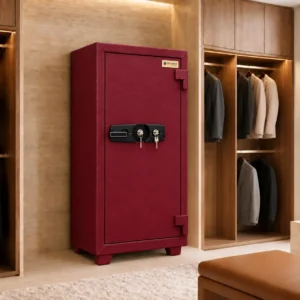
A standard safe can protect documents, cash, jewelry, and small valuables. But when the volume, value, or sensitivity of what you store exceeds the limits of a cabinet safe, vault doors create a more serious level of controlled protection. They secure a dedicated room or reinforced enclosure, giving homeowners and organizations the capacity to protect larger asset collections without compromising access control.
For a jewelry business, finance department, retailer, collector, or private residence, the right vault solution is not chosen by appearance alone. The door rating, wall construction, lock configuration, installation conditions, and daily operating needs must work together. A high-security door attached to an unsuitable opening will not deliver the protection its specification suggests.
When a Safe Is Not Enough
Safes remain the right choice for many applications. They are compact, practical, and available in formats for homes, offices, hotels, cash deposits, and fire-resistant document storage. A vault becomes the stronger option when a business needs room for inventory, multiple safe boxes, records, bulk cash storage, sensitive equipment, or extensive jewelry stock.
The difference is scale, but it is also flexibility. A vault room can be designed around the way assets are handled. A retailer may need enough internal space for secured stock movement and end-of-day cash procedures. An office may need organized storage for legal files, backup media, and confidential records. A homeowner may want a private secure room that accommodates valuables too large or numerous for a traditional safe.
This approach also allows security controls to be separated from general workplace activity. Instead of keeping high-value items in a storage room with broad staff access, a properly planned vault creates a defined restricted area.
What Vault Doors Are Designed to Protect
Vault doors are security barriers engineered for use with a purpose-built vault room, strongroom, or reinforced secure area. Depending on the model and the surrounding construction, they can support protection against forced attack, unauthorized access, and fire exposure.
Burglary resistance is usually a central consideration. Doors may be built with layered steel construction, barrier materials, reinforced locking systems, relocking mechanisms, and protected boltwork. The exact performance level should match the threat profile. A small professional office storing paper records has different requirements from a jewelry operation holding high-value inventory overnight.
Fire protection requires equal care. A door described as fire-resistant should be assessed alongside the vault walls, ceiling, floor, seals, and ventilation penetrations. The protected room is only as dependable as its weakest section. If preserving paper records, digital media, or temperature-sensitive materials is a priority, confirm the relevant fire performance requirements for the full enclosure rather than relying on the door alone.
Choosing Vault Doors by Risk, Not Size
The largest door is not automatically the most suitable choice. Selection should begin with a realistic assessment of what will be stored, who needs access, how often the space will be used, and what risks the site faces.
Burglary resistance and certification
Look for independently tested burglary ratings where the project requires a measurable standard of protection. A rating provides a more useful basis for procurement than general descriptions such as heavy-duty or high-security. It helps facility managers, insurers, and business owners compare doors according to expected resistance rather than weight alone.
The appropriate rating depends on the stored value, location, operating hours, existing premises security, and insurance requirements. Higher resistance can involve greater door weight, more demanding structural work, and additional installation planning. Those trade-offs are worthwhile when the exposure justifies them, but excessive specification can complicate a project without adding meaningful operational value.
Fire performance for your stored materials
Paper files, cash records, contracts, and physical archives need different protection from electronic media or specialized inventory. Heat and humidity can damage stored materials even when flames do not reach the room. Discuss the items being protected early in the planning process so that the vault construction, door seals, and internal storage system suit the actual contents.
For offices, pairing a secure room with fire-resistant filing cabinets can provide another layer of organization and protection for records that need controlled retrieval throughout the day.
Locking and access control
Vault doors can be specified with key locks, mechanical combination locks, electronic locks, or dual-control arrangements. The best choice depends on the access policy, staffing level, audit requirements, and business continuity procedures.
Electronic locking may suit environments that need managed user access and time-based controls. Mechanical options can appeal where simple, long-term operation is preferred. Dual-control arrangements can reduce the risk of a single individual having unrestricted authority over sensitive assets. The goal is not to add complexity for its own sake. It is to create an access process that staff can follow consistently.
The Door Is Only One Part of the Security Plan
A vault door performs as part of a complete system. The walls, ceiling, floor, frame anchoring, hinges, locking side, threshold, and surrounding building structure all influence the final result. This is why site assessment matters before ordering.
A professional survey should review the proposed opening, access route for delivery, floor loading, wall composition, clearances, emergency egress considerations, and any nearby utilities. Large security doors are heavy, and installation may require structural preparation well before the product arrives on site.
Do not overlook the frame. The frame transfers force from the door into the surrounding structure. If the frame and wall assembly are not correctly designed and installed, even an advanced door can be undermined. The same principle applies to cable routes, ducts, and service openings entering the secure room. Every penetration needs to be considered within the overall protection plan.
Plan for Daily Use, Not Just Overnight Security
A vault that is difficult to use will eventually create workarounds, delays, or poor access habits. Operational planning is therefore a security requirement, not an afterthought.
Think about how items move into and out of the room. A jeweler may need internal display storage, compartmentalized cabinets, and space for controlled stock checks. A finance team may need secure storage near cash-counting equipment, counterfeit detection tools, and document destruction procedures. A warehouse manager may need protected inventory zones with shelving that supports clear labeling and safe handling.
Internal organization reduces unnecessary door openings and helps authorized users locate assets quickly. Mobile shelving, metal cupboards, lockers, and filing systems can make a vault room more functional, provided they are planned around the room dimensions and door swing. Maintain clear internal aisles and ensure stored goods do not interfere with the door, locking area, or emergency access requirements.
Where Vault Doors Deliver the Most Value
Vault doors are often specified for jewelry stores, luxury goods retailers, financial-service environments, cash-intensive businesses, government and legal offices, and facilities with sensitive physical records. They are also appropriate for private collectors and homeowners with substantial valuables, irreplaceable documents, or a dedicated secure room.
For commercial buyers, the value is often in consolidation. Instead of distributing sensitive items across multiple cabinets, a well-designed vault room brings them into a controlled location with a defined authorization process. That can improve stock accountability, reduce handling risk, and simplify internal security policies.
For residential buyers, discretion is usually as important as capacity. The design should fit the home layout, support the family’s access needs, and provide protection without disrupting everyday use of the property.
Before You Order a Vault Door
Start with the assets, not the product code. Document what needs protection, its approximate volume, any fire or insurance requirements, the number of authorized users, and the desired operating schedule. Then assess the proposed site and the construction needed to support the door and vault enclosure.
It is also wise to plan the wider security environment. Alarm integration, surveillance coverage, visitor controls, lighting, record handling, and staff responsibilities all affect the real-world effectiveness of a protected area. A vault door is a critical barrier, but it should support a disciplined security process rather than replace one.
Safe World UAE can assist buyers who need vault doors alongside fire-resistant safes, filing protection, cash-handling equipment, and organized storage systems for a complete facility requirement. Contact the team with your room dimensions, intended use, and protection priorities before finalizing a specification.
The best vault solution is the one that makes secure storage practical every day while giving valuable assets the level of protection their importance demands.