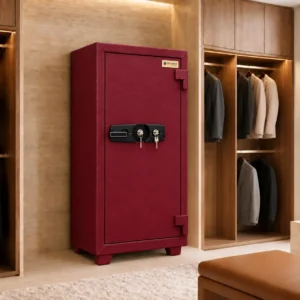
A luxury safe should do more than store valuables behind a premium finish. It should fit the assets you own, the room where it will be installed, and the level of protection your home or business requires. This luxury safe customization guide helps buyers specify a safe that protects jewelry, watches, cash, documents, collectibles, and sensitive items without compromising daily access or interior organization.
For a homeowner, customization may mean a compact jewelry safe with watch winders and a discreet finish. For a jeweler, retailer, or hospitality operator, it may mean controlled access, compartmented storage, fire resistance, and secure anchoring. The right specification depends on what is being protected and how the safe will be used.
Start With the Assets, Not the Exterior
The most common mistake is choosing a luxury safe based on appearance or outside dimensions alone. A polished finish, leather-lined drawers, or a digital display can add value, but security capacity starts with the contents.
Make a practical inventory before selecting the safe. Consider the quantity and type of jewelry, the number of watches, document sizes, cash volumes, collectibles, and any items that need separate storage. A safe that holds a few jewelry cases today may become restrictive as a collection grows. Leaving reasonable spare capacity prevents overcrowding and helps preserve delicate items.
Jewelry often needs shallow, divided drawers that keep pieces from tangling or rubbing together. Watches require cushioned holders sized for the collection, while passports, title documents, and legal records may need a vertical compartment or file-compatible section. If cash or sealed envelopes will be stored, consider a separate internal lockable compartment to support controlled access.
For commercial use, identify who needs access and whether the contents change throughout the day. Retail operators may need a secure area for cash and high-value stock. Offices may need protected storage for contracts, backup drives, and confidential records. A luxury safe can be tailored for each purpose, but the layout must reflect the actual workflow.
Choose Protection Levels Before Custom Features
Customization should never reduce the core protection of the safe. The body construction, door design, locking system, fire rating, and anchoring options should be selected before finishes and accessories.
Burglary Resistance
Burglary-resistant construction is essential when the safe will hold high-value jewelry, cash, precious metals, or collectible items. The required level depends on the value and attractiveness of the contents, the building’s wider security measures, and where the safe will sit. A protected internal room with alarms and controlled entry presents different risks than an accessible retail area or a residence with frequent service access.
Ask about the safe’s construction, locking bolts, door thickness, and available certification or test standards. For higher-risk applications, a vault door or a purpose-built secure room may be more suitable than relying on a single cabinet-style safe.
Fire Protection
Fire resistance matters most for paper records, passports, certificates, contracts, and certain business documents. Fire-resistant safes are designed to limit internal temperature during a fire for a specified period. That does not mean every stored item has the same protection requirements.
Paper documents, digital media, and electronic storage devices tolerate heat differently. If backup drives or other sensitive media are part of the contents, discuss a storage arrangement designed for those materials. A jewelry-focused safe with decorative drawers may not provide the same fire performance as a dedicated fire-resistant document safe.
Anchoring and Placement
A strong safe still needs correct installation. Floor or wall anchoring can help prevent removal, but the installation method must suit the building structure and the safe model. A heavy safe may also require site assessment for access routes, floor loading, elevators, stairs, and final placement.
Choose a location that is convenient enough for legitimate use but not obvious to visitors. Avoid damp areas, direct sunlight, or locations exposed to excessive heat where possible. In commercial premises, place the safe within a controlled area rather than using it as a visible display feature.
Select a Locking System Around Access Control
The locking system should match the people, schedule, and accountability requirements around the safe. There is no single best option for every buyer.
A key lock can suit a private owner who prefers a straightforward physical control, provided keys are managed securely. Electronic locks can provide convenient daily access and may support multiple users or access records depending on the model. Biometric options can be practical for limited authorized users, but they should be selected for reliability and backed by appropriate management procedures.
For a family home, simpler access may be the priority. For a jewelry business, office, or retail operation, multiple-user permissions and audit capability can be more valuable. Dual-control arrangements may be appropriate where two authorized people should be involved in accessing high-value contents.
Do not treat the lock as an isolated feature. Consider who will manage credentials, how staff changes will be handled, and what procedures apply if an authorized person is unavailable. Good safe security combines the hardware with clear responsibility.
Luxury Safe Customization Guide: Design the Interior
The interior is where a luxury safe becomes a useful long-term storage system rather than a large empty box. Custom interiors should protect items from movement, scratches, dust, and unnecessary handling.
Common interior options include velvet or leather-style linings, adjustable shelves, jewelry trays, ring rolls, necklace hooks, watch cushions, document drawers, lockable inner compartments, and display-style drawer layouts. The best combination depends on the collection, not on adding every available feature.
A watch collector may prioritize dedicated watch storage and a clear inventory arrangement. A jewelry owner may need graduated drawer depths, removable trays, and individual spaces for chains, earrings, and bracelets. A business owner storing documents and valuables may need a mixed layout with secure drawers above and larger shelves below.
Consider visibility as well as capacity. When every item has a defined location, it is easier to identify what is stored, reduce handling time, and notice when something is missing. For high-value collections, a clean internal layout also supports better inventory checks.
Avoid oversized decorative compartments that waste usable volume. Similarly, do not specify tight-fitting inserts without allowing for future purchases, packaging changes, or larger items. Adjustable elements provide more flexibility than a completely fixed interior.
Match the Finish to the Setting
Luxury safe finishes can help the unit complement a dressing room, private office, executive suite, jewelry showroom, or hospitality environment. Options may include wood-effect panels, premium paint finishes, leather-style detailing, polished hardware, and colors selected to coordinate with existing interiors.
Appearance should support discretion where needed. A safe intended for a visible showroom may benefit from a refined presentation, while a home safe located in a closet or private office may be better with a neutral, low-profile finish. A highly decorative exterior can make sense for a curated space, but it should not advertise the safe’s contents or location unnecessarily.
For commercial sites, choose finishes that remain practical under regular use. Fingerprint-prone surfaces, delicate trims, and light-colored interiors may require more maintenance in busy environments. A luxury specification should remain professional after years of use, not only on installation day.
Plan Delivery and Installation Early
Customization can affect size, weight, lead time, and installation requirements. Confirm the final location before placing an order, including doorway widths, corridors, staircases, elevator dimensions, and any access restrictions at the property.
For homes, consider the impact of installation on flooring, wall finishes, and privacy. For businesses, schedule delivery around operating hours and coordinate with facility management where required. Installation is part of the protection strategy, not an afterthought.
Before approving your specification, confirm these practical details:
- The external dimensions fit the intended route and final location.
- The internal layout accommodates current contents with room for growth.
- The lock type supports authorized users and daily operating needs.
- The safe’s burglary and fire features match the assets being stored.
- Anchoring, power requirements, and site conditions have been reviewed.
A customized luxury safe is most effective when every choice has a purpose: stronger protection for the risk, better organization for the contents, and controlled access for the people responsible. Safe World UAE can help buyers compare luxury jewelry safes, fire-resistant options, vault solutions, and installation requirements so the final specification protects what matters most. Contact us with your asset list, preferred location, and access needs before selecting the finish.