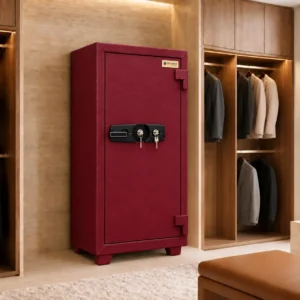
A jewelry display can be cleared in minutes, but the loss can affect a business for years. Diamonds, gold, watches, repair items, and customer pieces combine high value with small physical size. The best jewelry store safes are built around that reality: they protect concentrated value, support disciplined daily routines, and give owners confidence after the showroom closes.
A retail safe should not be chosen by exterior size alone. Its burglary resistance, lock control, internal organization, installation method, and capacity for future inventory all affect how well it performs in a real store. For jewelers, the right safe is a working part of the business, not simply a storage box in the back room.
What Makes the Best Jewelry Store Safes Different?
Jewelry safes need to resist forced attack while making valuable stock easy to organize and account for. A standard office safe may hold cash or documents adequately, yet it can become inefficient when staff must manage trays of rings, watch boxes, loose stones, repair envelopes, and high-value display pieces.
Purpose-designed jewelry safes often provide a combination of burglary-resistant construction and jewelry-focused interiors. Adjustable shelves, lockable drawers, watch storage, felt-lined compartments, and tray systems reduce handling and help staff complete opening and closing counts accurately. A well-organized interior also makes missing items easier to identify before they become a serious issue.
Fire protection should be considered separately from burglary protection. Fire-resistant safes are designed to protect contents from heat for a stated period, while burglary-resistant models focus on defeating physical attack. A jewelry retailer may need both qualities, but the level required depends on the stock value, building risk, insurer requirements, and whether sensitive records are stored in the same unit.
Start With Your Jewelry Inventory and Daily Routine
The correct safe capacity is based on more than the amount of stock currently on display. Include reserve inventory, incoming pieces awaiting processing, customer repairs, certificates, sales records, and room for business growth. A safe that is full at installation often leads to poor storage habits within a short time.
Think about how your team uses the safe at the beginning and end of each day. If staff return many trays at closing, a narrow cabinet with deep shelves can slow the process and increase the chance of a counting error. Wider shelving, fitted drawers, or dedicated tray positions may be more practical even if the overall capacity is similar.
For smaller boutiques, a compact burglary-resistant safe with a structured jewelry interior may be suitable. Established stores with extensive diamond, gold, and watch inventory may require a larger commercial jewelry safe or a protected safe room arrangement. Stores that accept repair work should also allocate a clearly separated area for customer property, identified by repair ticket or intake record.
Capacity planning should account for these distinct storage needs:
- Daily display stock that moves between the showroom and secure storage.
- Reserve inventory, including boxed items and seasonal collections.
- Customer repairs, custom orders, and consignment pieces.
- Certificates, warranties, invoices, and essential business documents.
Keeping these categories separate protects more than the merchandise. It creates a clearer chain of responsibility for staff and supports faster reconciliation when inventory is checked.
Burglary Resistance Is the Core Requirement
For a jewelry store, steel thickness by itself is not a complete security measure. The safe body, door construction, boltwork, hinges, locking areas, and overall design work together to create burglary resistance. Ask for the safe’s recognized security classification or testing information rather than relying on broad claims such as “heavy duty.”
A higher burglary rating is generally appropriate as the value held in the safe increases. Insurance providers may also specify a minimum safe grade based on the maximum value kept on the premises overnight. Confirm this requirement before ordering. Selecting a safe that does not meet policy conditions can leave a costly protection gap, regardless of how solid it appears.
The building environment matters as well. A safe positioned in an exposed area, a ground-floor shop with after-hours access risks, or a location with limited on-site security may justify a stronger model. Conversely, a safe installed within a monitored, access-controlled back office has an additional layer of protection, though that does not replace the need for appropriate burglary resistance.
Weight can discourage removal, but it should never be treated as the only control. A properly specified safe must be professionally anchored to a suitable structural surface where the model and site conditions allow. Anchoring helps prevent an entire safe from being moved for attack elsewhere. The installation team should assess flooring, wall clearance, access routes, and the building’s load capacity before delivery.
Choose a Lock That Supports Accountability
The lock should suit the people and processes responsible for the inventory. Electronic locks are common in retail environments because authorized users can operate them quickly and access permissions can be managed without distributing physical keys. Features vary by model, so confirm the number of user codes, audit capability, time-delay options, and emergency management procedure before purchase.
Mechanical combination locks remain a dependable option for businesses that prefer a non-electronic operating system. Key locks can also be used in specific applications, particularly for interior drawers or secondary compartments, but key control needs careful management. Lost, copied, or poorly recorded keys create an avoidable security concern.
Dual-control locking can be valuable when no one employee should access the main inventory alone. Requiring two authorized people to participate in access can strengthen accountability for high-value stock. It may not suit every small store, however, because it can slow legitimate access during busy periods. The best approach is the one that matches your staffing pattern without encouraging shortcuts.
Do not treat the lock as an afterthought. A high-security safe with weak access discipline can still expose the business. Assign access only to trained, authorized personnel, review permissions when staff roles change, and maintain clear opening and closing procedures.
Interior Design Protects Inventory and Improves Operations
Jewelry can be damaged, misplaced, or poorly counted when it is stored in generic piles, loose boxes, or overcrowded drawers. The interior should protect delicate pieces from scratches while giving staff a repeatable layout. Felt-lined jewelry drawers and removable trays are especially useful for rings, earrings, pendants, chains, and loose items that need visual separation.
Watch retailers may need deeper compartments or drawer configurations that fit presentation boxes. Gold jewelry often requires tray layouts that prevent tangling. Stores handling diamonds and gemstones should consider small, clearly labeled compartments that support precise stock control. The safe’s interior should reflect the merchandise, not force merchandise to fit an unsuitable cabinet.
Adjustable storage is valuable as product mixes change. A store focused on bridal jewelry today may add luxury watches, bullion, or premium accessories later. Modular shelves and drawer systems provide flexibility without requiring an immediate replacement safe.
For customer repair items, consider a separate locked compartment within the main safe or a dedicated internal drawer. This reduces the risk of customer property being mixed with saleable inventory and makes handover checks more reliable.
Installation Should Be Planned Before the Safe Arrives
A properly selected jewelry safe can underperform if delivery and installation are rushed. Measure doorways, service corridors, elevators, stair access, turning points, and the final installation room. Commercial safes can be heavy and difficult to reposition, so planning protects the premises, the safe, and the people handling it.
Placement should balance discretion and practical access. A safe located directly in public view is rarely ideal, but a location that is too difficult for authorized staff to reach may cause inconsistent end-of-day procedures. Select a secured back-office area with controlled access, suitable anchoring conditions, and enough space for staff to work without stacking inventory on the floor or nearby desks.
Also consider fire and environmental exposure. Avoid areas prone to water intrusion, excessive humidity, or damage from building services. If documents, digital media, or certificates are stored with jewelry, verify that the safe’s fire protection is suitable for those contents. Different materials tolerate heat differently.
Build Security Around the Safe, Not Only Inside It
A jewelry safe is strongest when it forms part of a wider security routine. Monitored alarms, surveillance coverage, controlled staff access, inventory records, and opening and closing checks all reinforce physical protection. The safe protects assets after they are placed inside it; the surrounding process determines how consistently that happens.
Create a documented closing routine that accounts for every display tray, repair item, and high-value piece before the safe is secured. Limit the number of people involved in inventory handling, and make responsibility clear at each handover. These habits are simple, but they reduce confusion during busy sales periods and support investigations if a discrepancy occurs.
For retailers expanding into multiple locations, standardizing safe sizes, drawer layouts, access roles, and end-of-day records can make management more consistent. Procurement teams should evaluate safes as part of an operating system rather than as isolated purchases.
Safe World UAE can help businesses select jewelry safes that match their stock profile, operational requirements, and site conditions. Choose security based on verified protection, organized storage, and a practical installation plan. Protect what matters most, then give your team a secure routine they can follow every day.