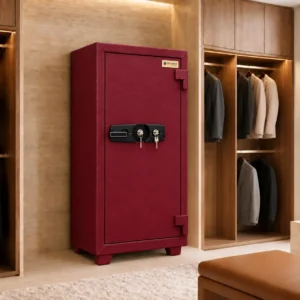
The best place to install a home safe box in Dubai is a dry, hidden spot on solid concrete. A bedroom wardrobe, a storage room or a home office closet usually works well. The location matters as much as the safe itself. A burglar can carry off an unanchored home safe box and open it later.
This guide explains placement, anchoring and access security. It suits Dubai apartments, villas and rented homes across the UAE.
Where Is the Best Place to Install a Home Safe Box in Dubai?
The best place for a home safe box is a dry, private area with a concrete floor or a structural wall. The spot must also let the door open fully.
Most Dubai homes offer three good options. Each one has trade-offs, as the table shows.
| Location | Main benefit | Main risk |
| Bedroom wardrobe | Easy daily access | Clothes can block the door |
| Storage room | Room for a larger safe | Heat or damp air |
| Home office closet | Private and quiet | Visitors may see it |
Hidden placement helps a lot. A safe that guests, cleaners or maintenance staff cannot see attracts less attention.
Next, think about daily use. You should stand comfortably, read the keypad and reach the shelves. A safe that is hard to use often ends up unused.
Where Should You Avoid Placing a Home Safe Box?
Avoid damp, hot, visible and unstable spots. These places damage the contents or weaken security.
- Bathrooms and balconies: Dubai’s humidity can harm papers, jewellery and electronic locks.
- Near ovens or direct sunlight: Heat can stress the lock and the contents.
- Open living areas: Anyone who walks past can see the safe.
- Weak furniture: Shelves and cabinets cannot carry a heavy safe.
- Tight corners: A blocked door or a dark keypad makes daily use hard.
- Unchecked walls: Drilling can hit hidden pipes or cables.
Also keep shelves and boxes away from the door of your home safe box. Over time, stored items slowly block access.
How Do You Anchor a Small Home Safe Box Properly?
Bolt a small home safe box to concrete, using the maker’s anchor holes and the right fixings. Anchoring stops a thief from carrying the safe away.
A small home safe box is light. That makes anchoring more important, not less. A thief can lift an unanchored home safe box in seconds.
Thieves attack safes by prying, drilling, punching and cutting. They work against the clock. A safe bolted to concrete gives them far less time and leverage.
First, check the factory anchor holes. Use them whenever the maker approves anchoring. Do not drill new holes in the safe body. Extra holes can damage the fire insulation and cancel the warranty.
Next, match the fixing to the surface. Concrete, masonry, steel and timber each need different hardware. A bolt that suits a light cabinet may fail on a heavier safe.
Then, check the floor. Concrete floors work best. Tiled floors, raised floors and upper slabs need extra checks, because a finished surface does not prove the structure below is strong.
Wall mounting needs care too. Drywall alone is not a secure surface. Use a structural wall and check for pipes and wiring first. Read the safe installation requirements for more detail.
Finally, test the safe. Open and close the door several times before you load valuables. The small home safe box should sit level and should not rock.
How Should You Install a Home Safe Box in a Dubai Apartment or Villa?
In an apartment, get written permission before drilling, then plan the delivery route. In a villa, you have more options, but the same anchoring rules apply.
For apartment residents and tenants:
- Read your tenancy contract and ask the landlord about drilling.
- Ask building management about lift size, weight limits and delivery rules.
- Measure the door, corridor, lift and turns, using the packed size of the safe.
- Choose a closet or a low cabinet if you cannot drill into the floor.
- Clear rugs and cables from the route to the home safe box spot.
If drilling is not allowed, pick a heavier home safe box and hide it well. A 200-pound safe resists theft far better than a 40-pound one. However, a heavy safe may need extra helpers and a booked delivery slot.
Our guide to the best safes for apartment renters covers more rental tips.
Villa owners often have solid concrete floors, which suit anchoring. Confirm this before you drill. Also plan the route into the house, because heavy units need careful handling.
Which Home Safe Box Suits Your Chosen Location?
Choose a home safe box by what you store, then match its weight and rating to the spot. Fire protection and burglary protection are two different goals.
A small home safe box suits passports, documents, watches and tablets. It fits wardrobes and closets easily. A fire-resistant safe protects birth certificates, insurance papers and wills. A burglary-resistant safe suits cash, jewellery and collectibles.
Ratings help you compare. RSC, short for Residential Security Container, fits many households. TL-15 and TL-30 units are heavier, cost more and are harder to install. Check the fire rating and the burglary rating separately, because one does not prove the other.
Many buyers make three mistakes:
- They buy the largest safe, not the one that fits their valuables.
- They measure the outside only. Insulation and bolts reduce the inside space.
- They assume a fire rating also means strong burglary protection.
SafeWorld UAE sells fire-resistant, jewellery and small home safes, along with burglary-resistant models. The team helps customers in Dubai and Abu Dhabi pick a model and plan the site. For heavier units, read about the burglary-resistant home safe options first.
How Do You Control Access to a Home Safe Box?
Limit the code to people you trust, and store backup keys away from the safe. Good access control keeps a well-placed home safe box secure.
- Change the default code on day one.
- Share the code only with trusted adults.
- Keep emergency keys in a separate, secure place.
- Check the batteries on a fixed schedule.
- Keep a private list of items, with photos and serial numbers, away from the safe.
Lock type matters too. Keypads open fast, but they need batteries. Mechanical locks need no battery, but they open slowly. Biometric locks are convenient, so keep a backup entry method.
A key lock gives weaker control for cash and jewellery. Choose a keypad or a combination lock for those items.
For more such information and updates, follow us on Facebook and Instagram. Or contact us at our WhatsApp number.
What Are the Common Questions About Installing a Home Safe Box?
Where is the safest place for a home safe box?
Choose a dry, hidden spot on a concrete floor or structural wall. Make sure the door opens fully.
Can I keep a small home safe box in a wardrobe?
Yes, if the base is solid and you can anchor the safe. Check door clearance first.
Should I fix a home safe box to the floor or the wall?
Follow the maker’s advice. Concrete floors usually give the strongest hold.
Can tenants install a home safe box in a Dubai apartment?
Yes, but get written permission before drilling. A heavy freestanding safe is an option if drilling is banned.
Do I need a professional to install a home safe box?
Not always. Hire one for heavy, built-in or high-security units.
Ready to choose? Explore suitable home safes at SafeWorld UAE. Share your valuables and room layout, and the team will help you pick the right model.