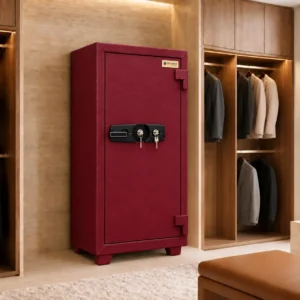
A safe can have thick steel, fire-resistant insulation, and a well-designed interior, but the lock determines how people access it every day. Choosing among safe lock types is not simply a matter of convenience. It affects who can open the safe, how quickly they can do it, what happens during a power issue, and how confidently you can control access to cash, documents, jewelry, and other assets.
For a home, the right lock may mean quick access to passports and valuables without managing spare keys. For a retail store, office, hotel, or jewelry operation, it may mean assigning access to authorized staff while reducing the risk of lost keys, shared codes, or unauthorized entry. The best choice depends on the safe’s purpose, location, users, and required security level.
The Main Safe Lock Types
Most safes are supplied with one of five lock options: key locks, mechanical combination locks, electronic keypad locks, biometric locks, or dual-lock configurations. Each has a clear role, and no single lock is right for every application.
Key locks
A key lock is simple, familiar, and independent of batteries or electronics. It can be suitable for small home safes, hotel safes, lockers, filing cabinets, and applications where one responsible person controls access. Many compact safes use a key lock as the primary system or as an emergency override for an electronic keypad.
The trade-off is key control. A lost key can create access problems, while an improperly stored spare key can defeat the purpose of the safe. Keys should never be kept in a desk drawer, near the safe, or labeled with the safe’s location. For workplaces with several users or frequent staff changes, key-only access can become difficult to manage.
Mechanical combination locks
Mechanical combination locks use a turning dial and a set sequence of numbers. They are a proven choice for burglary-resistant safes, commercial safes, vault doors, and long-term storage where reliability is the priority. Because they do not rely on batteries, they remain operational during power outages and require little day-to-day maintenance.
A quality mechanical lock is also less exposed to common electronic issues such as low battery warnings or keypad damage. However, users need to learn the dialing procedure and allow extra time to open the safe. This can be inconvenient for cashiers, hotel teams, or busy office staff who need repeated access during the day.
Mechanical locks are often the right fit when a safe will be opened infrequently but must remain dependable for many years. They are especially practical for document safes, fire-resistant safes, and high-security installations where access is limited to a small number of trained keyholders.
Electronic keypad locks
Electronic locks use a keypad and personal identification number, or PIN, to open the safe. They are among the most popular safe lock types for homes and businesses because they offer fast operation and straightforward code management. Many models allow users to set or change codes without replacing hardware, which is valuable when staff responsibilities change.
Electronic keypad locks can include useful features such as wrong-code penalties, time delays, dual-user access, audit trails, low-battery alerts, and temporary codes. These features make them effective for offices, retail stores, hospitality environments, and homes where quick but controlled access matters.
Battery operation is the main consideration. A quality lock will provide a low-battery warning well before the battery is depleted, and many safes include an external emergency power connection or backup key procedure. Replace batteries on a planned schedule rather than waiting for an alert. For commercial sites, assign this task to a responsible manager and record the battery replacement date.
Biometric locks
Biometric locks use fingerprint recognition to authorize access. Their main benefit is speed. Instead of locating a key or entering a code, an approved user can place a finger on the scanner and open the safe in seconds. This can be useful for home safes containing emergency items, bedside safes, and selected business applications where rapid individual access is required.
Biometric access is not automatically a higher level of burglary protection. The safe body, door construction, boltwork, lock quality, installation method, and anchoring remain equally important. Fingerprint readers can also be affected by dirty sensors, moisture, injured fingers, or inconsistent enrollment. For that reason, biometric safes should have a reliable PIN or mechanical backup method.
Biometric locks work best when the number of users is limited and each authorized person can be enrolled and tested properly. They are less suitable for operations with frequent staff turnover or environments where dust, grease, gloves, and heavy use may affect scanner performance.
Dual-lock and dual-control configurations
A dual-lock safe requires two separate credentials to open. This may be a key and electronic PIN, two separate keys, or two independently controlled electronic codes. Dual control is designed for higher-risk assets and situations where no single person should have unrestricted access.
Jewelry businesses, finance departments, cash rooms, pharmacies, and high-value inventory areas often benefit from this arrangement. It strengthens accountability because access requires two authorized people or two distinct forms of authorization. It can also support internal control procedures for opening and closing a safe at the start or end of a shift.
The trade-off is operational speed. Dual control is not ideal if one manager is routinely unavailable or if a single employee must access emergency supplies immediately. Before selecting this setup, establish who holds each credential, who acts as backup, and how access is documented.
Match the Lock to the Safe’s Purpose
The lock should support the job the safe needs to perform. A fire-resistant document safe is designed to protect paper records, contracts, certificates, and passports from heat exposure. A mechanical combination lock or electronic keypad is usually appropriate, depending on how often those records are needed.
A burglary-resistant safe used for cash, watches, gold, or high-value electronics needs more than a convenient lock. Consider the safe’s burglary rating, steel construction, relocking system, boltwork, and anchoring requirements. A premium electronic lock may improve access control, but it cannot compensate for a lightweight safe that is not secured to the floor or wall where appropriate.
For retail and hospitality operations, deposit safes reduce the need for employees to open the main compartment. A drop slot, rotary drawer, or deposit system allows cash or envelopes to be placed inside while restricting access to stored contents. Electronic access codes and dual-control procedures can add further protection for managers and finance teams.
Hotel safes prioritize simple guest operation and reset capability between stays. In this setting, an electronic keypad lock is generally the practical choice. It should be paired with a clear override and management procedure so authorized staff can assist guests without compromising security.
Access Management Matters as Much as the Lock
A safe lock is only as secure as the way it is managed. Avoid using birthdays, phone numbers, unit numbers, or repeated digits for PIN codes. Do not share one code among an entire team. Give access only to people who need it, remove codes promptly when employees leave, and keep emergency keys under separate, controlled custody.
For businesses, create a short written process covering code changes, keyholder authority, battery maintenance, safe opening times, and incident reporting. This is especially valuable for retail cash handling, jewelry stock, confidential files, and shared office safes. Clear procedures reduce confusion and help protect both assets and employees.
Placement also matters. A safe should be installed where it can be used privately, monitored appropriately, and anchored according to the manufacturer’s instructions. A lock can discourage unauthorized access, but a properly selected and installed safe provides the full layer of protection.
Choose for Security, Daily Use, and Recovery
When comparing safe lock types, start with three practical questions: Who needs access, how often will the safe be opened, and what happens if a code, key, battery, or user is unavailable? Your answers will usually point toward the right configuration.
A mechanical combination lock favors long-term reliability. An electronic lock favors speed and flexible code control. A biometric lock favors rapid individual access with a dependable backup. Dual control favors accountability for high-value assets. Safe World UAE can help match the lock configuration, safe category, and capacity to your protection requirements. Select the system your team can manage consistently, then maintain it with the same care you give the valuables inside.