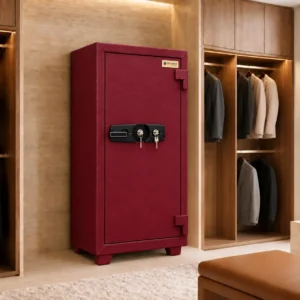
A jewelry box on a dressing table may organize a few everyday pieces, but it does not provide meaningful protection against theft, fire, or unauthorized access. This secure jewelry storage guide helps homeowners, collectors, retailers, and hospitality operators choose protection that matches the value, volume, and daily handling needs of their jewelry.
Jewelry storage is not one-size-fits-all. A family protecting heirloom gold and diamond pieces has different requirements from a retailer managing inventory, repairs, and customer items. The right solution protects the assets while keeping them accessible, organized, and accountable.
Start With the Real Value at Risk
Before selecting a jewelry safe, make a complete inventory. Include purchase price, current appraised value, photographs, serial numbers where available, and supporting documents. This process often reveals that the total value stored at home or in a store is higher than expected.
Do not size a safe only for the items you own today. Engagement rings, watches, gold sets, inherited pieces, and business inventory can accumulate quickly. A safe that is too small encourages people to leave items outside it, defeating the purpose of secure storage.
For businesses, separate stock from customer property. Jewelry brought in for cleaning, resizing, valuation, or repair should have its own labeled storage process. Clear separation reduces disputes and makes daily reconciliation easier.
Choose a Safe Before Choosing Storage Trays
Velvet trays, watch winders, ring rolls, and drawer inserts help prevent scratches and tangles. They are useful only after the primary security decision has been made. The safe is the protective barrier. Interior organization should support that barrier, not replace it.
A suitable jewelry safe should be evaluated for burglary resistance, fire protection, lock type, capacity, anchoring options, and interior layout. A decorative cabinet may look appropriate in a bedroom, boutique, or office, but appearance alone does not indicate resistance to forced entry.
Burglary Protection Matters Most for Jewelry
Jewelry is compact, portable, and easy to resell. That makes it a high-priority target during a break-in. Look for a purpose-built safe with a solid steel body and door, secure locking bolts, protected hinges, and a lock designed for security use.
The level of burglary resistance should reflect the value being stored and the location of the safe. A small home collection may need a compact burglary-resistant safe that is professionally anchored. A jeweler, retailer, or high-value collector may require a heavier jewelry safe or a dedicated vault-room solution.
Weight can discourage quick removal, but it is not a complete security rating. Even a heavy safe should be anchored to a suitable floor or structural surface according to manufacturer instructions. An unanchored safe can still be removed with enough time and equipment.
Fire Protection Protects More Than the Jewelry
Precious metals and gemstones may survive temperatures that damage their setting, finish, adhesive components, documentation, or packaging. Pearls, opals, emeralds, and certain treated stones can be especially sensitive to heat and sudden temperature changes.
A fire-resistant safe adds protection during a building fire and may also safeguard appraisals, certificates, insurance records, and purchase receipts. Fire protection is measured by tested performance over a stated period and temperature condition. Do not assume every burglary-resistant safe has the same fire performance, or that every fire safe offers strong burglary protection. For many owners, the right choice combines both.
Select a Lock That Fits Your Access Pattern
A key lock is straightforward but creates a key-control responsibility. If a key is copied, misplaced, or stored near the safe, security is compromised. Electronic locks allow faster access and can be practical for authorized family members or staff, particularly when individual codes and audit features are available.
Mechanical combination locks avoid battery dependence but may be slower for frequent transactions. Biometric access can be convenient, but it should be assessed carefully for user reliability, backup access, and the number of authorized users. For commercial use, dual control or time-delay features may be appropriate when no single employee should open the safe alone.
Secure Jewelry Storage Guide: Plan the Location
A strong safe placed in the wrong location can still create unnecessary risk. Avoid obvious locations such as an exposed closet shelf, a visible office corner, or an area with frequent unmonitored access. Choose a location that supports privacy during opening and closing, yet remains practical enough for consistent use.
At home, a secured interior location away from public view is often preferable. Consider the building structure before selecting a large unit. Upper-floor placement may have weight limitations, while damp basements and unconditioned spaces can create moisture concerns.
In a retail environment, the safe should be located behind controlled access, away from storefront visibility and customer traffic. It should also support end-of-day procedures. Employees should not need to carry high-value items across an open sales floor after hours.
Hospitality operators should use appropriately sized in-room or back-office safes based on guest needs and staff access policies. A small hotel safe is suitable for temporary guest valuables, not for storing a property’s high-value jewelry inventory or significant cash holdings.
Organize the Interior to Prevent Damage and Delay
A well-organized safe reduces handling time and helps identify missing pieces quickly. Use lined trays or drawers that keep rings, bracelets, earrings, necklaces, and watches separated. Avoid piling jewelry into pouches or loose boxes where chains snag and stones scratch against metal.
For personal collections, reserve one section for frequently worn pieces and another for heirlooms or occasional-use items. Keep certificates and appraisal records in a separate protected compartment or fire-resistant document container, rather than beneath the jewelry where they may be overlooked.
For retail stock, organize by category, SKU, collection, or display location. A numbered tray system makes counts faster at opening and closing. Customer repair items should be stored in tamper-evident, labeled packets with intake documentation. This protects the customer and strengthens operational accountability.
Moisture control also matters. Keep jewelry clean and dry before storage, especially in humid environments. Use appropriate desiccant products if conditions require them, and check them regularly. Do not place loose chemical products directly beside jewelry, as some materials can tarnish metals or affect finishes.
Control Access With Clear Rules
Most jewelry losses do not result from sophisticated safe attacks. They happen through weak routines: a safe left open during a busy period, shared access codes, keys stored in predictable places, or no record of who handled inventory.
For households, limit access to trusted adults and update electronic codes when household circumstances change. Do not share a safe code with contractors, temporary staff, or casual visitors. Store emergency access details separately and discreetly.
For businesses, establish a written access policy. It should identify authorized users, opening and closing procedures, code-change requirements, inventory-count responsibilities, and escalation steps if a discrepancy is found. Individual user codes are preferable to one shared code because they provide clearer accountability.
These controls deserve particular attention:
- Change access codes when staff leave, roles change, or a code may have been observed.
- Keep keys under controlled custody and maintain a record of authorized keyholders.
- Require two-person verification for very high-value inventory or sensitive transfers.
- Reconcile inventory at scheduled intervals, with immediate investigation of discrepancies.
Match Your Insurance and Documentation to the Storage Plan
Insurance coverage may have limits for jewelry stored at home, in a store, or while in transit. Contact the insurer before assuming every item is fully covered. They may require current appraisals, photographs, proof of ownership, alarm systems, particular safe ratings, or specified storage practices.
Keep appraisals current, especially for gold, diamonds, and pieces that have changed significantly in market value. Photograph each item from multiple angles and record distinguishing features. Store digital copies securely and maintain protected physical copies where appropriate.
For retailers and service businesses, document custody from intake through return. A signed intake form, condition notes, photographs, and transaction record can be as valuable operationally as the safe itself.
When a Standard Safe Is Not Enough
A standard home safe can be a sensible starting point for modest collections. However, a larger collection, luxury watches, extensive gold holdings, or retail inventory may justify a dedicated jewelry safe with specialized drawers, internal lockers, high-security locking, and customized interior compartments.
Businesses may also need a layered approach: a secure display case during business hours, controlled back-room storage for working inventory, and a burglary-resistant safe for overnight protection. If cash, documents, or confidential records are handled alongside jewelry, separate compartments or separate safes can improve security and simplify access control.
Safe World UAE can help buyers compare jewelry safes, burglary-resistant models, fire-resistant options, and customized storage configurations based on the assets they need to protect. Select the safe around the risk, then build a storage routine that people can follow every day. The best jewelry storage solution is the one that keeps valuables protected without making secure handling difficult.