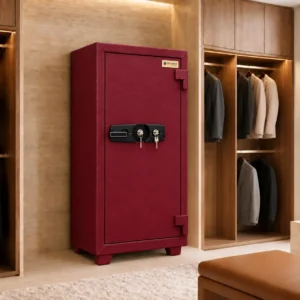
A safe that is too small creates a problem the first time you need to add a document folder, jewelry box, or cash pouch. A safe that is too large may cost more than necessary and be difficult to position securely. If you are asking what safe size is needed, start with what you need to protect now, then allow room for what you will need to secure over the next several years.
For homes, offices, retail counters, jewelry businesses, and hospitality properties, the right choice is not based on outside dimensions alone. Internal capacity, door clearance, weight, fire protection, locking method, and installation location all affect whether a safe will provide practical protection.
What Safe Size Is Needed for Your Property?
The first step is to make a realistic inventory. Do not estimate by looking at a small stack of items on a desk. Gather the actual valuables you plan to store and measure the space they occupy.
A home safe may need to hold passports, property documents, birth certificates, backup drives, family jewelry, watches, cash, and small collectibles. A business safe may need to accommodate daily cash deposits, checkbooks, contract files, keys, company seals, confidential records, or employee valuables. Jewelers and luxury retailers may need organized space for trays, display stock, watches, and high-value pieces that should not be stacked carelessly.
Add at least 25% to 50% more internal space than your current inventory requires. This allowance prevents the safe from becoming overcrowded and reduces the need to replace it when your storage needs grow. For business use, account for seasonal increases in cash, inventory, or documentation.
Small Safes for Essential Valuables
A compact safe can be suitable for a limited collection of documents, passports, cash, and small jewelry items. These models work well in apartments, hotel rooms, executive offices, or locations where space is restricted.
However, compact does not automatically mean convenient. A small safe with a narrow door opening may not accept A4 or letter-size documents flat. If you plan to store document folders, confirm the internal width, depth, and height rather than relying on the exterior cabinet size. The door frame, locking bolts, and interior shelving all reduce usable capacity.
Small safes should also be installed correctly. A lightweight unit that can be carried away offers limited burglary resistance, even with a quality lock. Where the model and property allow it, secure anchoring to a suitable floor or wall is a practical part of the protection plan.
Medium Safes for Homes and Offices
Medium-size safes are often the most flexible option for homeowners and small businesses. They can typically accommodate document files, laptops, backup media, cash boxes, jewelry cases, and personal valuables without forcing everything into a single pile.
This category is a strong choice when several family members use one safe or when an office needs protected storage for records and controlled-access items. Adjustable shelves can help separate cash from documents and prevent jewelry, watches, or electronics from being damaged by heavier items.
Before ordering, consider whether the safe must fit inside a cabinet, closet, storeroom, or office partition. Measure the available floor area, wall height, doorways, elevators, and turns along the delivery route. A safe can fit its final location on paper but still be difficult to move into the building.
Large Safes for Commercial and High-Value Storage
Large safes are designed for more demanding requirements, including bulk cash storage, extensive document retention, retail inventory, jewelry stock, and multi-user access. They are common in finance offices, retail operations, warehouses, administrative departments, and high-value residential properties.
More capacity is useful, but it also brings planning requirements. Larger safes are heavier, may require professional delivery and positioning, and can place significant load on upper floors. The installation site should be assessed for access, floor strength, and anchoring options before purchase.
For jewelry businesses, the best size depends on the number and type of storage trays, not just the total value of stock. A safe with well-organized internal storage can be more efficient than a larger empty cabinet where items are difficult to count, retrieve, and protect from scratching.
Measure the Contents, Not Just the Room
Safe buyers sometimes select a model based on how much space it will occupy in a room. That matters, but the interior is the working space that determines whether the safe is useful every day.
Measure large folders, cash drawers, laptops, jewelry boxes, key cabinets, and storage trays individually. Check the height of binders and the depth of stacked document boxes. If you need to store fire-resistant document pouches or media cases, include their dimensions as well.
Pay close attention to the clear door opening. The external width of a safe may look sufficient, while the opening is narrower because of the door thickness and locking mechanism. This is especially relevant for filing documents, laptops, and boxed inventory.
For commercial use, think about workflow. If a cashier needs to make deposits during operating hours, a deposit safe with a drawer, slot, or rotating hopper may be more appropriate than a general storage safe. If staff need access to different contents, separate compartments or controlled lock access may reduce handling risks.
Size Must Match the Type of Protection
Capacity is only one part of safe selection. A large cabinet with limited burglary protection may not be the right place for high-value jewelry or substantial cash holdings. Conversely, a compact burglary-resistant safe may be ideal for small, valuable items that need stronger protection.
Choose the safe type according to the main risk. Fire-resistant safes are intended to help protect paper documents and selected contents from heat exposure for a stated period. Burglary-resistant safes focus on construction, locking bolts, door strength, and resistance to forced entry. Many buyers need both types of protection, but fire performance and burglary performance should be checked separately for each model.
Digital media, external drives, and electronic devices can require more specialized fire protection than paper records. Do not assume that any fire-resistant safe provides the same protection for all contents. Review the product specifications and the stated fire rating before making a decision.
Lock selection also affects usability. A key lock is straightforward but requires secure key control. Electronic locks provide quick access and can suit homes and workplaces where authorized users need a code. Combination and advanced locking systems may suit higher-security applications. For a busy office, the best lock is one that balances access control with reliable daily operation.
Plan for Installation and Daily Access
A safe only protects valuables when it is used consistently. Select a size and placement that make secure storage practical, not inconvenient. If documents are stored in a difficult-to-reach area, people may leave them in desks or cabinets instead.
For residential use, avoid obvious locations when possible, but do not place the safe where it is exposed to moisture, extreme heat, or inaccessible corners. For offices and retail sites, place it within controlled areas and away from public view. A deposit safe should support cash-handling procedures without giving unauthorized people visibility of the process.
Leave enough room for the door to open fully and for users to access shelves, drawers, or compartments. Consider the direction of the door swing, particularly in narrow offices, closets, and back-room areas. A model that opens against a wall or shelving unit can become frustrating to use.
Also consider future changes. A growing family may accumulate more important records and valuables. A retail business may add product lines, increase cash volumes, or require separate storage for keys and documents. Buying slightly above your current capacity is usually more cost-effective than replacing a safe too soon.
A Practical Buying Decision
The best safe size is the smallest model that comfortably stores your current contents, allows organized access, provides room for future additions, and meets the required fire and burglary protection level. Do not compromise security simply to fit a safe into an unsuitable location, and do not pay for unused capacity without a clear operational reason.
For a straightforward selection, prepare a list of the items you need to protect, their dimensions, the intended installation space, and the protection level you expect. Safe World UAE can help match those requirements to home safes, fire-resistant safes, deposit safes, jewelry safes, and commercial security storage.
Protect what matters most by choosing a safe that has room to work for you today and capacity to keep working as your responsibilities grow.