

Vault Door Installation: Plan Before You Build

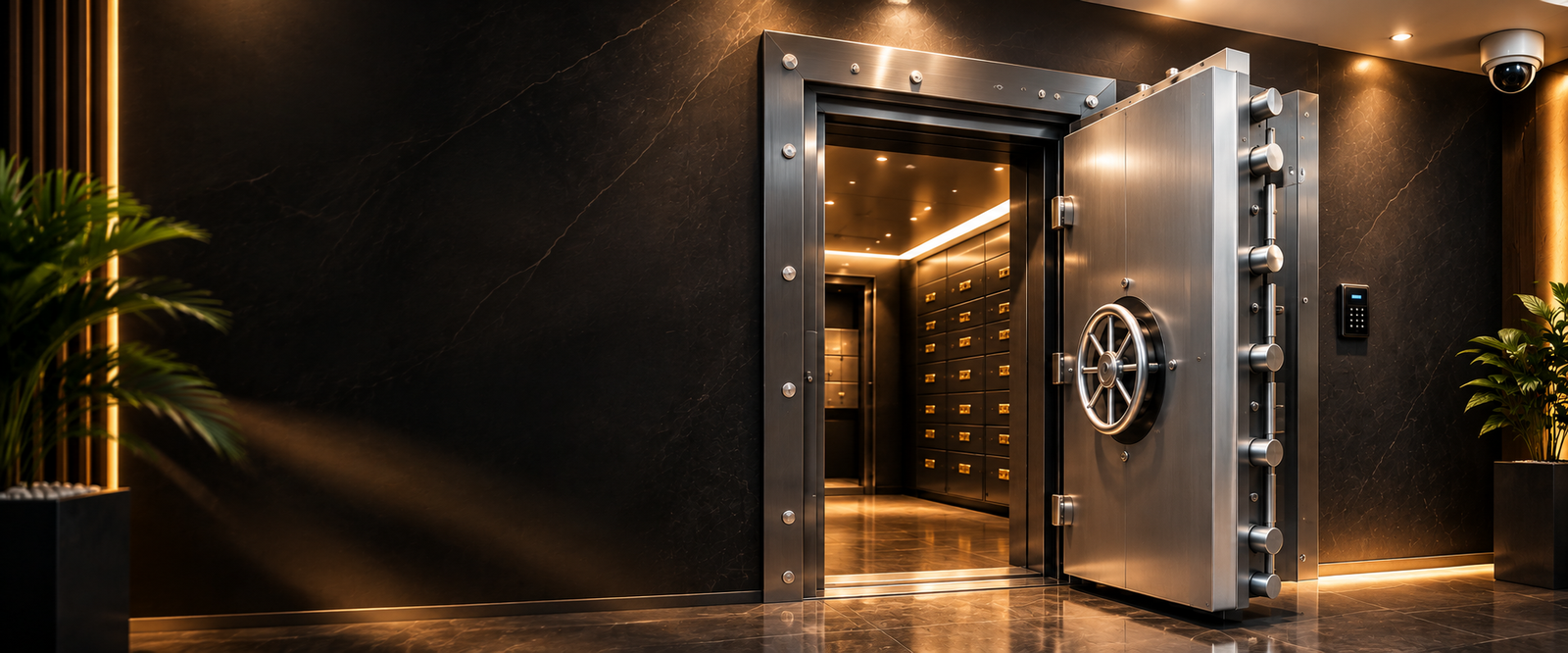
A vault door is only as secure as the structure around it. Vault door installation is not a finish-stage detail to settle after a room is built. The opening, reinforced wall, floor load, swing clearance, and access method must work together before the door arrives. A correct installation protects valuables, documents, cash, jewelry, and sensitive business assets without creating daily access problems.
For a residence, the goal may be a protected safe room or secure storage area. For a jewelry retailer, finance office, warehouse, or hospitality operation, the requirement may include controlled access, cash storage, fire resistance, and audit-ready key management. The right project begins with a clear security purpose, then matches the door and installation method to that purpose.
Vault Door Installation Starts With the Room
The first decision is not the lock type. It is where the vault will sit and what supports it. A vault door is heavy, and the surrounding construction must resist forced entry rather than simply hold the door in place. A standard interior partition, hollow block wall, or lightweight stud wall is not a suitable foundation for a high-security opening.
A purpose-built vault room is usually formed with reinforced concrete or another engineered barrier system. The wall thickness, steel reinforcement, door frame anchoring points, and concrete strength should be specified as one assembly. Installing a strong door into a weak opening can shift an intruder’s focus from the door to the wall around it.
Floor capacity also needs attention. The door, frame, and hardware add substantial concentrated weight near the entrance. If the room is above ground level, an engineer should confirm that the slab and supporting structure can safely carry the load. This matters even more when the room will also contain safes, filing cabinets, cash-handling equipment, or dense inventory.
Measure the route to the room as carefully as the opening itself. Delivery teams need enough width, height, turning room, and floor capacity to move a large door safely into position. Staircases, elevators, narrow corridors, and finished flooring can change the installation plan or increase handling requirements.
Define What the Door Must Protect Against
A vault door should be selected for the risks the owner actually faces. Theft resistance is often the main concern, but it is not the only one. Fire, unauthorized employee access, water exposure, and emergency egress may be relevant depending on the building and the items stored inside.
For example, a homeowner securing passports, family records, and jewelry may prioritize burglary protection plus fire protection. A retailer handling daily cash deposits may need controlled access, a time delay lock, and operating procedures that limit who can enter. A jewelry business may require a higher level of attack resistance and a room layout that supports secure stock handling.
Do not assume that every vault door delivers the same level of protection. Compare the construction, locking bolts, frame design, lock options, fire performance, and applicable security ratings. The door should support the security level of the entire room. An exceptionally high-rated door may not be the right investment if the walls, ventilation penetrations, or adjacent access points remain vulnerable.
Plan the Opening Before Concrete Work
The clear opening must match the manufacturer’s frame requirements, not just the advertised door size. Frame dimensions, anchoring details, sill conditions, and wall thickness affect how the unit fits. Small errors can delay installation or require expensive structural corrections.
Before construction begins, confirm whether the door frame is designed to be cast into place, anchored after the wall is complete, or installed using a specific engineered method. The installer also needs to verify which way the door swings. An inward-swinging door may save hallway space, while an outward-swinging door can preserve interior room. The better option depends on emergency access, room layout, and the position of shelving or safes.
Allow enough clearance for the door to open fully. A heavy vault door that stops against a cabinet, wall, or equipment trolley is inconvenient and can place unnecessary stress on hinges. The handle and locking mechanism also need clear operating space. In commercial settings, consider whether staff need to move cash boxes, document carts, or inventory containers through the entrance.
The threshold deserves the same attention. A raised sill can improve certain sealing or frame conditions, but it may interfere with trolleys, mobility access, and regular movement of equipment. A flush threshold may be preferable for operational areas, provided it meets the door’s installation requirements and does not compromise security.
Choose Access That Fits Daily Operations
The lock is where physical security meets routine use. A mechanical combination lock provides dependable operation without batteries, but it requires careful code control and can take longer to open. Electronic locks offer faster access management and may support multiple users, time delay, audit features, or dual control. Biometric access can add convenience for approved users, though it should be selected with a realistic view of environmental conditions, user volume, and backup access procedures.
For many businesses, a dual-lock arrangement is a practical choice. It can require two authorized people to open the vault, reducing the risk of a single person accessing cash, jewelry, or confidential files alone. Time delay functions can also help deter coercion and support opening procedures at high-risk times.
Every electronic system needs a documented backup plan. Decide who holds override keys, how emergency credentials are stored, who can change user codes, and what happens if a staff member leaves. Security weakens quickly when keys are shared informally or access codes are not removed after a role change.
Protect the Weak Points Around the Vault
A vault room needs more than a strong door. Ventilation openings, cable conduits, ceiling voids, and service penetrations can reduce the room’s protection if they are not designed correctly. Any required opening should be minimized, protected, and included in the overall security plan.
Fire and environmental planning also matter. If documents, digital media, jewelry, or cash are being stored, identify what can be damaged by heat, humidity, dust, or water. A door may provide a measure of fire resistance, but the room design and the storage products inside should support the same objective. Paper records, electronic drives, and high-value goods do not all require the same protection.
For facilities in Abu Dhabi or Dubai, building access and delivery timing should be planned early. Loading restrictions, service elevator booking, site permits, and finished interior surfaces can affect how a heavy security product is moved and installed. Advance coordination keeps the project controlled and reduces disruption to business operations.
Use Qualified Installation and Handover Procedures
Vault door installation requires trained handling, accurate alignment, and secure anchoring. The frame must be level, plumb, and fully supported so the door operates correctly without binding. Misalignment can affect the bolts, hinges, locking mechanism, and long-term performance.
After fitting, the installer should test the complete operation: door swing, bolt engagement, lock function, relocking devices where applicable, and any electronic access controls. The owner or designated facility manager should be shown how to open, lock, reset, and maintain the door. This is also the right time to record serial numbers, warranty details, lock instructions, and emergency contacts in a separate secure location.
Commercial buyers should include the vault in their security procedures. Set access authority, opening and closing times, key custody rules, code-change schedules, and incident reporting steps. A strong vault door cannot correct weak key control or informal staff practices.
Prepare for Long-Term Service
A vault door is a long-term security asset, not a fit-and-forget purchase. Schedule periodic inspections of hinges, bolts, locks, door alignment, and electronic components. Avoid forcing the handle or applying unapproved lubricants. If the door becomes difficult to close or the lock behaves inconsistently, arrange service before a minor issue becomes a lockout or operational interruption.
The best installation is one that fits the building, the threat level, and the way people work every day. Safe World UAE can help buyers select a vault door and security-storage solution that supports responsible access, protected assets, and confident operations. Contact the team before construction or renovation work begins, when the right opening and protection plan are easiest to achieve.