

Choosing a Fireproof Filing Cabinet for Office Use

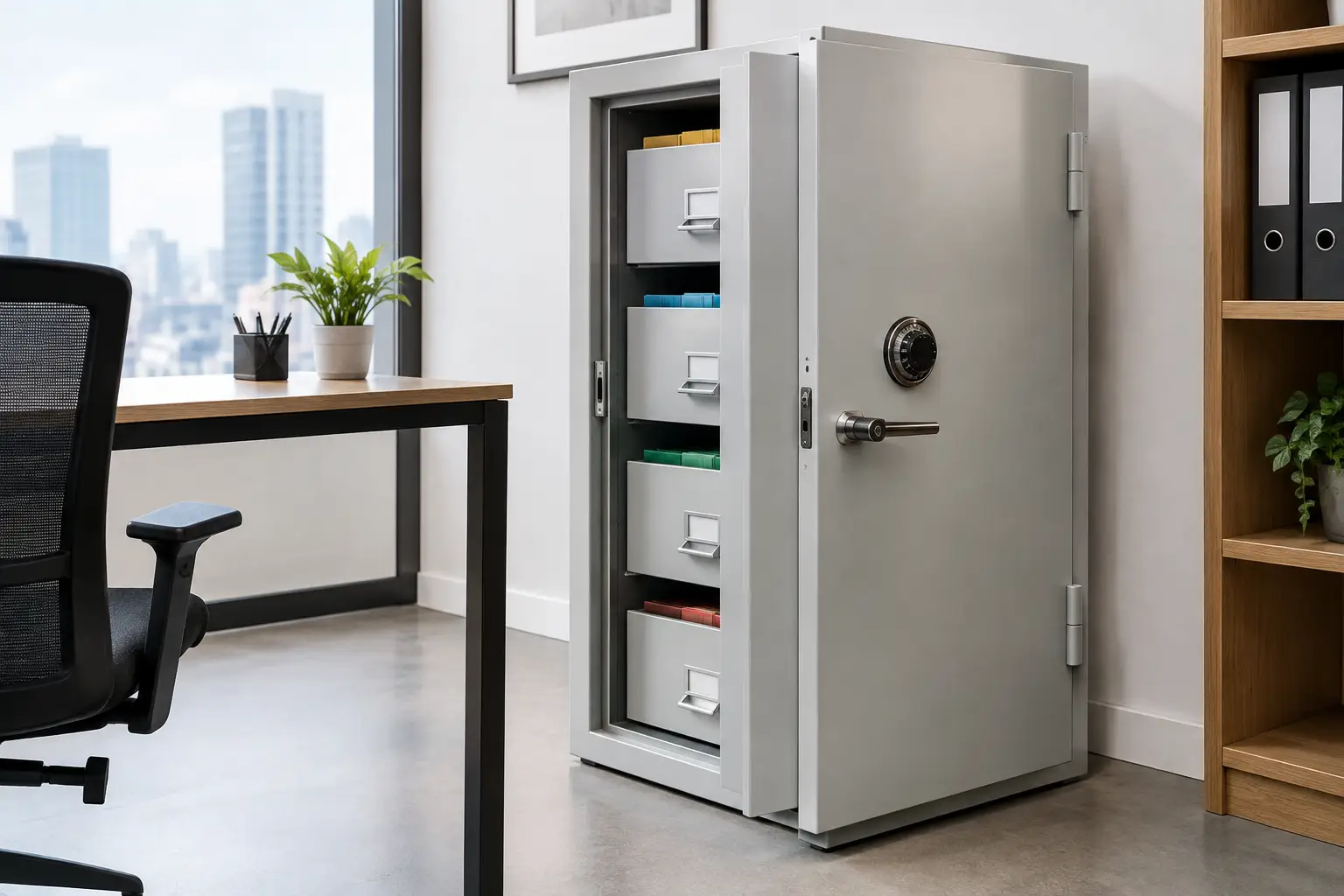
A lease agreement, employee record, client contract, or financial file can take years to build and only minutes to lose in a fire. Choosing a fireproof filing cabinet for an office gives critical paper records a dedicated layer of protection while keeping them accessible for daily work. For businesses that still depend on original documents, secure filing is not a storage detail. It is part of operational continuity.
A standard metal filing cabinet may help organize folders, but it is not designed to protect paper from extreme heat. A purpose-built fire-resistant filing cabinet uses insulated construction, protected drawer channels, and tested fire performance to keep internal temperatures below the point at which paper records are damaged. The right model depends on what you file, how frequently the cabinet is used, and the level of protection your workplace requires.
Why a Fireproof Filing Cabinet Office Setup Matters
Paper remains essential in many professional environments. Finance departments retain signed documents and accounting records. HR teams protect personnel files. Legal, healthcare, real estate, education, and government offices often handle original paperwork that cannot be easily replaced. Even businesses with digital systems may need to retain physical contracts, certificates, stamped documents, or records carrying original signatures.
A fire-resistant filing cabinet protects those documents without moving them into an off-site archive where daily access becomes inconvenient. It allows authorized employees to retrieve files quickly while giving management greater confidence that a localized fire will not immediately destroy vital records.
This protection also supports more orderly document control. When sensitive files have a clear, secure home, they are less likely to be left on desks, stored in open cupboards, or mixed with low-priority records. Good filing discipline supports confidentiality as well as recovery planning.
Understand Fire Ratings Before You Buy
The most useful specification on a fireproof filing cabinet is its independently tested fire rating. This rating indicates how long the cabinet is designed to protect its contents under specified fire-test conditions. Common durations include 30, 60, 90, and 120 minutes.
For routine office files with a lower replacement cost, a shorter rating may be appropriate. For legal originals, payroll records, accounting archives, insurance documents, or high-value customer files, longer protection is often the better commercial decision. The cabinet should be selected according to the consequences of document loss, not only the quantity of folders that need to fit inside.
Ask what type of material the cabinet is rated to protect. A paper-document fire cabinet is designed to maintain an internal environment suitable for paper. Digital media, including USB drives, backup disks, and some storage devices, may require a different level of heat and humidity protection. Do not assume that a cabinet rated for paper will adequately protect electronic media.
Fire resistance is also different from burglary resistance. Some filing cabinets include central locking and stronger access controls, but their primary design purpose is to protect documents from fire. If theft is a significant risk, assess the lock type, cabinet construction, location, access procedures, and whether separate secure storage is needed for highly sensitive documents.
Look Beyond the Advertised Fire Duration
A rating is meaningful when it is supported by a recognized test standard and clear product documentation. Review the stated protection time, the intended contents, and the conditions of the test. Procurement teams should also confirm the cabinet’s dimensions, weight, drawer arrangement, and installation requirements before ordering.
A larger rating is not automatically the right choice for every office. Higher-rated cabinets are usually heavier and may cost more. They can require careful delivery planning, particularly in upper-floor offices, facilities with restricted lifts, or rooms with load limitations. The best choice is the model that matches your records-risk assessment and practical site conditions.
Choose the Right Filing Format and Capacity
Before selecting a cabinet, identify the filing system already used by your team. Letter-size, legal-size, A4, and foolscap documents have different space requirements. A cabinet that does not suit the existing folder format creates wasted capacity and encourages staff to store records elsewhere.
Vertical filing cabinets suit offices that need to organize documents in a smaller footprint. Lateral filing cabinets provide wider drawers and can make high-volume files easier to browse. The choice often comes down to available floor space, filing volume, and the way employees retrieve records. A busy HR or finance department may value the faster visibility of lateral filing, while a small administration room may need the compact footprint of a vertical model.
Do not buy solely for today’s file count. Estimate reasonable growth over the next few years, but avoid paying for oversized capacity that consumes valuable office space. For larger archives, it may be more efficient to separate active files from retained files, using a fire-resistant cabinet for the records that need daily access and secure archival storage for documents that are rarely retrieved.
Drawer Design Affects Everyday Reliability
The cabinet should support safe, consistent use under a real office workload. Smooth drawer movement, stable construction, and an anti-tip mechanism are practical features, particularly when employees frequently access heavy folders. Anti-tip systems help prevent more than one drawer from opening at a time, reducing the risk of the cabinet becoming unstable.
Consider whether central locking is sufficient or whether separate drawer access is needed. Central locking can simplify end-of-day security, while individual drawer controls may suit departments where files are divided by role or confidentiality level. Key locks are straightforward and familiar, but key management must be controlled. Electronic locks can improve access administration in some environments, provided staff understand battery maintenance and emergency-opening procedures.
Plan Where the Cabinet Will Be Installed
A fire-rated filing cabinet only performs as intended when it is installed in a suitable location. Place it where authorized employees can access it without obstruction, but avoid routes that are exposed to unnecessary impact, water leaks, or unstable storage activity. Keep drawer clearance in mind. A cabinet may fit against a wall but still be difficult to use if an open drawer blocks a walkway or workstation.
Weight deserves early attention. Fire-resistant insulation and reinforced construction make these cabinets substantially heavier than conventional filing furniture. Confirm floor capacity where necessary, measure doors and corridors, and check elevator dimensions before delivery. This is especially relevant for commercial buildings, where access restrictions can affect delivery timing and placement.
The cabinet should not become the only point of failure in your records plan. Keep an up-to-date file index, define who has access, and establish retention rules for documents that no longer need to be stored. Where appropriate, scan critical records and maintain secure backups. Fire protection reduces loss exposure, while disciplined information management makes recovery faster.
Match Protection to Your Office Risk Profile
A small office holding a limited number of signed agreements has different requirements from a financial-services department managing years of physical client records. Likewise, a retail back office may need secure storage for invoices and licenses, while a legal practice may prioritize long-duration fire protection and controlled access.
Start with the documents that would cause the greatest disruption if lost. These may include original contracts, corporate registrations, tax records, employee documentation, property deeds, certificates, and compliance files. Then determine how often they are needed. The records requiring both frequent access and strong protection are the best candidates for a fire-resistant filing cabinet.
For confidential records, combine the cabinet with practical workplace controls. Limit key or code access to approved personnel, keep a check-out process for original files, and avoid leaving drawers open during busy periods. Security works best when the product and the procedure support each other.
Buy for Protection, Not Just Storage
A filing cabinet is easy to treat as basic office furniture until a fire, water incident, or records audit exposes its value. Selecting a tested fire-resistant model protects documents that support your business, your people, and your legal responsibilities. Compare fire duration, filing format, capacity, lock arrangement, cabinet weight, and delivery access before making a decision.
Safe World UAE supplies fire-resistant filing solutions for offices that need organized access and dependable document protection. Choose a cabinet that fits your active filing process, confirm the specifications that matter to your records, and order a solution built to protect what matters most.