

Choosing a Custom Luxury Jewelry Safe

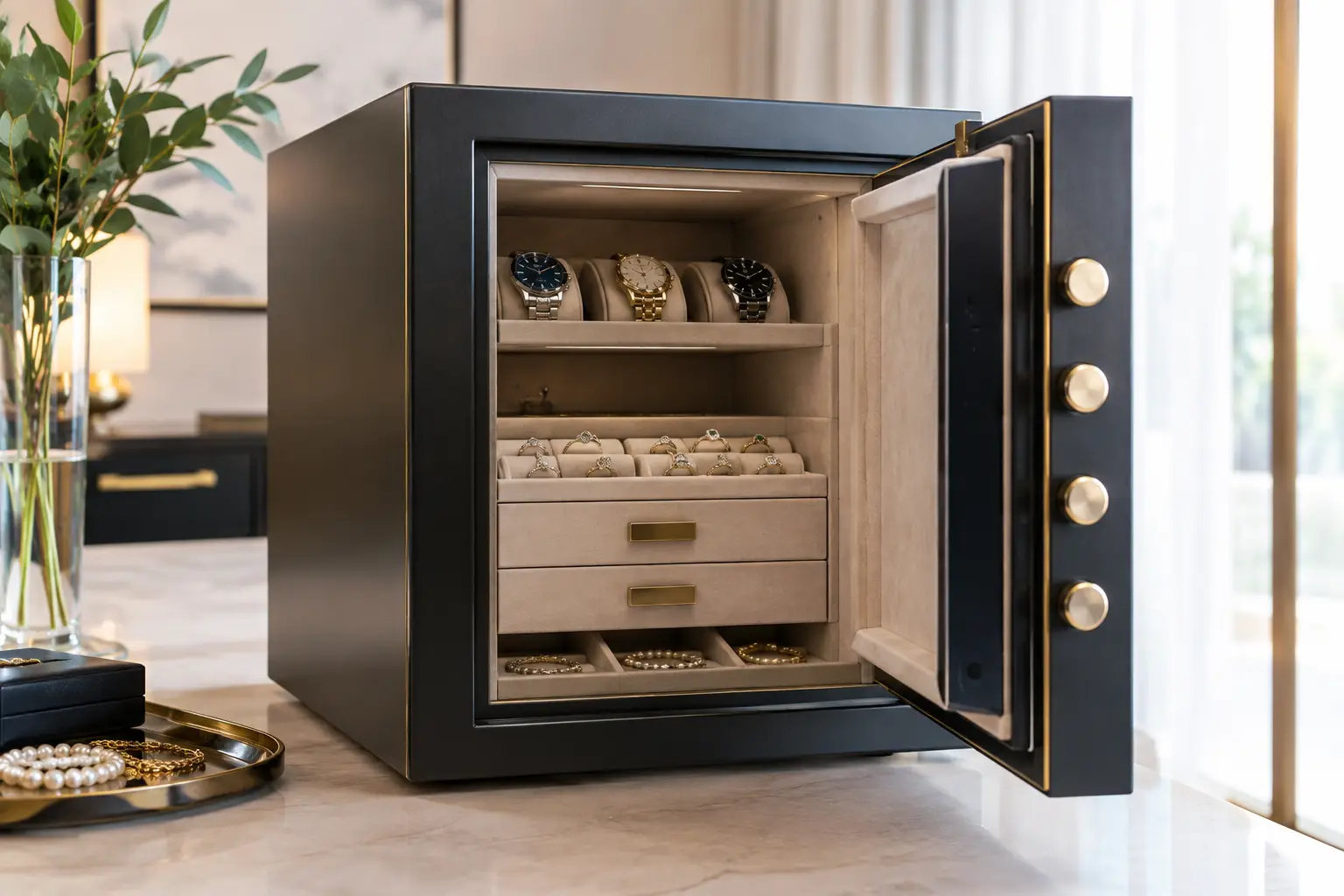
A diamond necklace, heirloom watch, or carefully built jewelry collection should not be stored in a standard cabinet, drawer, or basic home safe. A custom luxury jewelry safe provides a dedicated layer of theft protection, controlled access, and organized storage designed around the pieces you own. For homeowners, collectors, jewelers, and hospitality operators, the right configuration protects what matters most without turning everyday access into a difficult process.
Luxury is not only about the exterior finish. In a security product, it means the safe is built to match the value, quantity, dimensions, and handling requirements of your collection. The priority is simple: keep high-value items protected, visible, organized, and ready when needed.
What Makes a Custom Luxury Jewelry Safe Different?
A jewelry safe differs from a general-purpose safe because jewelry needs more than a secure steel enclosure. Rings, earrings, bracelets, watches, loose stones, and larger presentation cases all require separate storage formats. When these items are placed together in a plain compartment, they can become tangled, scratched, misplaced, or difficult to inventory.
A custom luxury jewelry safe is specified around those practical needs. Its interior can include lined drawers, divided trays, ring rolls, watch winders, necklace hooks, adjustable shelving, and compartments sized for individual jewelry boxes. The layout helps prevent damage while allowing the owner or authorized staff member to find a specific item quickly.
The exterior can also be tailored to the installation setting. A premium safe may be finished to suit a dressing room, private office, boutique, executive residence, or hotel suite. However, appearance should support security, not replace it. The safe’s burglary resistance, locking system, anchoring method, and installation position remain the most important decisions.
Start With the Collection You Need to Protect
The best safe size is rarely determined by what fits today. Jewelry collections often grow through purchases, gifts, inheritance, or business inventory. Choosing a safe with only enough space for current items can create an expensive storage problem later.
Begin by considering the type of valuables that will be stored. Fine jewelry may need shallow, compartmentalized drawers. Watches need cushions or winding modules. Passport documents, certificates of authenticity, and valuation records may require a separate shelf or document tray. A jeweler may need capacity for sealed parcels, display stock, repair items, and daily high-value inventory.
Also consider how often items move in and out. A home collector may open the safe daily before work or an event. A retail operation may require access during opening and closing procedures, with clear accountability for managers or authorized sales staff. The right internal layout and lock system will differ for each use case.
It is usually wiser to allow for additional drawers or adjustable capacity than to fill every compartment immediately. A safe should protect a collection as it develops, not force the owner to compromise on organization after one year.
Interior Features That Protect Jewelry Properly
Soft-lined storage is a practical requirement for fine jewelry. Velvet, suede-style, or other protective lining helps reduce surface contact that can mark polished metals and delicate stones. Separate compartments also make it easier to identify whether an item is missing before it becomes a serious issue.
For watches, individual cushions or dedicated watch drawers prevent pieces from knocking together. Watch winders can be useful for automatic watches, but they add electrical and maintenance considerations. They are most suitable when the safe is installed in a location with reliable power access and the collection requires regular winding.
Necklace hooks or vertical compartments are valuable for long chains and pendants. Without them, necklaces are likely to knot, slowing access and increasing the chance of damage. Removable trays are another practical feature, particularly for owners who want to select several items at once without leaving the safe open for longer than necessary.
Choose Security Based on Real Risk
A luxury finish does not automatically mean high burglary protection. Before selecting a model, assess the risk level at the property and the value of the contents. A safe for a modest personal collection in a protected residence will have different requirements than a safe holding high-value retail inventory.
The body and door construction should offer meaningful resistance to forced entry. Look at steel thickness, composite barrier materials, boltwork, relocking features, hinge protection, and the overall safe classification where applicable. The safe should also be professionally anchored to a suitable structural surface. Even a heavy safe can be removed if it is not properly secured.
Fire protection may also be necessary. Jewelry itself may survive heat better than paper records, but boxes, certificates, insurance documents, and watch components can be damaged in a fire. If these items will be stored together, select a safe with a fire-resistance rating suited to the records and valuables inside.
For commercial users, security planning should extend beyond the safe specification. Staff access procedures, CCTV coverage, alarm integration, key control, and opening schedules all affect the level of protection. A high-quality safe is strongest when it operates as part of a controlled security process.
Select the Right Locking Method
The lock determines who can access the safe and how access is managed. A traditional key lock is straightforward, but keys can be lost, copied, or left unsecured. Combination locks avoid key control issues, although they require disciplined code management.
Electronic keypad locks are a popular choice for personal and commercial jewelry safes because they offer quick access and code changes. Some models can support multiple users, time delay functions, audit trails, or dual-control access. These capabilities are particularly useful for jewelry retailers, office managers, and facilities where more than one authorized person handles valuable stock.
Biometric access can be convenient for a private residence, but it should not be selected purely for speed. Fingerprint performance can vary based on the scanner quality, environmental conditions, and user setup. A dependable override method and properly managed emergency access are essential.
For high-value holdings, dual locks or dual authorization may be appropriate. This requires two credentials, such as a key and code or two separate codes, before the safe can be opened. It adds a step to the routine, but it can reduce internal access risk in a business environment.
Plan the Installation Before Ordering
A custom safe should be designed with its final location in mind. Measure not only the floor area but also the delivery route, doorway widths, elevators, stairs, and turning points. Larger burglary-resistant safes can be extremely heavy, and installation cannot be treated as an afterthought.
Placement affects both security and convenience. A safe installed in a private dressing room may offer discreet personal access, while a safe in a back office may better suit a retail operation. Avoid obvious locations where possible, but do not place the safe somewhere that makes regular use difficult. An inconvenient safe may lead to valuables being left outside it.
Consider the supporting structure as well. Floor loading, wall conditions, anchoring points, electrical access for watch winders or electronic locks, and humidity levels should be reviewed before installation. In Abu Dhabi and Dubai, a supplier familiar with local property layouts and delivery requirements can help prevent delays and unsuitable placement.
Customization Should Improve Daily Control
The most effective customization is functional. It gives each item a proper place, reduces handling time, and supports reliable inventory checks. A clearly organized interior also makes it easier to photograph, document, and insure a collection.
For a jeweler, customization may mean lockable internal drawers for different stock categories, separate areas for customer repairs, and capacity for documentation. For a homeowner, it may mean watch storage, ring trays, space for family documents, and discreet access from a private room. For a hotel or luxury residence, it may mean an elegant finish that complements the interior while maintaining professional-grade security.
Avoid adding features simply because they look impressive. Every drawer, winder, shelf, and compartment should earn its place by making storage safer or more efficient. A clean interior with room to grow is often more useful than an overcrowded design.
When to Upgrade From a Standard Safe
A standard safe may be sufficient for a small number of items, but a custom jewelry safe becomes a sensible investment when the collection has significant financial or sentimental value, requires careful organization, or is accessed regularly. It is also appropriate when a business needs better accountability for valuable stock.
If jewelry is currently spread across drawers, boxes, and separate storage areas, consolidation can improve security and reduce the risk of accidental loss. If the current safe is full, difficult to organize, or lacks the burglary and fire protection required by your insurer, it is time to review the specification.
Safe World UAE can help buyers select a custom luxury jewelry safe that matches the collection, property, access requirements, and security level. Order now for a tailored storage solution that protects valuable pieces without sacrificing organized daily access.
The right safe should make careful ownership easier. When every valuable has a protected place and every access decision is controlled, you can enjoy your collection with greater confidence.