

Banknote Counting Machine Buying Guide for Businesses

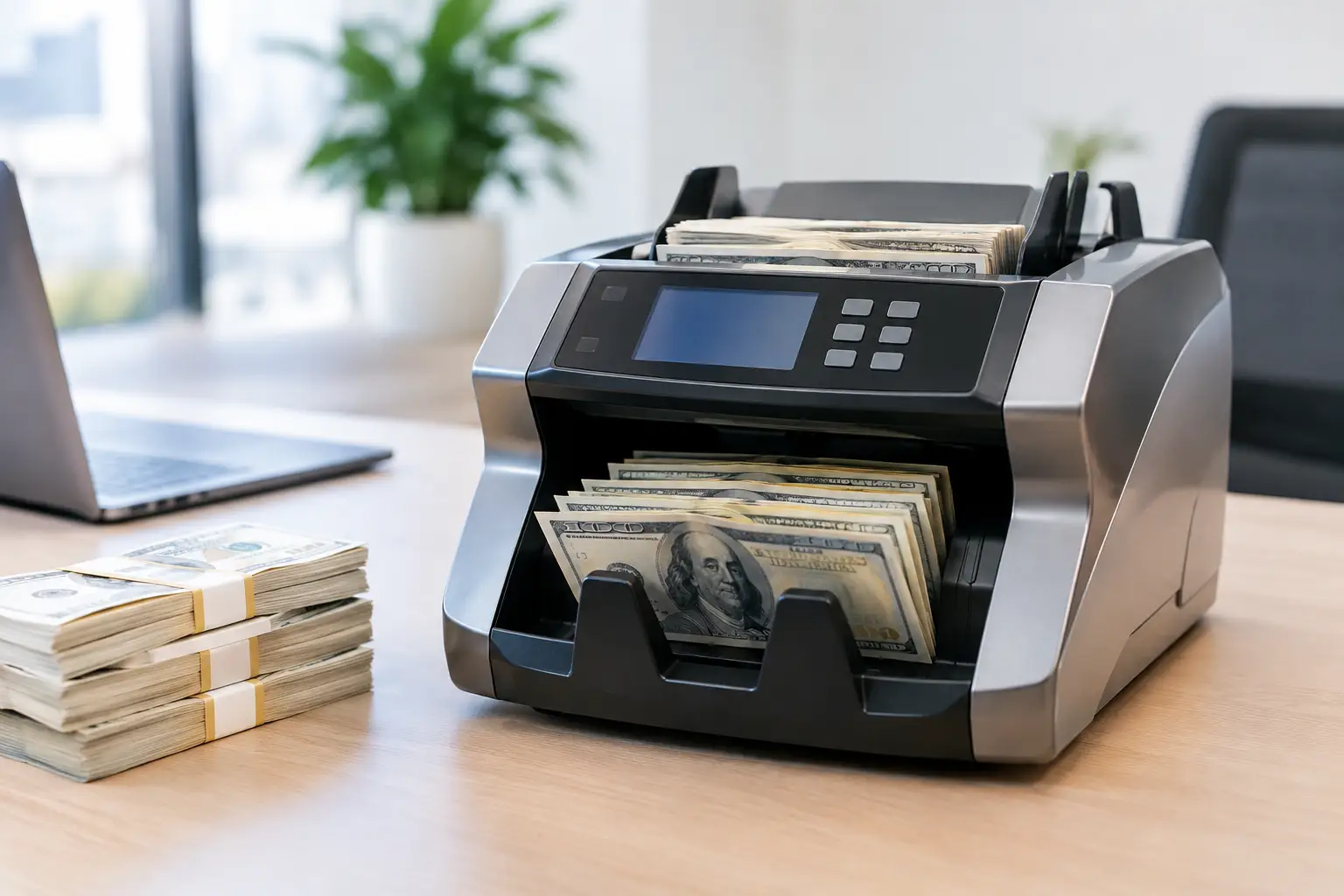
A cash drawer that is counted by hand at the end of every shift creates more than a delay. It creates opportunities for miscounts, disputed totals, and staff time lost to recounting. A banknote counting machine gives retailers, offices, hospitality teams, and cash-handling departments a faster, more controlled way to process notes before they are deposited or secured.
The right unit is not simply the fastest model available. It must match the currencies you accept, the volume you process, and the level of verification your operation requires. A small shop may only need reliable piece counting with basic counterfeit checks. A busy supermarket, exchange counter, or finance department may need mixed-value counting, batch reporting, and strong authentication sensors.
What a Banknote Counting Machine Does
At its most basic, a banknote counter pulls notes through a hopper and records the number of bills processed. This makes routine cash reconciliation faster than manual counting, especially when staff handle large quantities of one denomination.
However, capabilities vary significantly. Entry-level counters generally count the number of notes and can identify common problems such as double notes, chained notes, or torn notes. More advanced currency counters identify denominations, calculate the total value of mixed notes, sort notes by denomination or facing direction, and flag suspect bills for review.
Counterfeit detection is also a major buying consideration. Depending on the model, a machine may use ultraviolet, magnetic, infrared, image, and size detection. These systems add a practical checkpoint to cash handling, but they do not eliminate the need for trained staff to inspect a rejected note and follow company policy.
Choose the Right Counting Method for Your Cash Flow
The first question is simple: are your notes normally separated by denomination before counting? If they are, a standard piece-counting machine may be the cost-effective choice. Staff can count a stack of 100 notes, set a batch quantity, and quickly prepare deposit bundles.
If your cash drawers contain mixed denominations, a mixed-value counter is the better operational fit. It recognizes individual note values and provides a total amount without requiring staff to sort every bill first. That saves time during closing, reduces manual entry, and helps managers reconcile sales reports more quickly.
This distinction matters most in businesses with frequent cash transactions. Retail stores, restaurants, hotel front desks, pharmacies, entertainment venues, and service counters often receive mixed notes throughout the day. For these environments, buying a basic counter solely because it has a lower initial price can move the sorting work back to the employee.
A dedicated cash office may also benefit from a two-pocket or fitness-sorting machine. These models can separate accepted notes from rejected notes during a single run. They cost more and require more counter space, but they help high-volume teams maintain a cleaner, more consistent reconciliation process.
Key Features That Affect Daily Accuracy
Speed is useful, but it should not be the only specification considered. A counter rated for a high number of notes per minute can shorten closing time, yet note condition and detection requirements affect real-world throughput. Older, folded, damp, or heavily circulated bills may need slower handling and more frequent cleaning.
Look closely at hopper capacity and stacker capacity. A larger hopper lets staff process more notes before reloading, which is helpful for retail back offices and financial-service environments. For occasional use, an oversized commercial machine may be unnecessary. It depends on whether your bottleneck is the number of notes, the need to verify denominations, or the time required for manual reconciliation.
Useful features often include:
- Batch counting for preparing fixed deposit amounts or cashier floats
- Add mode for accumulating several stacks into one total
- Automatic start, stop, and error alerts for smoother operation
- Multi-currency recognition when your business accepts more than one currency
- Print, USB, or reporting options where transaction records are required
For UAE-based operations, confirm that the machine supports the currencies your team handles most often and that its note-recognition software can be updated when needed. Currency designs and security features can change, and a machine should remain suitable for the notes in circulation.
Counterfeit Detection Should Support Your Process
A counterfeit detector built into a banknote counter adds protection at the point where cash is received or reconciled. It is particularly useful for retailers, jewelers, hospitality operators, and offices that accept payments from a wide range of customers.
Still, detection technology must be viewed realistically. A machine can reject a note because it is damaged, improperly fed, or suspected of being counterfeit. A rejection is an alert, not a final conclusion. Staff should know how to isolate the note, avoid returning it to circulation, and escalate it to the responsible manager for inspection.
For higher-risk environments, use the counter as one part of a controlled cash process. Cashier checks, secure till procedures, documented handovers, deposit safes, and restricted access to the cash room all work together. A fast machine helps, but it cannot compensate for weak handling procedures.
Plan for the Counter’s Working Environment
Banknote counters perform best when placed on a stable, clean surface away from dust, direct sunlight, and excessive humidity. The machine should be accessible to the person responsible for cash reconciliation without being exposed to customer traffic or unauthorized handling.
Think about the full route cash takes after counting. Once a drawer is reconciled, where do the notes go? In a retail setting, a deposit safe can provide a secure handoff point until collection or bank deposit. In an office, counted cash may need to be stored in a rated safe with access controlled by key, digital lock, or dual custody procedures.
This is where procurement from a security-focused supplier can simplify planning. The counter, counterfeit detection equipment, deposit safe, and secure storage approach should support one consistent workflow rather than being selected as unrelated purchases.
Maintenance Protects Performance
A counting machine is a working office device, not a fit-and-forget purchase. Dust, paper fibers, and debris from circulated bills can affect sensors and rollers over time. Regular cleaning helps reduce jams, false rejects, and inconsistent counts.
Follow the manufacturer’s cleaning schedule and use approved materials. Staff should remove staples, rubber bands, clips, and foreign objects before loading notes. They should also straighten badly folded bills when possible and avoid forcing overloaded stacks into the hopper.
If the machine begins producing repeated errors, do not assume the notes are always at fault. Check for dirty sensors, worn parts, incorrect settings, or a need for service. Keeping a simple record of errors and maintenance dates can help managers identify recurring issues before they disrupt daily closing.
Buying for Small Teams and High-Volume Operations
For a small office, salon, boutique, or home-based business, a compact note counter with piece counting, batching, and standard counterfeit detection may be enough. The priority is dependable daily use, simple controls, and a size that fits the available workspace.
For a larger retailer, hotel, jewelry store, warehouse cash office, or finance department, the decision should focus on workflow capacity. Mixed denomination value counting, multi-currency support, detailed reports, and advanced detection can reduce the time spent sorting, recounting, and investigating discrepancies.
Do not pay for advanced sorting functions that will never be used. At the same time, do not choose a basic counter if your staff must still manually sort and calculate every mixed cash drawer. The right specification is the one that removes the most meaningful source of delay or error in your operation.
Put Cash Control at the Center of the Purchase
Before ordering, estimate your daily note volume, identify the currencies and denominations you receive, and decide whether you need piece counts or total value counts. Consider who will operate the machine, where it will sit, and how counted cash will be secured immediately afterward.
Safe World UAE can help businesses select cash-handling equipment that fits alongside safes, deposit solutions, and organized back-office storage. Choose equipment that gives your team a clear count, a reliable verification step, and a secure next place for every note. Protect the cash you earn by making reconciliation faster, more accurate, and easier to control.