

Best Safes for Apartment Renters to Buy

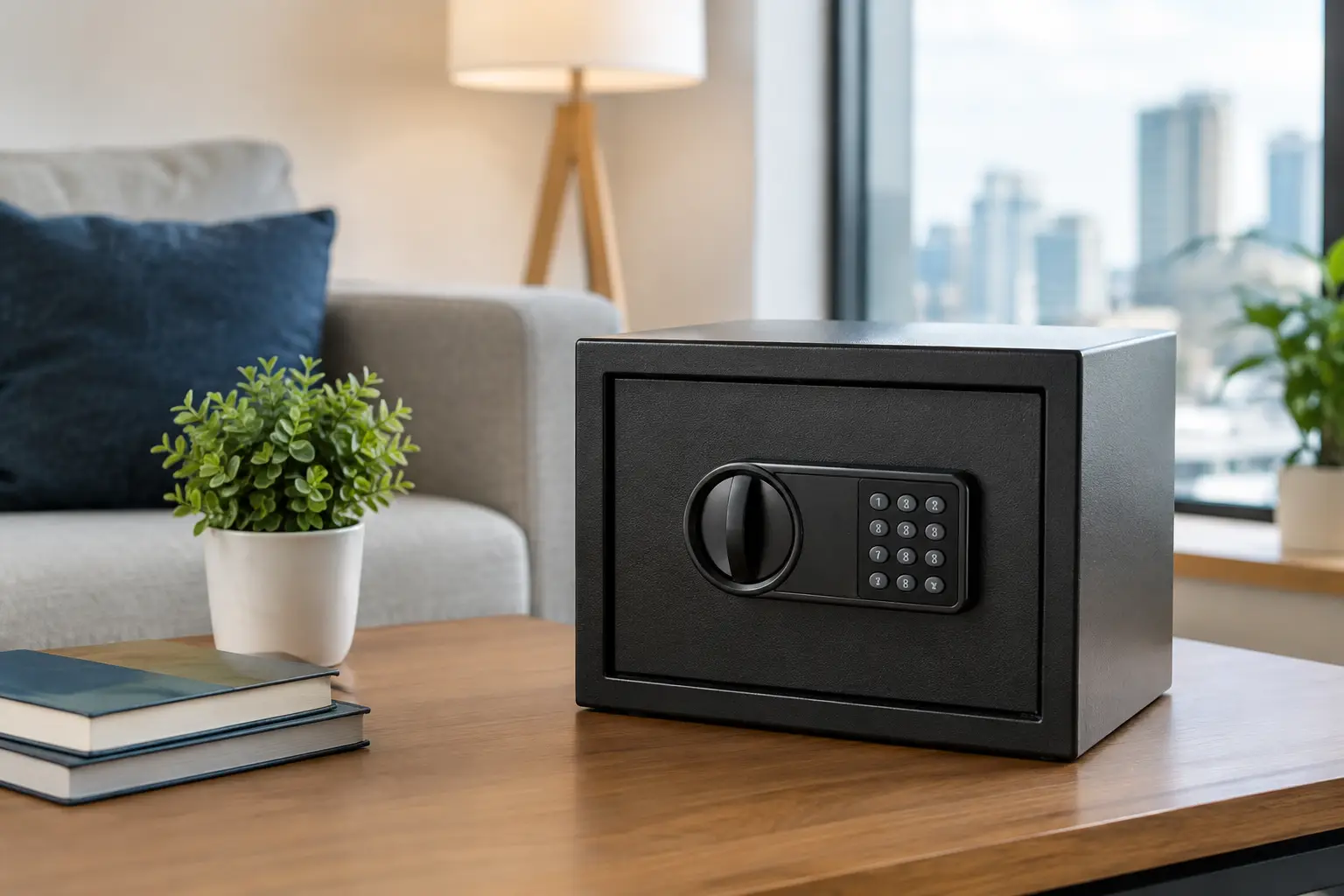
A safe that is too heavy to move, too obvious to hide, or impossible to install without drilling into concrete is not the right answer for a rental. The best safes for apartment renters balance real protection with practical limits: lease rules, limited floor space, shared walls, and the possibility of moving again.
For passports, jewelry, legal records, backup drives, cash, and small collectibles, the goal is not simply to buy the largest safe available. It is to choose a secure unit that fits your valuables, your apartment layout, and your landlord’s requirements while giving you meaningful protection from theft and fire.
Best Safes for Apartment Renters: Start With the Right Type
Most renters should begin with a compact home safe, fire-resistant safe, or small burglary-resistant safe. Each solves a different problem, and the right choice depends on what you need to protect.
A compact home safe is a sensible option for passports, documents, watches, tablets, and small jewelry collections. It is easier to place in a closet, cabinet, or bedroom than a full-size safe, and it is usually manageable when moving. Look for a steel body, solid locking bolts, concealed hinges, and pre-drilled mounting holes.
A fire-resistant safe is the stronger choice when paper documents are your priority. Birth certificates, property records, insurance policies, wills, and financial files can be difficult or impossible to replace after a fire. Check the stated fire rating carefully. A rating tells you how long the safe is designed to protect its contents under specific heat conditions. It does not automatically mean the safe is equally strong against forced entry.
A burglary-resistant safe is better suited to higher-value jewelry, cash, collectibles, and precious metals. These models generally use heavier steel, more substantial door construction, and stronger locking systems. They cost more and weigh more, but that added weight is part of the security value. A thief can carry away a lightweight safe and open it elsewhere.
For many apartment renters, a small fire-resistant safe with reliable burglary features offers the most balanced protection. If your valuables are especially high value, prioritize burglary resistance first and consider document protection separately.
Choose a Safe You Can Secure Without Damaging the Apartment
A safe that is not anchored can still deter casual theft, but it remains vulnerable to removal. This is the central trade-off for renters. Permanent floor anchoring offers excellent protection, yet drilling into concrete, tile, or structural flooring may violate a lease and create costly repair work.
Before buying, read your rental agreement and ask your property manager about approved mounting. Some landlords permit small wall anchors inside a closet or storage room, while others do not allow any drilling. Get approval in writing if possible.
Wall mounting can work for smaller safes only when the unit is secured directly into wall studs with appropriate hardware. Drywall alone is not a secure mounting surface. A heavy safe attached only to drywall can tear free under force and cause damage or injury.
If drilling is not allowed, choose a heavier safe and place it in a concealed, difficult-to-access location. A low cabinet, enclosed closet, or built-in storage area is usually more effective than placing it in plain sight. Concealment is not a substitute for a strong safe, but it reduces the chance that an intruder finds it quickly.
Avoid putting a safe where neighbors, maintenance staff, or visitors can easily see it. Also avoid bathrooms, balconies, and other areas with moisture exposure. Humidity can affect documents, jewelry, electronic locks, and the safe’s finish over time.
Measure More Than the Outside Dimensions
Apartment buyers often focus on whether a safe fits under a desk or inside a closet. That matters, but exterior size is only part of the decision. Interior capacity can be much smaller because of fire insulation, door bolts, and wall thickness.
Measure the place where the safe will sit, including door swing, baseboards, shelves, and nearby furniture. Then measure the largest item you intend to store. A folder holding legal documents may need more internal height than expected, while a jewelry box may require shelf depth rather than height.
Weight also deserves attention. Confirm that you can safely bring the safe through your building entrance, hallway, elevator, and apartment doorway. A 200-pound safe provides better removal resistance than a 40-pound model, but it may require professional delivery and placement. Never place a heavy safe on unstable shelving or furniture.
For upper-floor apartments, ask the building manager about delivery rules and elevator weight limits. Planning this before purchase prevents a secure investment from becoming a difficult installation problem.
Select the Lock Based on Daily Use
The lock should match how often you need access and who needs authorized entry. There is no single best lock for every renter.
Electronic keypad locks are convenient for frequent access. You can open them quickly without carrying a key, and many allow you to set or change a personal code. Choose a model with a low-battery warning and an emergency override method. Keep override keys in a separate secure location, never inside the safe or on a visible key hook.
Mechanical combination locks do not depend on batteries or electronics. They are dependable for long-term storage and may suit renters who access their safe only occasionally. The trade-off is slower opening and the need to keep the combination private and accurately recorded.
Key locks are straightforward, but the key itself becomes a security concern. If a key is lost, copied, or found by someone else, the safe’s protection is reduced. A key lock can be suitable for low-risk storage, but it is rarely the first choice for cash, jewelry, or sensitive documents.
Biometric locks offer fast entry, but fingerprint readers vary in quality and may be less dependable if fingers are wet, dirty, or injured. If you choose biometric access, confirm that the safe also has a keypad or key override.
Do Not Confuse Fire Protection With Theft Protection
A fire-resistant safe and a burglary-resistant safe are not interchangeable categories. Fire protection focuses on insulation and internal temperature control. Burglary protection focuses on resisting prying, drilling, cutting, and lock attacks.
A lightweight fire safe may protect documents during a short fire but offer limited resistance against a determined intruder. Conversely, a heavy burglary safe may protect jewelry well but may not provide the level of document fire protection you need. Read the specifications for both capabilities instead of relying on a broad label such as “fireproof” or “security safe.”
For digital files, consider how heat and humidity affect storage media. USB drives, external hard drives, and memory cards can be more heat-sensitive than paper. If you store digital backups, use a safe specifically designed or rated for media protection where possible.
Protect the Safe’s Contents, Not Just the Safe
Organized storage improves security and makes emergencies easier to manage. Place documents in labeled fire-resistant folders or sealed pouches, keep jewelry in separated compartments, and avoid packing the safe so tightly that you cannot locate essential items quickly.
Maintain a private inventory of high-value contents, including photographs, descriptions, serial numbers, and receipts. Store that record separately from the safe, preferably in a protected digital location. This helps with insurance claims if theft, fire, or water damage occurs.
Be realistic about cash. A small emergency amount may be reasonable, but storing large sums at home increases your financial risk. Check homeowners or renters insurance limits for cash, jewelry, collectibles, and electronics. A safe can reduce loss exposure, but it does not replace appropriate insurance coverage.
A Practical Buying Standard for Renters
Before ordering, confirm that the safe has the security features you actually need: suitable fire resistance, solid steel construction, live locking bolts, a dependable lock, internal dimensions that fit your valuables, and a weight you can install safely. Then confirm that its mounting plan complies with your lease.
The best choice is often not the largest or most expensive model. It is the safe that you can place discreetly, use correctly, and keep secure throughout your tenancy. Choose protection that works in the apartment you have now, while remaining practical to move when your next address changes. Protect what matters most with a safe selected for real use, not just a product label.