

How to Protect Home Passports From Fire and Theft

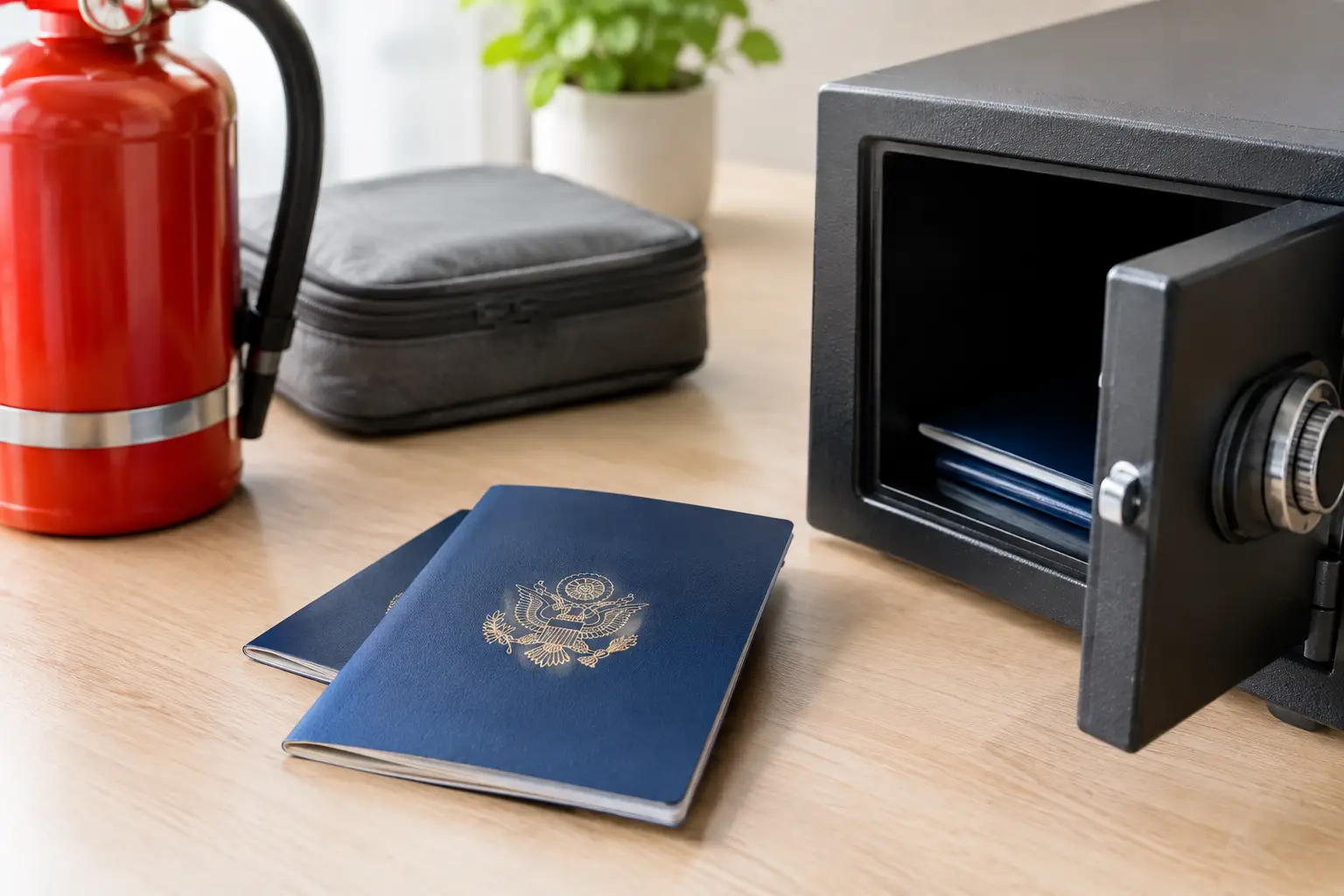
A passport is usually needed on the day you cannot afford to search for it: before an early flight, during a family emergency, or when a visa appointment is already booked. To protect home passports, treat them as essential identity documents, not as papers that can sit in a desk drawer or bedside cabinet.
A passport can be expensive and time-consuming to replace. More importantly, a lost or stolen passport can expose personal information and interrupt travel plans. The right home storage setup protects against the most common risks: fire, theft, water damage, misplacement, and unauthorized access.
How to Protect Home Passports at Home
The safest place for a passport is a quality safe installed inside the home. A locked drawer, filing cabinet, closet shelf, or suitcase may keep documents out of sight, but these locations offer limited protection against a determined thief and almost none against fire or flooding.
Choose a safe based on the risks you need to manage. For most households, a compact fire-resistant home safe with a reliable lock is the practical starting point. It should hold every family member’s passport along with birth certificates, property documents, insurance records, backup storage media, and a small amount of emergency cash.
Do not select a safe based on external dimensions alone. Passports are small, but the other documents you may need during a disruption are not. Check the internal capacity and allow room for a document pouch, folder, or fire-rated filing envelope. Overfilling a safe makes it harder to find documents quickly and can lead to damaged pages or bent passport covers.
Fire resistance is a document requirement
A burglary-resistant safe helps prevent theft. A fire-resistant safe is designed to maintain a safer internal temperature for a specified period during a fire. For passports and printed records, fire protection should be a primary consideration, especially if the safe will store more than jewelry or cash.
Check the stated fire rating and the type of contents it is intended to protect. Paper documents tolerate more heat than digital media, but both can be damaged by extreme temperatures, smoke, and moisture. A fire-resistant safe does not make documents invulnerable, yet it can give them a far better chance of surviving an incident than a standard metal box.
Water is the trade-off many buyers overlook. Firefighting can introduce substantial water into a home. If the safe is not specifically rated for water resistance, place passports in a sealed document pouch or waterproof inner container before storing them inside. This adds a useful second layer without replacing the need for a properly rated safe.
Theft protection depends on installation
A safe that can be carried away is not providing its full level of security. Small portable safes may be convenient for temporary use, but a burglar can remove them and attempt to open them elsewhere. Whenever the safe design and installation surface allow it, anchor the unit to a solid floor or wall according to the manufacturer’s instructions.
Placement also matters. Avoid obvious locations such as an exposed bedroom closet or a room where visitors routinely come and go. A discreet, dry location with a stable surface is usually better. However, do not hide the safe so completely that family members cannot access it quickly during a genuine emergency.
A heavier burglary-resistant safe generally offers stronger physical protection, but it requires proper delivery, placement, and anchoring. For renters, drilling into floors or walls may not be permitted. In that case, choose the highest practical security level for the property and discuss installation options before buying.
Select Access Without Creating a New Risk
Your safe lock should suit the people who need access and the way your household operates. There is no single best lock for every home.
A key lock is simple, but the key itself becomes a security concern. Storing the key near the safe defeats the purpose, while carrying it at all times may be inconvenient. Electronic keypad locks allow fast access and eliminate the need for a physical key, but users should maintain the battery and keep the emergency override method secure. Mechanical combination locks avoid battery dependence, though they can take longer to open and may be less convenient for family members who rarely use them.
For households with several authorized adults, establish one clear rule: only designated people know the code or have access to the key. Do not write the code on a note inside a desk, save it as an obvious phone contact, or share it casually with domestic staff, guests, contractors, or children.
If your safe supports user codes, change the factory code immediately and update access when household circumstances change. A separation, a change in staff, a lost key, or a person moving out are all valid reasons to reset access. Security is not only about buying the right safe. It is also about maintaining control after installation.
Organize Passports for Fast Retrieval
Protection should not make documents difficult to locate. Keep passports together in a labeled, moisture-resistant document pouch inside the safe. Store each person’s passport in a separate sleeve if the household has several travelers. This prevents covers and pages from rubbing together and makes it easier to confirm that every passport is present.
Keep photocopies or secure digital records of the identification page separately from the original passport. A copy can help provide passport details if the original is lost, but it should not be treated as a replacement for the document. Digital copies must be protected with a strong device passcode and secure account access. Avoid leaving passport scans in an unprotected photo gallery or sending them through unsecured messaging channels.
It is also wise to record passport expiration dates. Many destinations require passports to remain valid for several months beyond the travel date. A simple calendar reminder gives you time to renew before travel becomes urgent.
Avoid Common Passport Storage Mistakes
The most common error is keeping passports in a location chosen only for convenience. A kitchen drawer is easy to reach, but it is vulnerable to water, fire, and everyday handling. A filing cabinet may organize paperwork well, but unless it is fire-rated and secured, it is not a reliable security solution.
Another mistake is storing passports in a vehicle. Cars experience heat, theft risk, break-ins, and accidental loss. A passport should travel with its owner when needed and return to secure home storage as soon as the trip is complete.
Be careful with informal hiding places too. A book, clothing pocket, old bag, or box in the garage may feel private, but these areas are easy to forget and difficult to protect from moisture, pests, or household cleaning. The best system is one that is secure and repeatable: every passport goes back to the same protected place after use.
Build a Simple Recovery Plan
Even the best safe cannot prevent every loss. A practical recovery plan reduces confusion if a passport is missing, damaged, or inaccessible after an emergency.
Keep a separate record of each passport holder’s full name, passport number, issue date, expiration date, and issuing authority. Store that record securely, apart from the originals. Know which family member is responsible for checking the safe after a break-in, water leak, or fire. If theft is suspected, report it promptly and follow the replacement process required by the issuing authority.
For frequent travelers, review the safe contents before and after every trip. Confirm that expired passports are separated from valid ones, return current passports immediately after travel, and check that the safe door is fully locked. These small habits prevent the avoidable mistakes that create last-minute travel problems.
A properly selected and installed safe turns passport storage from a daily worry into a controlled household process. Safe World UAE can help homeowners choose fire-resistant and burglary-resistant safe options that fit their documents, access needs, and available installation space. Protect the originals, keep access limited, and make secure storage part of your family’s routine before the next trip is on the calendar.