

Choosing a Mixed Denomination Currency Counter

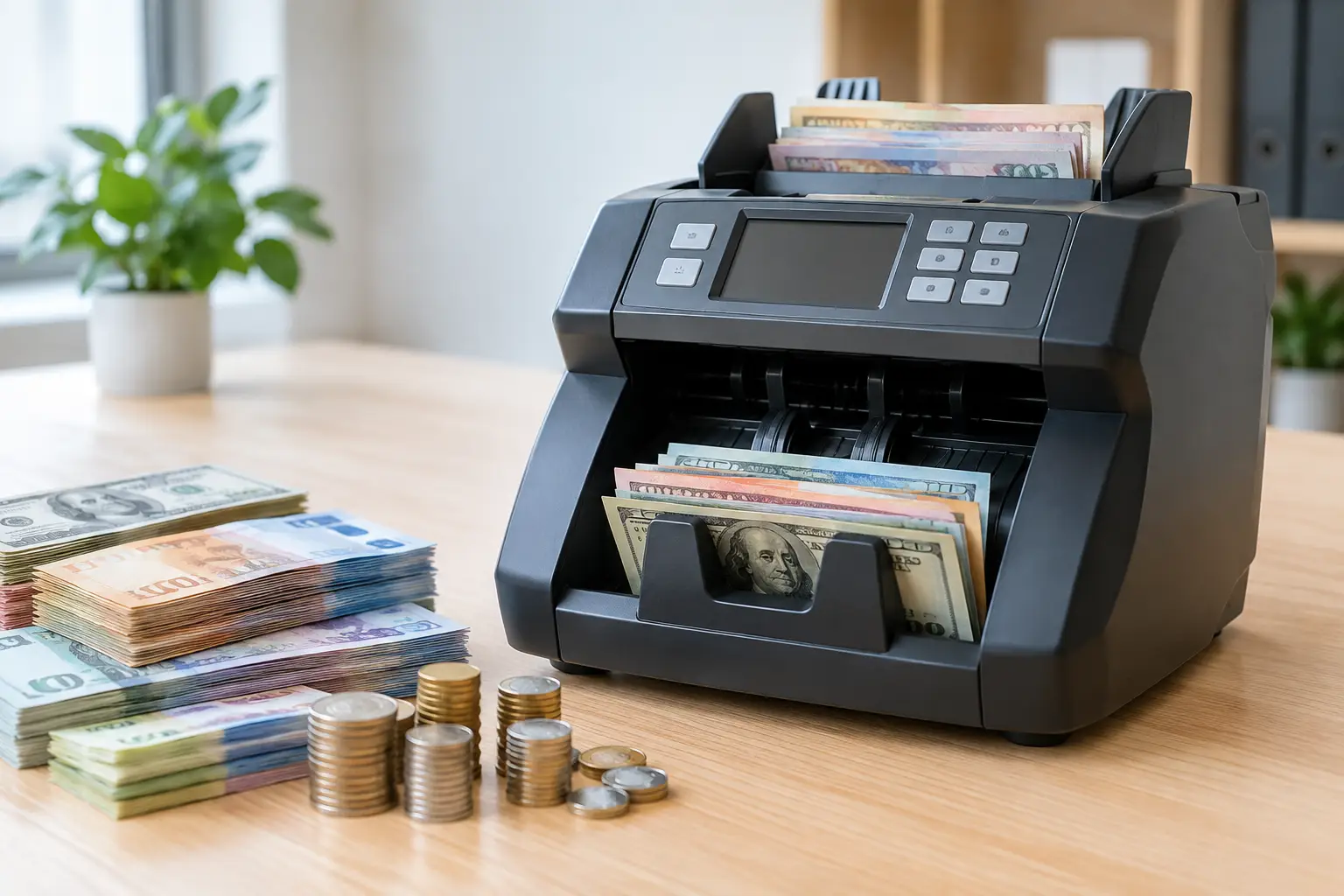
A mixed denomination currency counter changes the end-of-shift cash process from a manual counting task into a controlled verification step. Instead of sorting AED notes by value before counting, a cashier, finance assistant, or retail manager can feed a mixed stack into one machine and receive the total value, note count, and denomination breakdown in seconds.
For businesses that handle cash every day, this is not simply about speed. It is about reducing reconciliation errors, identifying suspect notes early, and creating a clearer record before cash moves to a safe, deposit point, or bank collection. The right machine supports faster operations while helping the team protect what matters most.
What a Mixed Denomination Currency Counter Does
A standard banknote counter primarily tells you how many notes are in a stack. If the stack contains different values, the operator must sort the notes first or calculate the total separately. That process takes time and creates opportunities for counting mistakes.
A mixed denomination currency counter is designed to recognize different note values within the same stack. It reads each banknote, adds the values together, and can usually provide a report showing the number of notes counted by denomination. For a stack containing AED 5, AED 10, AED 20, AED 50, AED 100, AED 200, AED 500, and AED 1,000 notes, the machine can calculate the cash value without manual sorting.
Many professional models also include counterfeit detection systems. Depending on the machine, these may use ultraviolet, magnetic, infrared, image, size, and thickness detection. When a note is rejected, the machine pauses or sends it to a reject pocket on two-pocket models, allowing staff to review the issue without restarting the count.
This makes mixed-value counting particularly useful where cash is received from many customers, tills, or branches throughout the day.
Where Faster Cash Counting Has the Greatest Value
Retail stores benefit when cashier drawers need to be reconciled quickly at closing time. A mixed-value counter helps managers confirm declared cash totals, investigate shortages sooner, and reduce the queue around one back-office counting table.
Restaurants, hotels, pharmacies, service counters, and convenience businesses often receive a wide mix of note values. Sorting every note before counting can extend closing procedures and keep staff on site longer than necessary. A counter that recognizes denominations gives supervisors a faster route from till collection to verified deposit.
Financial-service environments, exchange operations, and cash-intensive offices may require more advanced capabilities, including multi-currency recognition, detailed count reports, and reject-note handling. These users should focus on machine capacity, software support, and the specific currencies they process rather than buying solely on the basis of note-counting speed.
For jewelry retailers, the benefit extends beyond convenience. High-value cash transactions require a dependable chain of custody. Counting funds accurately, recording the result, and placing verified cash in a deposit safe or burglary-resistant safe helps maintain stronger internal control.
Key Features to Compare Before You Buy
The best counter is not always the machine with the highest notes-per-minute rating. A fast machine that cannot recognize your required currency, detect common note issues, or handle your daily volume will create more work than it saves.
Currency Recognition and Software Updates
Confirm that the machine supports AED if your operation receives dirhams. If you accept foreign cash, check the exact currencies and note series supported. Currency designs change over time, so ask whether updates are available and how they are installed.
This point matters for businesses in Abu Dhabi and Dubai that serve international customers. A counter may recognize several currencies, but its mixed-denomination value-counting function may not apply to every currency on the list. Verify the feature for the notes your team actually handles.
Counterfeit Detection Methods
Counterfeit detection should be a buying priority, but it should also be understood correctly. Detection sensors help identify notes that do not match expected security characteristics. They do not replace staff training, bank procedures, or careful review of rejected notes.
For routine cash handling, look for multiple detection methods rather than relying on one sensor alone. UV and magnetic checks are common, while infrared and image-based analysis can provide more detailed validation. A clear error message is equally useful because it tells the operator whether a note was suspected of being counterfeit, double-fed, chained, damaged, or sized incorrectly.
Hopper Capacity, Speed, and Daily Volume
Hopper capacity determines how many notes can be loaded at one time. A small office handling occasional petty cash may be well served by a compact machine. A busy retailer collecting several cash drawers each evening may need a larger hopper and sustained counting performance.
Speed should be balanced with accuracy. A machine rated for high-volume counting can be valuable for large cash rooms, but clean feeding and reliable detection are more important than a few additional notes per minute for many small and mid-sized businesses.
One-Pocket Versus Two-Pocket Design
A one-pocket counter stops when it encounters a rejected or unusual note. This is practical for lower-volume use and keeps the equipment cost lower. The operator removes the note, reviews it, and continues the count.
A two-pocket machine sends suspect, unreadable, or non-matching notes to a separate reject pocket while continuing to count accepted notes. This supports continuous processing and is often a better choice for high-volume retail, finance teams, and operations where several bundles must be counted without interruption.
Reporting and Connectivity
A denomination breakdown is useful on its own, but reporting options can strengthen reconciliation. Some models can print results, store count data, or connect to compatible systems. These features are worth considering when multiple employees handle cash or when finance staff need an auditable end-of-day record.
Do not pay for connectivity simply because it is available. For a single till and a straightforward daily deposit, a clear screen and reliable batch function may be sufficient. For multi-register operations, detailed reporting can save meaningful administrative time.
Build the Counter Into a Secure Cash Process
A currency counter performs best when it is part of a defined routine. Cash should be collected from tills by authorized staff, counted in a controlled area, and compared against point-of-sale or manual sales records. Any variance should be documented before the cash is transferred.
After counting, use a batch function to prepare fixed deposit amounts or cashier floats. For example, a business may create AED 1,000 bundles for banking or prepare a standard opening float for each register. Batch counting reduces the need to recount the same cash at each handoff.
The final step is secure storage. A counted cash total should not remain exposed on a desk while staff complete paperwork or attend to customers. A deposit safe can allow authorized employees to place funds into secure storage without granting them access to the full cash reserve. For larger cash holdings, select safe protection based on the value retained, the location, insurance requirements, and the risk profile of the premises.
This combination of counting, documenting, and securing cash creates a more disciplined operation. The counter confirms the amount. The record supports accountability. The safe protects the funds until banking or collection.
Common Buying Mistakes to Avoid
The first mistake is purchasing a basic note counter when the business needs value counting. If staff still have to sort mixed notes manually, the machine will not solve the real reconciliation problem.
The second is assuming every mixed-value model handles every currency. Always confirm AED recognition and any additional currencies required by your operation. Also check whether the model recognizes older and newer note series where relevant.
The third is overlooking the working environment. Dust, damaged notes, staples, folded corners, and poor cleaning routines can affect feeding performance. A counter should be placed on a stable counter in a clean, dry area. Notes should be straightened, checked for foreign objects, and loaded correctly. Regular cleaning, following the manufacturer instructions, helps preserve accuracy.
Finally, avoid treating rejected notes as automatic proof of fraud. A note can be rejected because it is torn, heavily soiled, folded, or fed with another note. Set a clear review process so staff know when to recount, set aside, escalate, or contact the bank.
Select Equipment That Matches Your Cash Risk
Choose a mixed denomination currency counter based on the way your business receives, verifies, stores, and deposits cash. A small shop may need dependable AED value counting and core counterfeit detection. A busy retailer or hospitality operation may gain more from a two-pocket model with stronger reporting and uninterrupted processing.
Safe World UAE can help businesses match cash-handling equipment with secure storage, from currency counters and counterfeit detectors to deposit safes and commercial safes. Order equipment that fits your actual cash volume, train staff on the process, and give every counted dirham a secure place to go.