

Counterfeit Currency Detector Machine Buying Guide

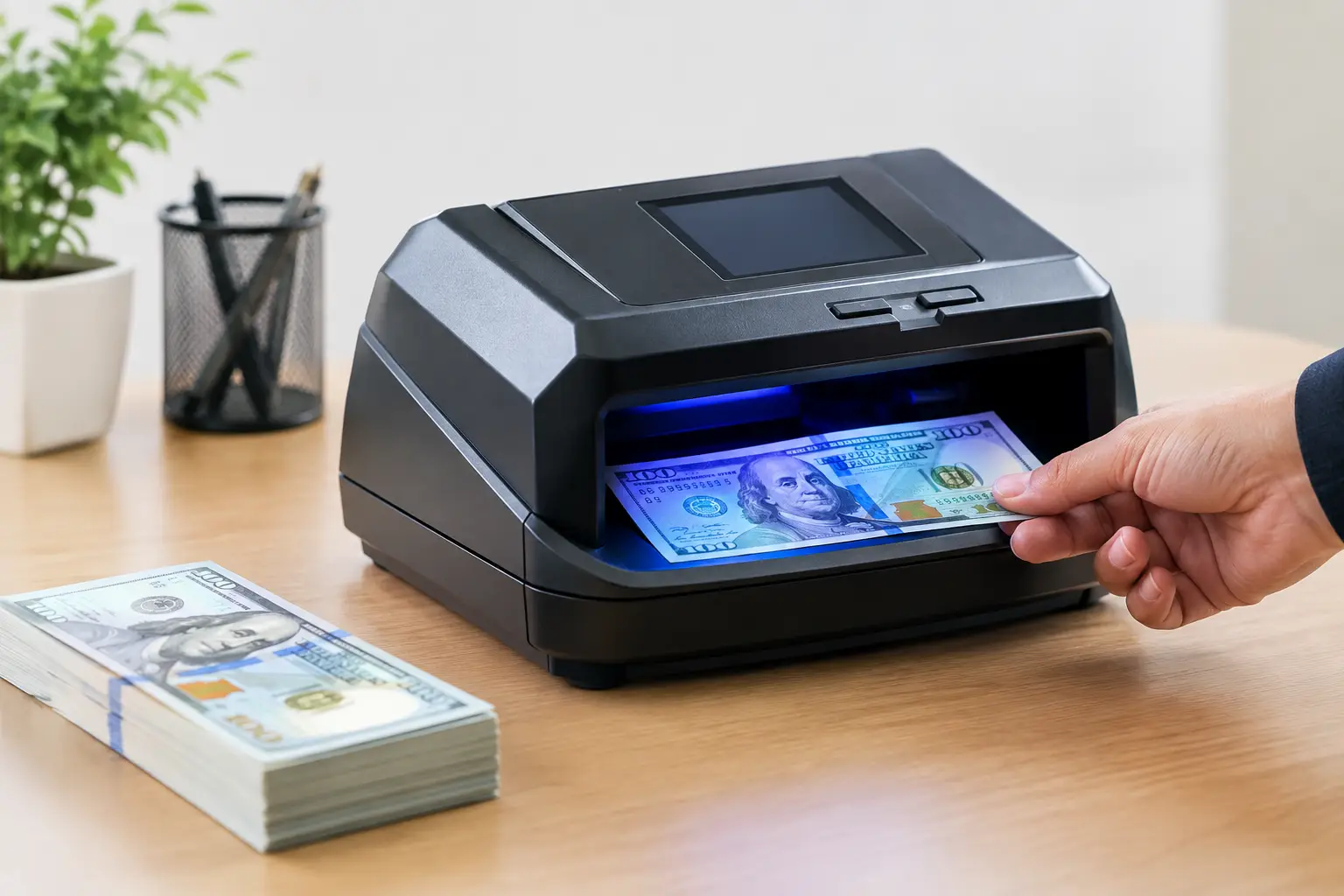
A suspicious banknote can turn a routine sale into a direct loss. For retailers, hospitality desks, offices, jewelers, and cash-handling teams, a counterfeit currency detector machine provides a practical first line of defense before questionable notes enter the till, deposit bag, or daily reconciliation.
The right machine does more than flash a warning. It helps staff check notes consistently, keeps queues moving, and reduces reliance on visual judgment during busy trading hours. Selection should be based on the currencies you accept, the volume of notes processed, and the level of verification your operation requires.
What a Counterfeit Currency Detector Machine Checks
Genuine banknotes contain multiple security features that are difficult to reproduce accurately. Detector machines inspect one or more of these features and alert the user when a note does not meet the expected standard.
A basic unit may use ultraviolet light to reveal fluorescent fibers, security threads, and UV markings. This is useful for quick manual inspection, but the operator still needs to understand what a genuine note should display. UV-only models are economical for low-volume use, yet they place more responsibility on the person checking the cash.
More advanced machines automate the decision by examining several features at once. Depending on the model, these can include ultraviolet detection, magnetic ink detection, infrared analysis, watermark verification, image scanning, paper thickness, and note size. A note passes only when its characteristics match the stored currency profile.
For businesses that accept several denominations or currencies, multi-currency detection matters. A machine should recognize the notes your team receives most often, rather than simply offering a long list of supported currencies that may not reflect your actual cash flow.
Choose Detection Technology for Your Risk Level
The best choice depends on where and how cash changes hands. A small front desk receiving occasional cash payments has different needs from a high-turnover retail counter or a finance department counting daily takings.
UV and magnetic detection for basic checking
UV and magnetic detectors suit businesses that need an affordable, visible verification point. They can help staff inspect a note before accepting it and are often compact enough for a reception desk, kiosk, or small cash counter. They work best when trained employees can compare the note with known security features.
The trade-off is speed and certainty. A basic detector may identify an obvious issue, but it will not deliver the same automated screening as a sensor-based machine. It is a sensible option for low cash volume, not a replacement for stronger controls where losses would be significant.
Automatic multi-sensor detection for active cash counters
Automatic counterfeit detectors are designed for quick, repeatable checks. Insert the note, and the machine scans it before displaying a pass result or alerting the operator to a suspected counterfeit. This approach reduces interpretation errors and is useful when several employees handle payments across shifts.
Retail stores, exchange-related environments, hotel reception desks, jewelry outlets, and busy service counters benefit from this format. The machine makes the verification process easier to follow, which supports accountability when cash is accepted under pressure.
Detection within a banknote counter
If your team counts stacks of notes every day, a banknote counter with counterfeit detection may be the more efficient investment. It processes cash faster while checking notes during the count. This is particularly useful for end-of-day reconciliation, cash rooms, and operations that receive mixed denominations.
However, not every counter offers the same detection level. Confirm which sensors are included and whether the machine can identify mixed values, sort suspected notes, or provide a count value as well as a note quantity. A lower-priced counter may count quickly but offer limited verification, while a mixed-value model can support more demanding workflows.
Match the Machine to Your Cash Workflow
Before buying, look at the point where the risk occurs. A detector positioned away from the payment counter may be technically capable but less likely to be used. Equipment should fit naturally into the staff routine.
At a point of sale, compact size, fast response, and a clear pass or fail indicator are priorities. Staff should be able to insert a note without interrupting the customer interaction. For a back office, throughput, hopper capacity, batch functions, and reporting may be more valuable than a small footprint.
Consider who will operate the machine. A simple detector with clear visual and audible alerts is usually best for teams with frequent staff rotation. Finance personnel may need more settings, count modes, and error information. The goal is not to buy the most complex machine. It is to buy equipment your team will use correctly every day.
Cash volume also affects the decision. Occasional note checks call for a compact detector. Continuous cash intake calls for durable equipment rated for regular operation. Purchasing too little capacity can create delays and maintenance issues, while purchasing a commercial-grade counter for minimal use may not be cost-effective.
Features That Deserve Close Attention
Specifications should be compared with the same care used for a safe or secure filing system. Look beyond the headline claim of counterfeit detection and confirm the features that affect daily performance.
Currency compatibility is the starting point. Verify that the detector supports the notes your business accepts, including the relevant editions in circulation. In locations where customers may pay in more than one currency, choose a machine that can check those notes without repeated setting changes.
Software updates are equally important. Banknotes change over time, and new designs may require updated recognition data. Ask whether updates are available, how they are installed, and whether the process is straightforward for your staff. A capable detector that cannot stay current may become less useful as currency designs change.
The alert method should be unambiguous. A strong machine uses a combination of screen message, audible alarm, and rejection or stop function. The operator should not have to guess whether a note passed. In a busy shop, a clear alert can prevent a questionable note from being returned to circulation by mistake.
Build quality matters as well. Notes carry dust and can vary in condition, especially in high-circulation environments. A well-built unit with accessible cleaning points and reliable note feeding will deliver more dependable results over time. Keep the machine on a stable, clean surface and follow its maintenance instructions to avoid false errors caused by dirty sensors.
A Detector Is Part of a Larger Cash-Control Process
A counterfeit currency detector machine reduces risk, but it does not remove the need for a clear cash-handling procedure. Staff should know what to do when the machine flags a note: set it aside, avoid returning it as change, notify the responsible supervisor, and follow the organization’s approved reporting process.
Train employees to check a suspicious note calmly and discreetly. An alarm does not automatically prove intent by the customer, and an accusation can create an unnecessary confrontation. The appropriate response is to retain the transaction details where permitted, use the business procedure, and seek guidance from the relevant authorities when required.
For stronger operational control, combine detection with secure cash storage. A deposit safe allows employees to move accepted cash out of the counter area without providing broad access to the main cash reserve. At the end of the day, a banknote counter supports accurate reconciliation before cash is secured for collection or bank deposit.
This layered approach is especially valuable for retailers and hospitality operations with multiple shifts. The detector screens notes at acceptance, the counter confirms the total, and secure storage limits exposure once cash has been received. Each product addresses a different point of risk.
When to Upgrade Your Equipment
Frequent false alerts, slow note feeding, unsupported currency designs, or growing cash volume are practical signals that an existing unit may no longer fit the operation. An upgrade may also be necessary when a business adds a new payment location, expands to multiple counters, or starts accepting additional currencies.
Do not wait for a loss to review the equipment. A short assessment of daily note volume, accepted currencies, and staff workflow can identify the right detector category before a problem reaches the cash drawer.
Safe World UAE can help businesses select counterfeit detection and cash-handling equipment that fits the working environment, from compact checkers to banknote counters with advanced verification. Choose equipment that gives your staff a clear process at the moment cash is accepted, then protect what matters most with secure storage behind the counter. Contact Us to identify the right solution for your operation.