

Best Shredder for Confidential Documents

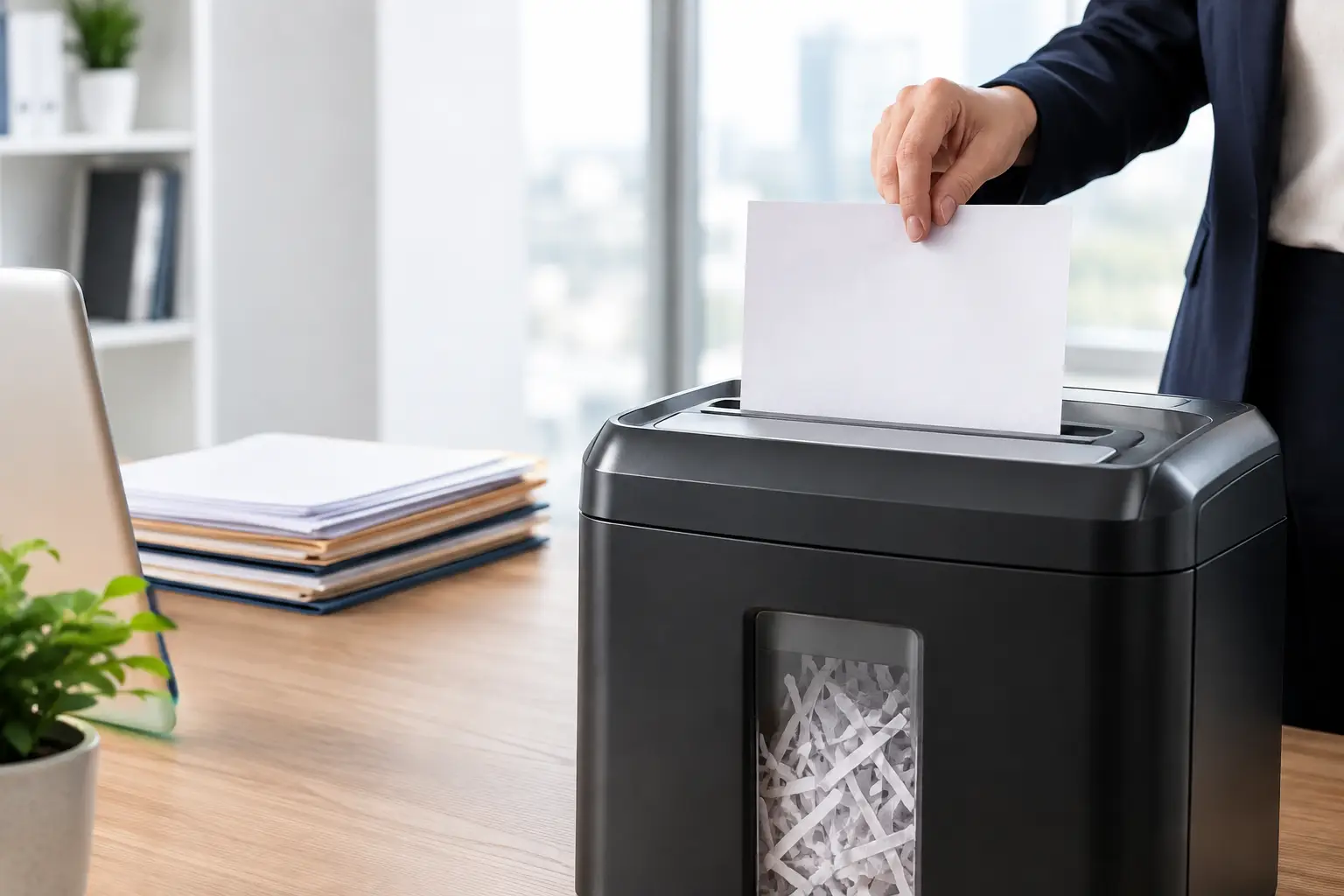
A client file left intact in a waste bin, an outdated employee record, or a discarded bank statement can create a preventable security exposure. The best shredder for confidential documents is not simply the machine with the highest sheet count. It is the one that destroys the information your home or business handles, at a speed and security level your team can maintain every day.
For offices, retail counters, finance departments, hospitality operations, and households with sensitive paperwork, the right shredder turns disposal into a controlled part of your security process. Choose based on the type of information you destroy, the number of users, and the volume of paper generated between collections.
How to Choose the Best Shredder for Confidential Documents
Start with the records you need to protect. Names, addresses, phone numbers, invoices, payroll documents, account details, signed agreements, patient information, passport copies, and customer data should not be placed in ordinary trash. A shredder reduces the chance that documents can be reconstructed or misused after disposal.
The best purchase depends on the balance between security and throughput. A small home office may need a compact cross-cut model for occasional files. A busy administrative department may need a high-capacity, continuous-duty unit that can serve several employees without frequent cooldown periods. Buying too small often results in paper piling up beside the machine, which defeats the purpose of secure destruction.
Choose the Right Cut Type
Strip-cut shredders turn pages into long strips. They can work for low-risk, high-volume disposal, but strips are relatively easier to reassemble. For confidential paperwork, strip-cut machines are rarely the strongest choice.
Cross-cut shredders cut each page both lengthwise and crosswise into small particles. They offer a practical level of protection for most offices, retail businesses, and home users. They are also a sensible option when teams need dependable document destruction without slowing down routine work.
Micro-cut shredders create much smaller particles. They are better suited to highly sensitive records, including legal paperwork, financial records, employee files, customer information, and documents containing identification details. The trade-off is that micro-cut models may process fewer sheets at once than comparable cross-cut units and can require more frequent maintenance when used heavily.
Security classifications are often described using DIN P-levels. A higher P-level means smaller particles and a higher level of information protection. For general confidential documents, a cross-cut unit in the middle security range is often appropriate. For financial services, legal files, HR records, or documents with regulated personal data, select a higher-security micro-cut model.
Match Capacity to Real Daily Use
Sheet capacity is useful, but it should not be the only specification you compare. A machine rated for 10 to 12 sheets per pass may be sufficient for one person handling occasional paperwork. Shared office use usually calls for a larger feed opening, higher sheet capacity, a larger waste bin, and a stronger motor.
Consider the total workload rather than the largest stack someone may place in the feed slot. Ask how many people will use the shredder, how many pages are destroyed in a normal week, and whether major cleanouts happen monthly or quarterly. A unit that is overloaded repeatedly is more likely to jam, overheat, and suffer premature wear.
Duty cycle is especially important for commercial buyers. It refers to how long a shredder can run before it needs to rest. Light-duty models may operate for only a few minutes at a time. Departmental and heavy-duty shredders are designed for longer operation and higher paper volumes. If your staff regularly destroys archived folders, old invoices, or batches of customer forms, a longer-duty machine is a better investment than a low-cost unit that stops halfway through the task.
Bin size also affects daily efficiency. A small bin is manageable for home use, but it can fill quickly in a shared office. When a bin overfills, shredded paper can interfere with sensors or spill onto the floor. Choose a capacity that lets staff empty the bin on a predictable schedule without interrupting secure disposal.
Security Features That Matter in a Confidential Document Shredder
A dependable shredder should make secure use easy for every employee or household member. Look for auto-reverse or jam-prevention functions that help clear overloaded paper before it damages the cutting system. An indicator for a full bin and an open-door alert can also prevent messy interruptions.
For workplaces, a lockable cabinet or enclosed bin adds another layer of control. It keeps shredded material out of reach until disposal or recycling is arranged. This can be useful in reception areas, finance rooms, shared administrative spaces, and retail back offices where multiple people move through the area.
Safety sensors are equally practical. Many machines stop cutting when hands move close to the paper entry or when the shredder head is removed. These features matter wherever employees, visitors, or family members may be near the machine. Security equipment must protect people as well as information.
Noise level is worth considering in customer-facing or quiet work environments. A high-volume shredder may be powerful but distracting beside reception desks, meeting rooms, or home workspaces. If documents are shredded throughout the day, a quieter model can make compliance easier because staff are less likely to postpone the task.
Do You Need to Shred More Than Paper?
Many confidential records arrive with staples, paper clips, credit cards, CDs, or other media attached. Check exactly what the shredder can process before buying. A model that accepts staples and small paper clips can save time in a busy office, since staff do not need to separate every document before destruction.
Credit card shredding is valuable for expired staff cards, customer cards that cannot be returned, and outdated access cards. Media shredding may be appropriate for organizations that retain data on discs. However, do not assume every paper shredder is designed for these materials. Using unsupported items can damage the cutters and void product protection.
For high volumes of hard drives, USB devices, or specialized data media, a standard office shredder may not be the correct equipment. Use a destruction method designed for that material and your required security standard.
Select a Shredder by Work Environment
A home user generally benefits from a compact cross-cut or micro-cut shredder with enough bin capacity for personal files, tax records, mail, and expired cards. Prioritize a manageable size, safety features, and a security level suitable for identification and financial documents. Avoid choosing solely by price if the machine will protect passports, banking paperwork, or personal legal records.
A small office needs a shared machine that handles regular invoices, proposals, personnel records, and customer forms. A cross-cut unit with a larger bin, higher sheet capacity, and a good duty cycle is usually the practical starting point. Place it where staff can access it without leaving documents exposed on desks or printers.
Finance teams, HR departments, legal offices, and medical or customer-service environments should prioritize higher-security particle cuts and strong sustained performance. Their documents often contain information that could cause serious harm if recovered. A larger departmental shredder may cost more initially, but it supports consistent disposal habits and reduces downtime during document-retention cleanouts.
Retailers and hospitality operators often need a shredder in the back office for transaction records, reservation details, supplier documents, staff paperwork, and old reports. In these settings, an enclosed unit with simple controls and jam protection helps keep disposal quick during busy shifts.
Keep Your Shredder Working Reliably
Even the right shredder needs correct use. Do not exceed the stated sheet limit, particularly with folded pages, thick paper, or documents containing staples. Feed paper evenly and give the machine time to cool when its duty cycle requires it.
Regular lubrication keeps cutting blades operating efficiently. Follow the product instructions for the recommended oil or lubricating sheets, especially for cross-cut and micro-cut mechanisms. Empty the bin before it becomes tightly packed, and keep the shredder away from moisture, dust buildup, and unstable power sources.
Create a simple disposal rule for employees: confidential paper should go directly into a locked collection bin or be shredded immediately. Do not leave sensitive documents in open recycling containers, near printers, or on desks waiting for a later cleanup. The machine is only one part of the process. Consistent handling is what protects the information.
Buy for Protection, Not Just Paper Volume
The right shredder supports both security and workplace efficiency. Compare cut type, security level, sheet capacity, duty cycle, bin size, supported media, and safety features before you order. For a commercial purchase, also consider where the unit will be located, who will operate it, and how the shredded material will be handled afterward.
Safe World UAE can help businesses and households select shredding equipment that fits their document-security needs alongside safes, filing systems, and organized storage solutions. Protect what matters most by choosing a machine your team can use confidently every day. Order now when your current disposal method leaves sensitive information exposed.