

How to Choose a Burglary Resistant Home Safe

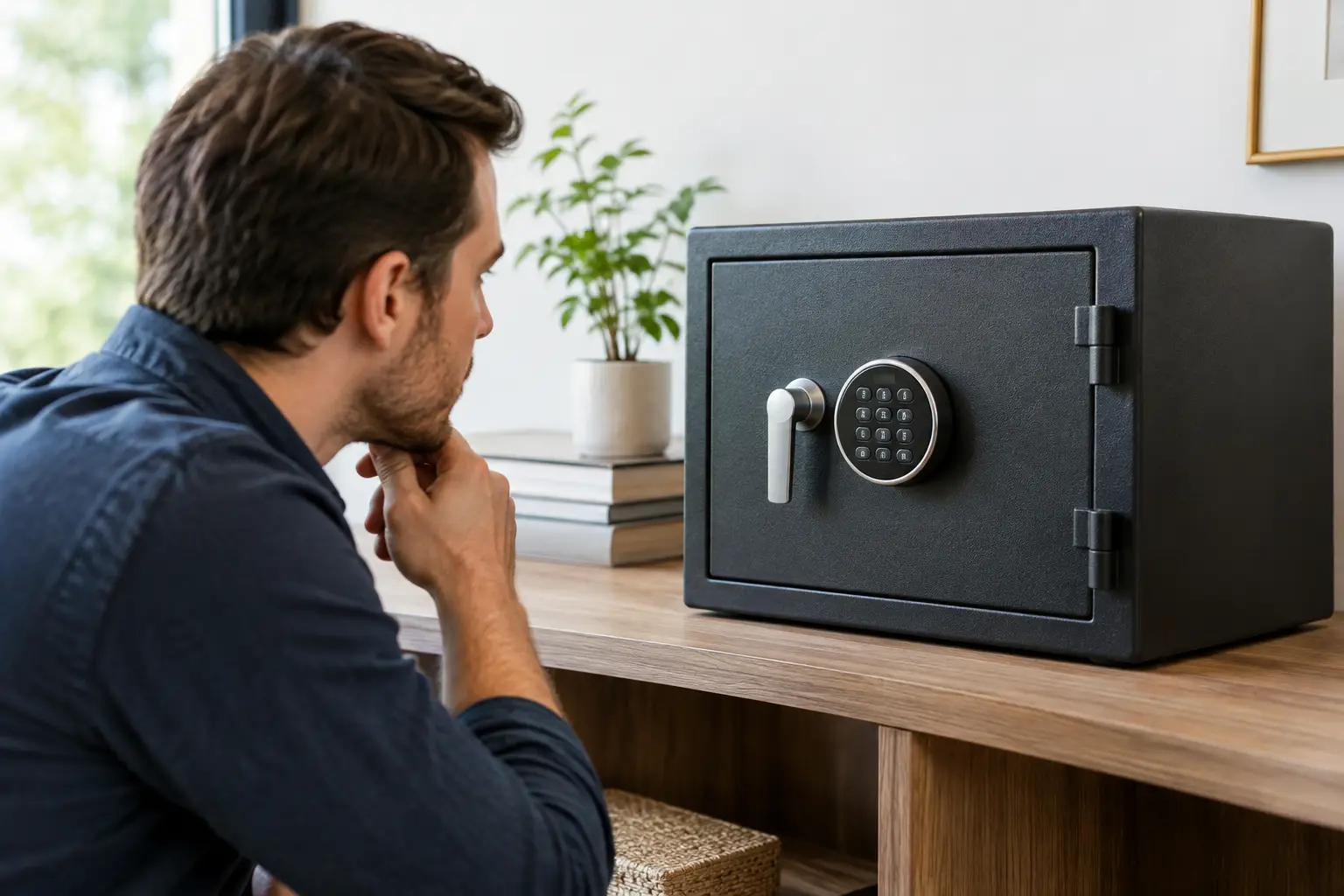
A passport drawer, a jewelry box, and a folder of property documents are convenient until someone knows exactly where to look. A burglary resistant home safe creates a protected point inside the home for the items that would be difficult, expensive, or disruptive to replace. The right model does more than lock valuables away. It resists forced entry, remains securely fixed in place, and gives you dependable access when you need it.
For homeowners, the best choice is rarely the largest safe or the one with the most visible features. It is the safe that matches the value of what you store, the risks at your property, and the location where it can be installed correctly.
What Makes a Burglary Resistant Home Safe Different?
A standard home safe may provide basic privacy and light protection against opportunistic theft. A burglary resistant home safe is built to delay and deter deliberate attack. Its body and door use heavier steel construction, reinforced locking points, protected hinges, and locking mechanisms designed to withstand prying, drilling, punching, or cutting attempts.
This distinction matters because burglars generally work against time. A safe that takes longer to attack creates more noise, requires more specialized tools, and increases the likelihood that the intruder leaves without gaining access. No residential safe should be described as impossible to open, but a properly rated and anchored unit can make forced entry far less practical.
When comparing models, look beyond door thickness alone. A thick door is valuable, but the overall security depends on the door frame, bolt work, lock protection, body construction, and how the safe is mounted. A weak locking system can undermine a heavy cabinet. Likewise, a secure safe that is not anchored may be removed and attacked elsewhere.
Start With What You Need to Protect
The contents should determine the security level. For passports, personal records, modest cash reserves, heirloom jewelry, watches, and small electronics, a quality home safe with burglary protection may be appropriate. For high-value jewelry collections, significant cash, rare collectibles, or items with substantial resale value, consider a higher burglary rating and professional installation.
Write down what will go inside before selecting a size. Include document folders, jewelry cases, backup drives, keys, and any items you may add over the next several years. Buyers often choose a compact safe based on today’s contents, then discover that passports, legal papers, and jewelry boxes do not fit efficiently together.
A safe should not be packed so tightly that you avoid using it. Leave room for organization and future storage. Interior shelves, drawers, felt-lined compartments, and adjustable layouts can make a practical difference, especially when jewelry and documents need separate handling.
Understand Burglary Ratings Before You Buy
Security ratings provide a more meaningful point of comparison than marketing terms alone. Depending on the safe and market, you may see classifications such as Residential Security Container, or RSC, and higher burglary ratings such as TL-15 or TL-30. These ratings refer to controlled testing standards and the level of resistance a product is designed to provide against specific attack methods.
An RSC-rated safe can be a sensible choice for many households. It offers a stronger level of protection than an unclassified cabinet or basic lockbox. Higher-rated safes are designed for more demanding applications and are often heavier, more expensive, and more complex to install. They may be the better choice when stored assets are substantial or insurance requirements call for a specified rating.
Do not assume that a fire rating automatically means burglary resistance. Fire-resistant safes are designed to manage heat for a stated period, while burglary-resistant safes focus on resisting physical attack. Some models combine both protections, but the ratings should be reviewed separately. If you are storing paper records, fire protection is useful. If you are storing digital media, confirm that the internal temperature rating is suitable for drives and storage devices, which can be more heat-sensitive than paper.
Choose a Lock That Fits Your Daily Routine
The lock should support secure habits rather than create frustration. A reliable mechanical combination lock has no battery dependency and suits owners who prefer a traditional, proven system. It does require careful code management and can take longer to open.
Electronic locks provide quick access and may allow multiple user codes, an audit trail, time delay settings, or dual-control access depending on the model. They are useful when two family members or authorized staff need separate access. Choose an electronic lock from a reputable safe manufacturer and understand the battery replacement procedure before installation.
Biometric access can be convenient for rapid entry, but it should not be the only factor in your decision. Fingerprint readers can be affected by placement, enrollment quality, dry skin, or dirty sensors. A biometric safe with a dependable backup access method is generally more practical than one that relies only on a fingerprint reader.
For households, the strongest routine is simple: limit access to trusted adults, keep override keys and codes separate from the safe, and avoid sharing access details through messages or unsecured notes.
Anchoring Is Part of the Security System
A burglary-resistant safe needs a secure foundation. Most freestanding home safes should be bolted to a concrete floor, wall, or another structurally suitable surface using the manufacturer’s specified anchoring points. The exact method depends on the safe’s weight, installation location, and building construction.
Anchoring prevents the most basic theft method: taking the entire safe. Even a heavy unit can be moved with enough people, equipment, and time. Once removed from the property, an intruder can work on it without the pressure of noise, neighbors, or an alarm response.
Avoid treating installation as an afterthought. A closet may offer discretion, but it still needs a solid surface, clearance for the door to open fully, and room for a technician to position and anchor the safe. Upper floors may have load limitations, while wall installations can be restricted by stud placement and wall construction. For heavy or high-security units, professional delivery and installation protect both the safe and your property.
Select the Right Location Without Making Access Difficult
The ideal safe location balances concealment, convenience, and structural strength. A master closet, home office, secured utility room, or purpose-built storage area can work well when access is controlled and the unit can be anchored correctly.
Do not place the safe where moisture, flooding, extreme heat, or corrosive chemicals may affect its contents or lock. A garage can be convenient, but temperature swings, humidity, and visible access may make it less suitable for documents, jewelry, or sensitive electronics. If the safe is in an area with potential water exposure, elevate stored items inside and use sealed document pouches where appropriate.
The location should also allow you to use the safe consistently. A secure safe that is inconvenient to reach often leads to valuables being left on a desk, in a drawer, or in an unsecured bag.
Check These Details Before Ordering
Before you buy, confirm the external dimensions, internal capacity, weight, door swing direction, lock type, burglary rating, fire rating, and anchoring requirements. Measure the route from the entry point to the final installation area, including elevators, staircases, turns, and doorways. A safe that fits the room may still be difficult to deliver into it.
Also ask about the warranty, lock servicing, replacement batteries for electronic models, and support if a code is lost or a lock requires maintenance. Security equipment is a long-term purchase. Service availability matters as much as the initial specification.
For homeowners comparing several models, it is useful to set a realistic budget based on the value and sensitivity of the contents. Spending slightly more for certified security, proper anchoring, and professional installation is often more sensible than replacing valuables, documents, and peace of mind after a break-in.
A burglary resistant home safe is most effective when it becomes part of a disciplined security routine: store critical items promptly, keep access limited, maintain the lock, and ensure the unit remains firmly anchored. Choose the protection level that matches what you cannot afford to lose, then order a safe built to protect it.
One thought on “How to Choose a Burglary Resistant Home Safe”