

Pallet Racking for Warehouse Storage That Works

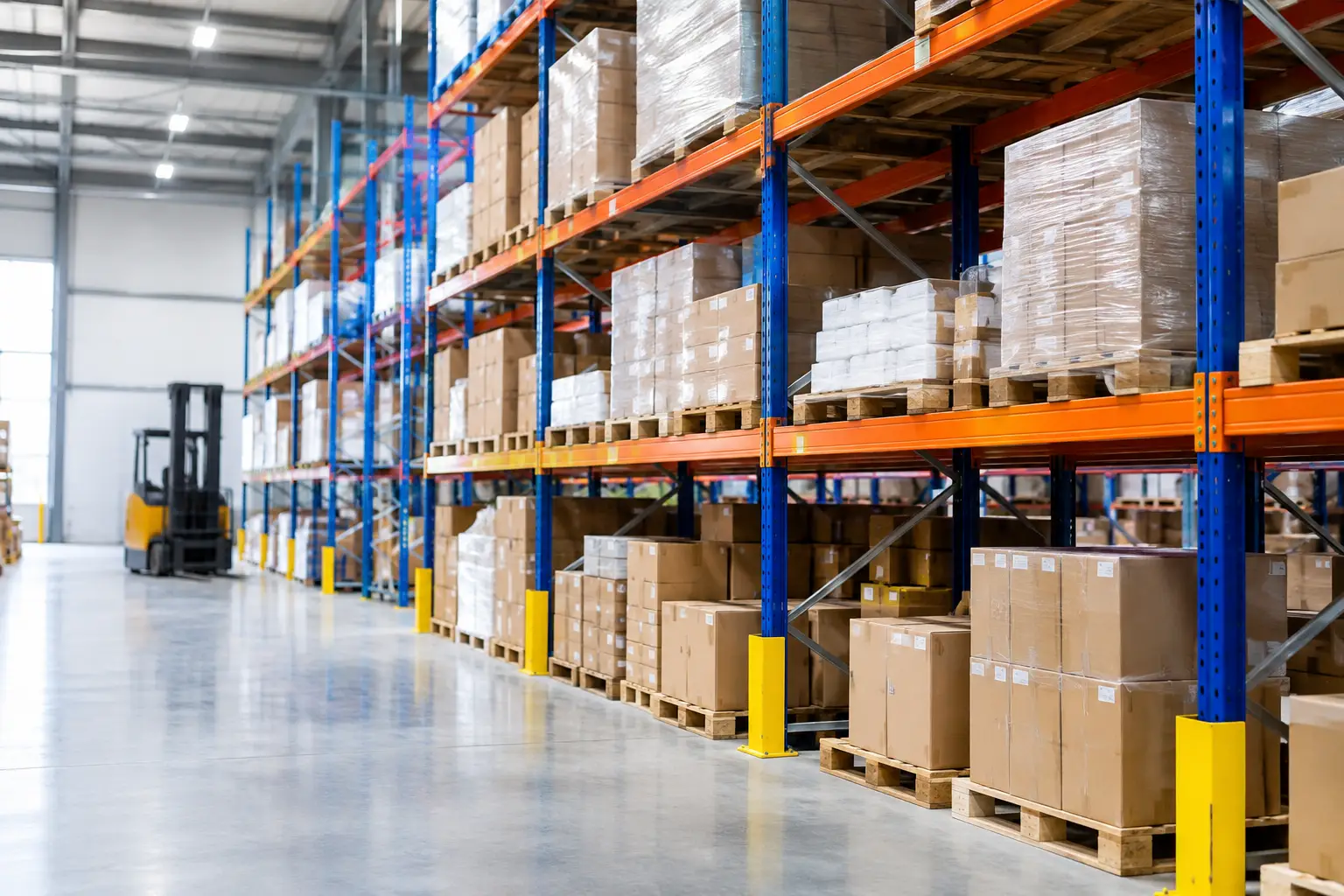
A warehouse can look full long before it is efficiently used. Floor-stacked pallets block access, slow picking, and make stock checks harder than they should be. The right pallet racking for warehouse operations turns vertical space into organized, accessible storage while supporting safer daily handling.
For warehouse managers, facility teams, retailers, and procurement professionals, racking is not simply metal shelving. It is part of the operating system of the building. Its configuration affects forklift movement, stock rotation, load safety, replenishment speed, and the ability to expand without moving premises.
Choose pallet racking for warehouse needs first
The first decision is not the rack model. It is the storage requirement. Start with the pallet type, pallet dimensions, loaded weight, stock turnover, number of SKUs, and the equipment used to handle loads. A system that performs well for uniform, high-volume goods may be inefficient for a warehouse holding many product lines in small quantities.
Selective pallet racking is often the practical choice when direct access to every pallet matters. It uses upright frames and horizontal beams to create rows of individual pallet positions. Forklift operators can reach each load without moving adjacent pallets, making this format suitable for varied inventory, regular picking, and first-in, first-out stock management.
For high-density storage, a different configuration may make better commercial sense. Drive-in racking stores pallets deeper within lanes and can increase capacity where inventory is more uniform and turnover is controlled. Push-back systems also increase storage density while keeping access from a single aisle. These systems save aisle space, but they may reduce direct access to individual pallets and require a clearer loading discipline.
The correct choice depends on how inventory moves. Do not select a dense system solely because it offers more pallet positions. If staff frequently need one specific pallet from the back of a lane, delayed retrieval can erase the space-saving benefit.
Match load capacity to real operating conditions
Every racking layout must be designed around verified load data. This includes the weight of a fully loaded pallet, the number of pallet levels, beam capacity, upright-frame capacity, bay capacity, and the load imposed on the floor. The heaviest load is the baseline, not the average load.
Pallet weight can change over time. A warehouse may begin by storing lightweight packaged goods and later introduce bulk materials, liquids, or denser products. If the racking was selected without room for these changes, overloading becomes a serious risk. Load notices should be installed clearly and should state the permitted load for each beam level and bay.
Forklift type also matters. Reach trucks, counterbalance forklifts, and very narrow aisle equipment have different aisle-width, lifting-height, and turning requirements. A rack layout that provides maximum storage but leaves inadequate clearance is not an efficient layout. It creates handling delays and raises the likelihood of impact damage.
Ceiling height should be assessed with equal care. The available height is not always the usable height. Consider lighting, sprinklers, ducts, roof bracing, clearance requirements, and the forklift’s true lift capacity at the proposed storage height. A professional site assessment prevents a costly layout that cannot be used as planned.
Think beyond the rack itself
A safe installation includes more than frames and beams. It may require row spacers, wall ties, pallet supports, mesh decking, rack-end protectors, upright guards, and aisle protection barriers. These components protect both the racking and the people working around it.
For example, pallet supports can help when pallet quality varies or when loads do not sit securely on standard beams. Mesh decking can provide a stable surface for cartons or irregular stock, but it must be rated for the intended load. Rack protection is particularly valuable at aisle ends and lower upright sections, where forklift contact is most likely.
Design aisles around workflow, not guesswork
Good pallet storage supports a clear path from receiving to put-away, storage, picking, staging, and dispatch. When these areas conflict, forklifts and pedestrians compete for the same space. The result is congestion, poor visibility, and avoidable handling time.
Plan dedicated receiving and dispatch zones so incoming and outgoing loads do not remain in travel aisles. Fast-moving inventory should be placed where it reduces travel distance, while slow-moving stock can occupy less convenient positions. If stock rotation is essential, the layout should support the chosen method, whether first-in, first-out or last-in, first-out.
Aisle width should suit the handling equipment and the largest load being carried. Narrower aisles can increase storage capacity, but only if the forklifts are compatible and operators can work safely. Wider aisles are easier to operate in, but they consume valuable floor area. This is a commercial trade-off, not a one-size-fits-all rule.
Warehouse lighting, line markings, pedestrian routes, and emergency access should be considered before installation. Racking must not obstruct fire equipment, electrical panels, exits, or required access paths. The layout should support safe work under normal conditions and during an emergency.
Inspect racking before small damage becomes a major issue
Warehouse racking is exposed to daily impact, vibration, and changing loads. A bent upright, dislodged beam lock, or damaged pallet can compromise more than one storage position. Routine inspection is a necessary control, not an optional maintenance task.
Assign trained staff to perform regular visual checks and report damage immediately. A simple inspection process should cover four areas:
- Uprights, beams, braces, and connectors for bends, cracks, corrosion, or missing parts.
- Beam safety locks and pins to confirm they are correctly engaged.
- Pallets for broken boards, loose loads, poor wrapping, and unstable overhang.
- Aisles and protection barriers for impact marks, blocked routes, or forklift damage.
Any damaged component should be assessed before the location is used again. Do not straighten, weld, or modify rack components on site unless this has been approved by the system manufacturer or a qualified racking specialist. Replacement parts need to match the original system and load design.
Staff training has the same importance as physical inspection. Operators should understand load limits, correct pallet placement, reporting procedures, and the need to avoid pushing pallets into position with forklift masts or forks. Even a well-specified system can fail when it is used outside its intended operating rules.
Plan for growth without overbuying
A warehouse rarely stays static. Seasonal stock, new product lines, larger order volumes, and changing fulfillment methods can alter storage needs quickly. Modular pallet racking offers a practical advantage because bays and levels can often be expanded or reconfigured as operations change.
However, expansion should be planned, not assumed. Future extension requires suitable floor space, compatible components, adequate fire clearance, and a layout that still supports vehicle movement. Buying the cheapest system without considering availability of matching parts can create a procurement problem later.
For businesses in Abu Dhabi and Dubai, local site conditions also deserve attention. Building access, slab condition, delivery schedules, installation windows, and coordination with existing operations can affect the final project. Measuring the warehouse carefully before ordering protects budget, timeline, and safety.
Safe World UAE supplies industrial storage solutions for businesses that need dependable organization and efficient use of warehouse space. Select a racking system based on verified loads, handling equipment, and inventory flow, then maintain it with the same care given to the stock it holds. Contact Us to discuss a configuration that keeps your inventory accessible, protected, and ready to move.