

How to Choose a Hotel Safe for Guest Rooms

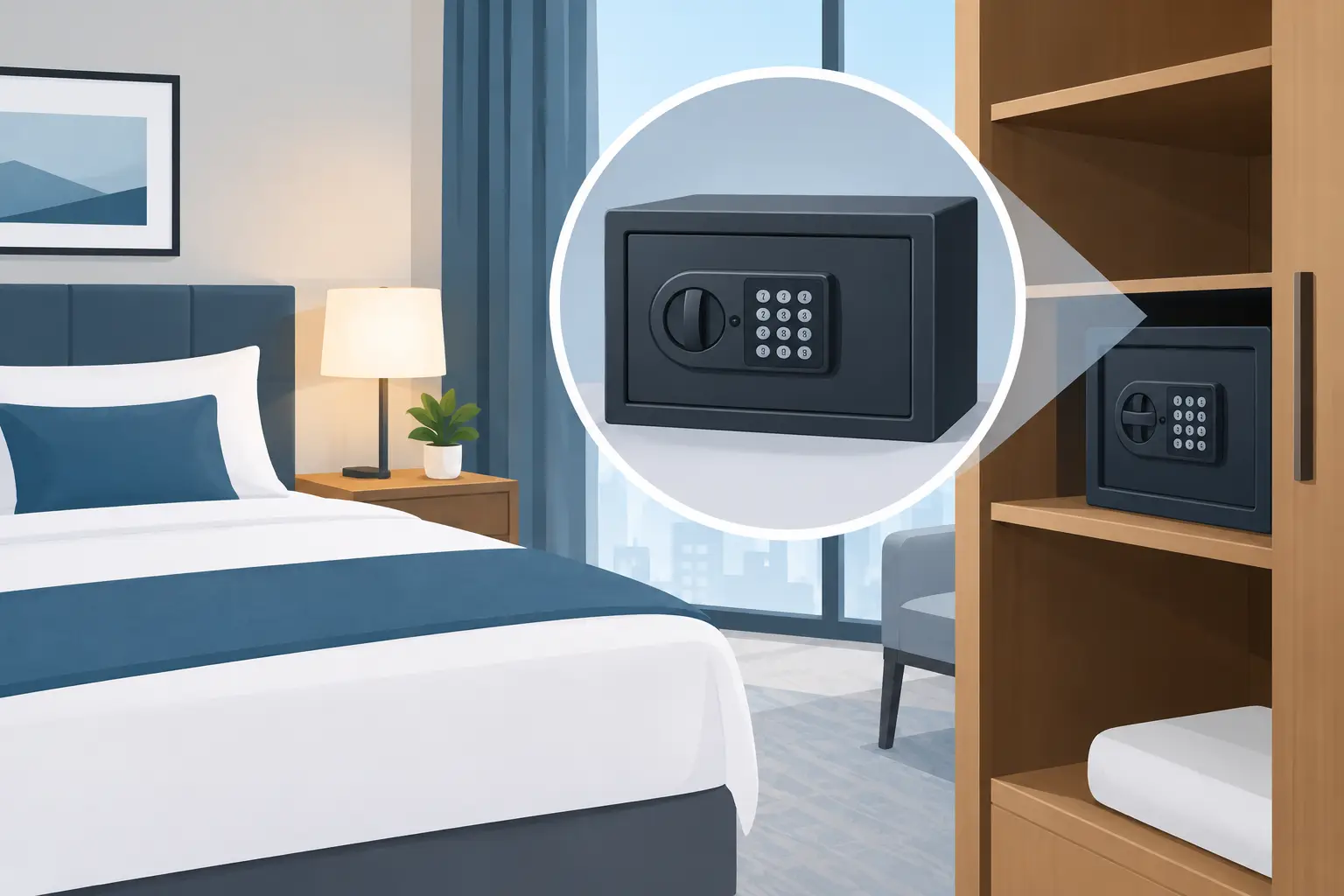
A missing passport at checkout can turn an otherwise excellent stay into a serious guest-service issue. A properly selected hotel safe for guest rooms gives travelers a practical place to secure passports, cash, jewelry, electronics, and business documents while helping the property demonstrate responsible security standards.
For hotel owners, procurement teams, and facility managers, the right in-room safe is not simply a small metal box. It must fit the room layout, accommodate the items guests actually carry, operate without staff assistance in normal use, and allow authorized personnel to respond quickly when a safe is left locked or a guest forgets a code. Selecting the wrong model can create daily operational friction. Selecting the right one protects guest confidence and supports efficient housekeeping and front-desk procedures.
What a Hotel Safe for Guest Rooms Must Do
Guest room safes have a different job from cash safes, jewelry safes, or high-security commercial safes. They are designed for convenient, short-term use by many different people. The priority is a straightforward guest experience combined with controlled hotel access when needed.
A suitable unit should let a guest set a temporary personal code, clearly confirm that the door is locked, and reset for the next user after checkout. It should also be strong enough to deter opportunistic theft and securely installed so it cannot be removed from the room.
The best specification depends on the property. A boutique hotel with compact rooms may prioritize a space-saving drawer safe. A business hotel may need laptop-compatible models in every room. A resort serving families and international travelers may benefit from larger safes that hold multiple passports, cameras, tablets, and travel documents.
Start With the Items Guests Need to Store
Safe size is often the first decision, and it should be based on usable internal dimensions rather than external measurements. A safe that looks generous on a product sheet may be too shallow for a standard laptop once the door mechanism and interior padding are considered.
For many properties, a laptop-sized safe is the practical baseline. It supports modern business travelers and also gives families enough room for passports, wallets, tablets, watches, and small valuables. Confirm both the internal width and depth, especially if guests are likely to carry 15-inch or larger laptops.
Smaller models can work in limited-space rooms, but they have a trade-off. If a guest cannot store a laptop or camera, the safe may be viewed as inadequate even if it holds cash and passports. Before placing a bulk order, test the proposed model with common items: a laptop, a document folder, a tablet, several passports, and a small travel pouch.
Consider Where the Safe Will Be Installed
A safe must be accessible without making the room feel crowded. Typical locations include wardrobes, cabinets, desks, and low shelving units. Each location affects the safe type and the installation method.
An in-cabinet safe can preserve the room’s appearance, but the cabinet itself must be suitable for secure fixing. A freestanding unit that is not anchored is not an effective guest room safe. It can be carried away or damaged during an attempted theft. Choose models with mounting holes and use proper anchors suited to the wall, floor, or furniture structure.
Avoid positioning the safe where guests must kneel awkwardly, move heavy furniture, or struggle to see the keypad. Clear access reduces calls to the front desk and helps guests use the safe correctly from the first night of their stay.
Choose a Lock System Built for Hospitality Use
Electronic keypad locks are commonly preferred for hotel guest rooms because they allow temporary guest codes and efficient reset procedures. A guest should be able to create a code at check-in, use it throughout the stay, and leave without the next guest gaining access.
However, not all digital locks provide the same level of control. For hotel use, look for a lock with a clear display, low-battery warning, reliable motorized or electronic operation, and authorized emergency opening options. The management process must be controlled. Master codes, override keys, and emergency access tools should be limited to approved staff and stored under documented procedures.
Audit trail capability is particularly valuable for larger properties and premium accommodations. An audit trail can record opening attempts and authorized access events, helping management investigate a complaint or confirm whether a safe was accessed after checkout. It does not replace good staff procedures, but it provides accountability when questions arise.
Mechanical override access can be useful during battery failure or lockout situations. The trade-off is that physical override keys must be tightly controlled. If many employees can access them, the safe’s security value is reduced. Establish a sign-out process and restrict access to trained managers or security personnel.
Focus on Construction and Physical Security
Guest safes are generally deterrent safes, not substitutes for a certified burglary-resistant vault. Their role is to discourage quick theft and protect valuables from casual access within a guest room. That distinction matters when setting expectations for guests and selecting equipment for the property.
Look for solid steel construction, concealed or protected hinges, locking bolts, and a door that closes without excessive movement. A heavier safe may offer better resistance to forced entry, but it also requires stronger furniture, proper mounting, and more careful installation. The goal is a balanced specification that matches the risk level and property class.
Do not assume that a fire-resistant safe and a hotel safe serve the same purpose. Some properties may need both features, especially where guest documents are a concern, but fire protection depends on a tested rating and the specific construction of the model. If fire resistance is required, confirm the rating, duration, and conditions it covers before purchase.
Plan for Housekeeping, Checkout, and Guest Support
The safe becomes part of hotel operations the moment it is installed. Housekeeping staff should be trained to identify a safe left locked after departure and follow a documented escalation process. They should never attempt improvised opening methods or handle guest property without authorization.
Front-desk and security teams need a clear process for guests who forget their codes. This should include identity verification, controlled authorization, a record of the request, and, where appropriate, a second staff member present during opening. These steps protect the guest, the employee, and the property.
Battery replacement should also be planned rather than handled only after a lock failure. Choose models that provide low-battery alerts and make it possible for authorized staff to replace batteries without damaging the safe or disturbing guest property. Keep compatible batteries available as part of routine maintenance stock.
Use This Buying Checklist Before You Order
When comparing hotel safes, assess the complete operating requirement rather than choosing on price alone. Confirm these essential points with the supplier:
- Internal dimensions that fit the laptops and travel items your guests carry.
- Electronic guest-code operation with reset and emergency-access procedures.
- Audit trail capability where management accountability is required.
- Mounting points and installation hardware appropriate for the intended location.
- Clear warranty, spare-parts availability, and service support for locks and keypads.
For a multi-room project, request consistent models across comparable room types. Standardization makes staff training, battery replacement, emergency access, and spare-parts management much easier. It also gives guests a familiar experience across the property.
Installation Is Part of the Security Specification
Even a well-built safe will underperform if installed poorly. Confirm mounting requirements before furniture is manufactured or rooms are renovated. The fixing point must have sufficient strength, and installers should avoid damaging electrical lines, plumbing, finished surfaces, or cabinet structures.
After installation, test every unit before the room is released for guest use. Check the door alignment, keypad response, bolt action, mounting stability, emergency procedure, and reset process. Record the safe location, model number, and access-control details in the property’s equipment register.
A planned inspection schedule helps maintain confidence over time. Staff can check for loose mounting, worn keypads, battery alerts, damaged doors, and signs of tampering during routine room maintenance. Small issues are far easier to correct before they become a guest complaint or a security incident.
A hotel safe should make guests feel prepared, not uncertain. Choose a model that fits real travel needs, install it correctly, and give your team clear access procedures. Then order the equipment that protects guest valuables while keeping daily hotel operations under control.