

Jewelry Safe With Drawers: What to Look For

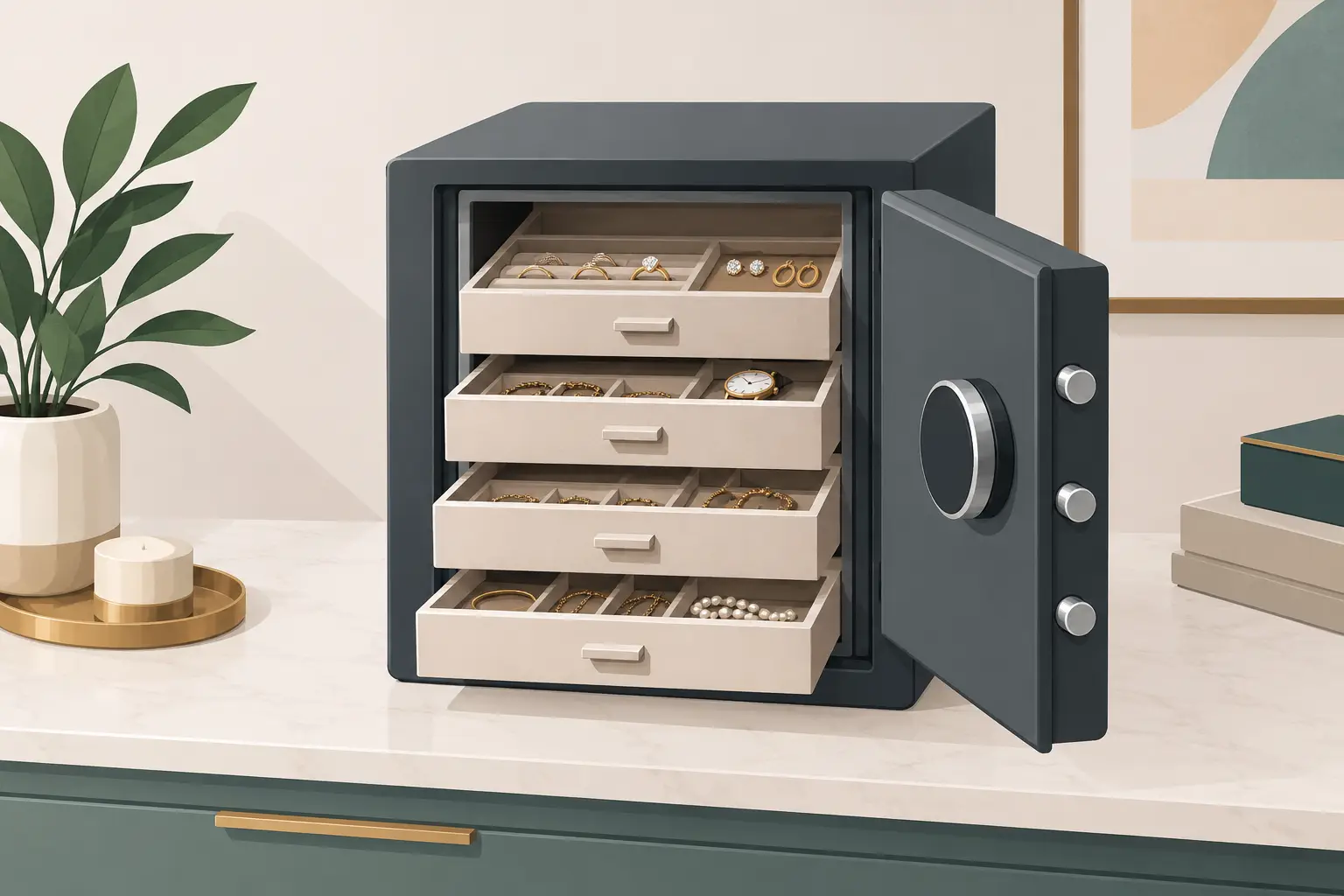
A jewelry safe with drawers solves a problem that standard safes often create: valuables may be protected, but they are not easy to find, separate, or inspect. Loose rings, watches, certificates, and small gold items can quickly become tangled or buried in a single compartment. A drawer-equipped safe keeps high-value pieces organized while placing them behind a serious physical-security barrier.
For homeowners, collectors, retailers, and professional jewelry users, the right model should provide more than an attractive interior. It must suit the value of the contents, the location where it will be installed, the access required each day, and the level of fire and burglary protection needed. The drawers are valuable for organization, but the safe body, locking system, and installation determine how well the contents are actually protected.
Why Drawers Matter in a Jewelry Safe
Jewelry is rarely stored as one large item. It is a collection of small, high-value pieces that need separation. Drawers with lined compartments help prevent chains from tangling, reduce scratching between watches and bracelets, and make individual items easier to inventory. This is especially useful when several family members share the safe or when staff members need controlled access to retail stock.
A well-designed interior also makes routine checks faster. Instead of removing boxes and pouches to locate one item, the owner can open a dedicated drawer and see what is present. For a jeweler, this can support cleaner opening and closing procedures. For a homeowner, it can reduce the temptation to leave frequently worn items outside the safe for convenience.
However, drawer count should not be the first buying decision. More drawers can mean less vertical room for larger watch cases, document folders, or jewelry boxes. Choose the interior layout based on what you own now and what you expect to store later.
Security Features That Matter More Than the Drawers
The drawer system is only as secure as the safe around it. Begin with the construction of the door and body. A properly built jewelry safe should use solid steel construction, a secure door frame, strong locking bolts, and protection around vulnerable areas such as the lock and hinges. These features help resist forced entry attempts.
Lock selection should reflect who needs access. A high-quality electronic lock offers quick daily access and can be practical for households, retail counters, and office environments. A mechanical combination lock avoids battery dependence and may suit owners who prefer a traditional system. Biometric access can be convenient for selected users, but it should be evaluated carefully for reliability, user management, and backup entry procedures.
For higher-value collections or commercial stock, look for a safe with a tested burglary-resistance rating rather than relying only on door thickness or weight. Ratings provide a clearer indication of how the unit performs against defined attack methods. Insurance requirements may also specify a minimum safe rating, especially for jewelry businesses and substantial private collections.
Fire protection is another separate consideration. Jewelry itself may survive heat better than paper records, but certificates, purchase documents, appraisals, passports, cash, and digital backup media may not. If these items will be stored together, select a safe with suitable fire resistance and understand what materials the rating is designed to protect.
Choosing the Right Drawer Configuration
A jewelry safe with drawers should match the types of items being secured. Shallow, felt-lined drawers are practical for rings, earrings, pendants, and delicate bracelets. Wider drawers can accommodate necklace trays, watch rolls, and larger boxed pieces. Some premium models use removable trays or adjustable dividers, allowing the layout to change as a collection grows.
Consider whether the drawers extend fully. Full-extension slides improve visibility and access to items at the back, but they must be durable enough to support the expected load. Soft interior linings are also useful, though they should never be mistaken for a security feature. Their role is to protect the finish of jewelry and keep compartments orderly.
For retail or shared business use, a single large drawer may not provide enough accountability. Multiple labeled drawers can support category-based storage, such as gold pieces, diamond items, repair jobs, customer-held stock, or daily display inventory. In a busy operation, organization supports security because it makes discrepancies easier to identify.
Size, Weight, and Installation Planning
A safe that is too small often leads to poor storage habits. Valuable items end up in bedrooms, desk drawers, display cabinets, or unsecured boxes because the safe has no remaining space. Allow room for future purchases, packaging, documents, and the interior clearance needed to open drawers comfortably.
Before ordering, measure the installation area, doorways, elevators, hallways, and turning points. Large jewelry safes can be extremely heavy, and access constraints can affect the model selected. Also check the space required in front of the safe door. A drawer-equipped unit needs enough clearance for the door to open and for interior drawers to pull out without obstruction.
Anchoring is essential. A compact safe that can be removed from the premises offers limited protection, regardless of its interior design. Where the model and site allow, secure the safe to a suitable floor or wall structure according to manufacturer guidance. Installation should be assessed in advance, particularly in apartments, upper-floor offices, retail spaces, and properties with finished flooring.
Concealment can add another layer of protection, but it should not make the safe difficult to use. A concealed unit that is inconvenient to open may encourage users to store jewelry elsewhere. The best location balances discretion, structural support, environmental conditions, and convenient authorized access.
Home, Retail, and Professional Use Have Different Needs
A home buyer may prioritize discreet placement, fire protection, and enough drawers for family jewelry, watches, passports, and personal documents. Daily access may be limited, so a reliable electronic or mechanical lock with a clear backup process can be appropriate. The safe should also be large enough to avoid overcrowding as valuables accumulate.
A retail jeweler has different priorities. Daily opening cycles, employee access rules, stock volume, insurance requirements, and end-of-day procedures all affect the choice. A burglary-rated safe with organized drawers can help separate items for display, customer orders, repairs, and reserve inventory. In this setting, access control and documented key or code management are as important as the physical unit.
Hotels and hospitality operators may need secure storage for high-value guest property, special-event valuables, or administrative assets. Offices may use a jewelry-safe format for small precious items, confidential media, or controlled inventory. The correct product depends on the asset type and operating procedure, not simply on the word “jewelry” in the safe name.
Questions to Ask Before You Buy
Before selecting a model, confirm the safe’s external dimensions, internal dimensions, usable drawer space, total weight, lock type, burglary rating, fire rating, and anchoring options. Ask how emergency access is handled, whether lock batteries can be changed from outside the safe, and what service support is available after installation.
It is also wise to review your insurance policy or speak with your insurer before purchase. The insurer may require a particular safe grade, installation method, alarm system, or location for coverage of jewelry above a stated value. Buying a safe that looks substantial but does not meet policy conditions can create an expensive gap in protection.
For commercial buyers, establish who can access the safe, who controls codes or keys, and how inventory is checked. A secure cabinet can support good procedures, but it cannot replace them. Limit access to authorized personnel and change codes promptly when staffing changes.
Protect Valuables Without Sacrificing Order
The right safe should make secure storage practical every day. When jewelry is separated, visible, and easy to retrieve, it is more likely to be returned to protection after use. When the safe has appropriate burglary resistance, fire protection, locking, and anchoring, the organized interior is backed by meaningful security.
Safe World UAE can help buyers assess jewelry storage requirements alongside wider needs for fire-resistant safes, business asset protection, and organized storage. Select a model based on the value of what it protects, not only on the number of drawers. Contact Us to choose a jewelry safe that keeps valuable items secure, accessible, and properly organized.