

Currency Counter Accuracy: What Affects It?

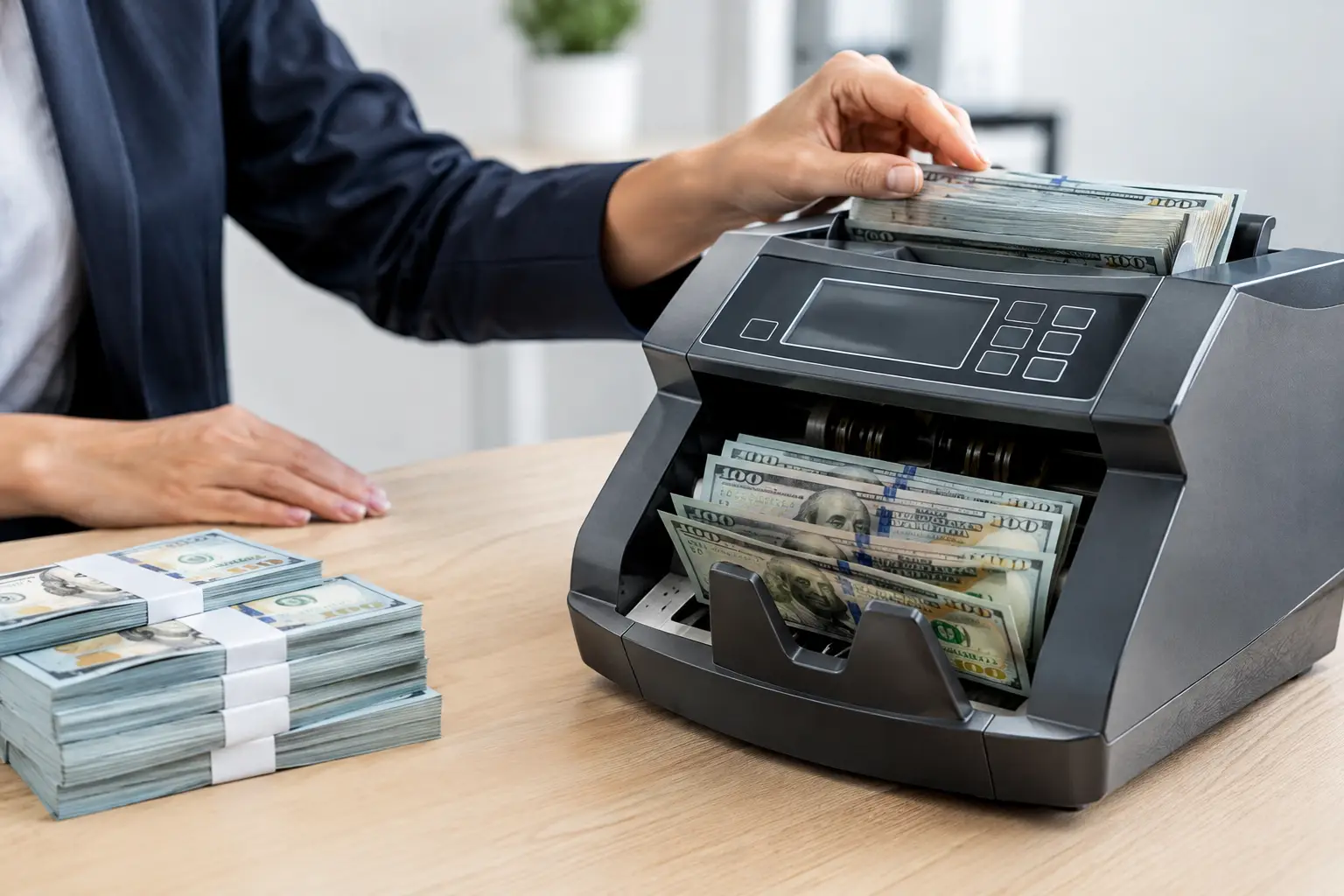
A cash difference at the end of a shift is rarely just a bookkeeping problem. It can delay deposits, create disputes between staff, and expose a retailer or office to avoidable loss. Currency counter accuracy is the control point that helps businesses process notes faster while keeping every cash total accountable.
A quality banknote counter can count a large stack in seconds, but no machine is completely independent of its operator, its environment, or the condition of the notes being processed. Understanding those factors helps you select the right equipment, set it up correctly, and know when a count needs to be checked.
What Currency Counter Accuracy Actually Means
Currency counter accuracy describes how reliably a machine counts the number of banknotes fed through it. For mixed-value currency counters, it can also describe how correctly the machine recognizes denominations and calculates the total monetary value of a mixed stack.
These are related but different functions. A basic count-only machine may accurately report 100 notes without knowing whether those notes are $1, $10, or $100 bills. A mixed-value counter identifies denominations and produces a value total. This is the more suitable option when retail cash drawers, exchange desks, or finance teams receive mixed denominations throughout the day.
Accuracy also applies to the machine’s ability to identify irregular notes. Depending on the model and its detection systems, it may flag double notes, chained notes, half notes, unusually sized notes, or suspected counterfeit currency. A detected error is not proof that the note is fake or unusable. It is a signal to remove the note and inspect it manually.
The Main Factors That Affect Currency Counter Accuracy
The biggest cause of inaccurate counting is often the cash itself. Notes that are heavily worn, damp, folded, taped, stained, or curled may not move through the feeder consistently. Two notes can pass together as one, or a damaged note may stop before it reaches the counting sensors. Fresh notes can also cling together because of static or surface texture.
Machine condition matters just as much. Dust, paper fibers, and residue accumulate around sensors, rollers, and feed components over time. When sensors cannot read a note clearly or rollers lose their grip, the risk of misfeeds rises. A counter that performed well when new can become unreliable when routine cleaning is ignored.
Incorrect adjustment of the hopper or feeder gap is another common issue. If the gap is too wide, multiple notes may feed together. If it is too tight, notes may jam or feed unevenly. The correct setting depends on the thickness and condition of the banknotes being counted.
Power quality, machine placement, and operator handling can also affect results. Place the counter on a stable, level surface away from excessive dust, moisture, and direct airflow. Load notes neatly into the hopper rather than forcing a loose, crumpled stack into the machine. These basic controls protect the equipment and improve count consistency.
Count Accuracy vs. Counterfeit Detection
A machine can count notes accurately while still having limited counterfeit detection capability. This distinction matters when selecting equipment for a business that accepts cash from the public.
Count-only models are practical for sorting and batching one denomination, such as preparing daily deposits or counting pre-sorted cash drawers. Models with UV, magnetic, infrared, and image-based detection provide more security checks. Mixed-value currency counters add denomination recognition and value calculation, making them suitable for higher-volume cash operations where speed and verification are both required.
No currency counter should replace staff judgment or formal cash procedures. If a machine rejects a note, staff should follow a clear review process. Compare the note with known genuine currency, use an appropriate counterfeit detector where needed, and keep questionable notes separate from normal circulation. Do not force a rejected note repeatedly through the counter simply to complete a batch.
How to Improve Currency Counter Accuracy Every Day
Reliable performance starts before the first stack is counted. Straighten notes, remove rubber bands and clips, and separate severely damaged or wet notes. Fan a tight stack lightly if notes are sticking together. This takes little time and prevents many avoidable feeding errors.
Use the correct operating mode for the task. Count mode is suitable when the number of notes matters. Batch mode is useful for preparing fixed bundles, such as 100-note deposit packs. Add mode allows several stacks to be accumulated into one total. Mixed-value mode should be used only with currencies and denominations supported by the machine.
For consistent results, apply these operating controls:
- Clean sensors, rollers, and the hopper according to the manufacturer schedule, and more often in dusty cash-handling areas.
- Check feeder-gap adjustment when note thickness changes or the machine begins reporting frequent double-note or jam errors.
- Run a test count with a known quantity of notes at the beginning of each shift or before a major cash reconciliation.
- Recount any rejected batch after removing the flagged note, rather than assuming the displayed total is final.
- Keep software and currency-recognition updates current on compatible models, especially when new banknote series enter circulation.
A useful internal rule is to investigate repeated errors, not just clear them. If the same counter begins rejecting ordinary notes or showing inconsistent totals, clean and test it before returning it to heavy use. Persistent errors may indicate worn rollers, sensor issues, or a need for professional service.
Choosing the Right Counter for Your Cash Volume
The best machine depends on how cash enters your operation. A small office receiving pre-sorted deposits may only need a reliable banknote counter with batch and add functions. A busy retailer may benefit from counterfeit detection to support front-counter staff. Jewelry stores, exchange operations, hospitality businesses, and finance departments handling mixed denominations often need a mixed-value counter that provides denomination breakdowns and a total value report.
Do not buy based on speed alone. A very fast counter is useful only when it can process your typical note condition accurately and provide the verification features your procedures require. Consider the currency types you accept, daily volume, counterfeit-risk exposure, available counter space, and whether staff need batch reports for reconciliation.
For UAE businesses, it is also essential to confirm that the equipment supports UAE dirham banknotes and that its detection features are appropriate for the currency series in circulation. A counter should fit the actual cash flow of the workplace, not just its advertised maximum speed.
When a Manual Recount Is Still Necessary
Automation improves efficiency, but manual checks remain part of sound cash control. Recount high-value deposits, unusually large transactions, or batches that generated repeated machine errors. Dual verification is especially valuable when cash moves from a cashier to a supervisor, from a retail location to a deposit safe, or from an office to a bank collection point.
The goal is not to slow every transaction with unnecessary handling. It is to apply stronger checking where the financial exposure is higher. A documented process can state when a second count is required, who approves discrepancies, and how rejected or suspect notes are recorded.
A counter should also be matched with secure storage. Counted cash left in an open drawer remains a risk. For retail and office operations, a deposit safe or suitable cash-safe process helps protect funds between counting, reconciliation, and collection.
Keep the Machine Accurate, Keep the Cash Accountable
Currency counter accuracy is built through the right combination of equipment, note preparation, maintenance, and staff procedure. A dependable counter reduces manual workload, but it delivers the best results when operators understand its limits and respond correctly to errors.
Select a machine that matches your volume and verification needs, maintain it on schedule, and treat exceptions as useful security signals. Safe World UAE can help businesses choose cash-handling equipment designed for efficient counting, practical verification, and more controlled daily cash operations. Protect every count before it becomes a discrepancy.