

Electronic vs Mechanical Safe Locks: Which Fits?

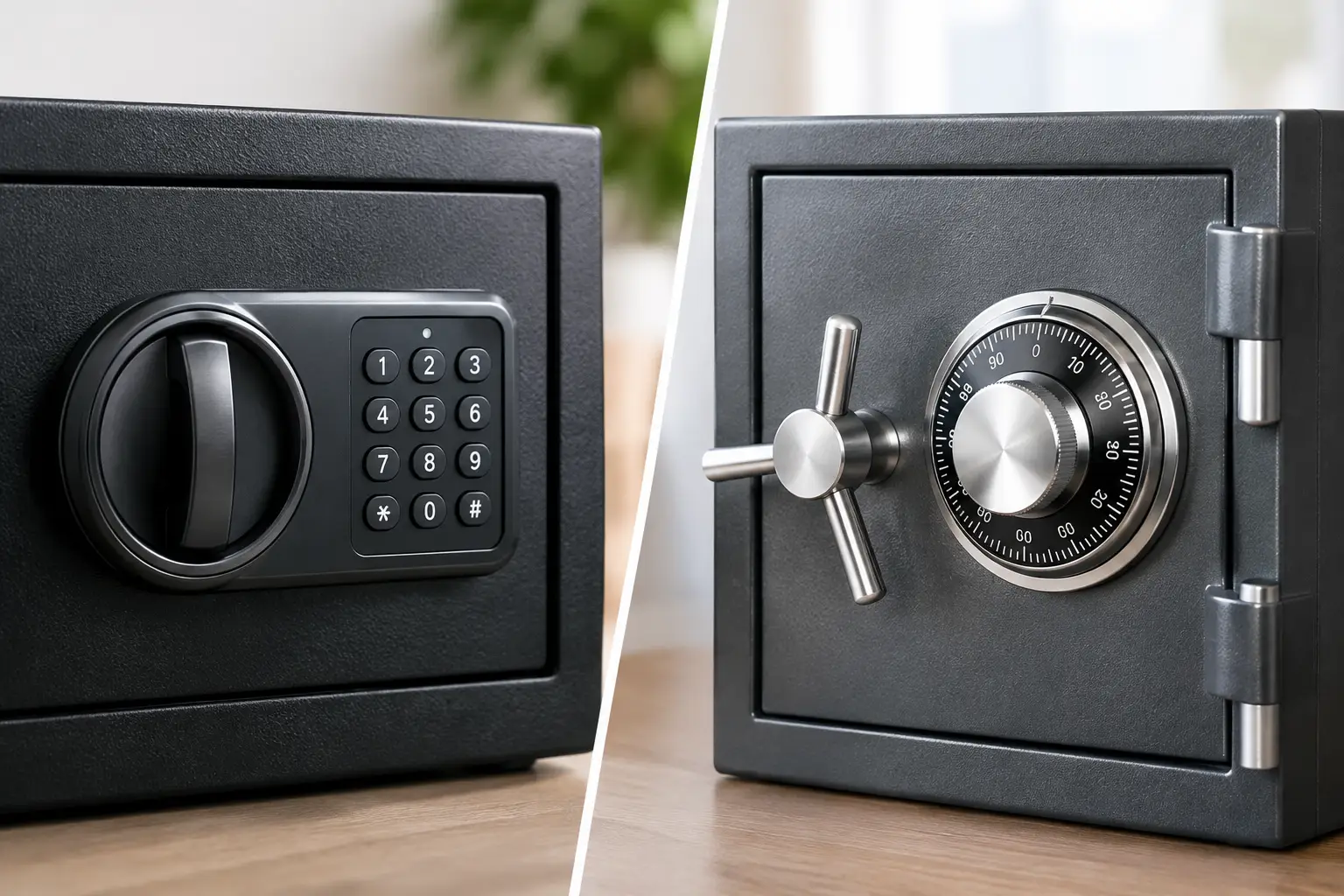
A safe can have a strong body, reliable boltwork, and a suitable fire rating, yet daily security still depends on how access is controlled. When comparing electronic vs mechanical safe locks, the right choice comes down to who needs access, how often the safe is used, and how much control your operation requires.
For a home safe holding passports, jewelry, and legal documents, simplicity may matter most. For a retail store, finance office, hotel, or jewelry business, fast access, user management, and accountability may be the deciding factors. Neither lock type is automatically better. Each serves a different security need.
Electronic vs Mechanical Safe Locks
Mechanical combination locks use a dial and a fixed sequence of numbers. They do not need batteries, software, or a keypad. A properly maintained mechanical lock can provide dependable service for many years, which is why it remains a trusted option for safes that are opened occasionally or stored in locations where battery maintenance is inconvenient.
Electronic locks use a keypad, a digital code, and battery power. They are common on home safes, deposit safes, office safes, hotel safes, and commercial security cabinets because they are faster to operate and easier to manage when multiple authorized users need access.
The decision should not be based on convenience alone. Consider the safe’s purpose, the value and type of contents, the number of users, the required response time, and the availability of professional service if a lock needs attention.
Mechanical locks: proven, independent access
A mechanical dial lock does not rely on a battery. This is its most practical advantage. If the safe is rarely opened, such as a residential fire safe for original documents or a long-term storage safe for collectibles, owners may prefer a lock that is always ready without checking battery condition.
Mechanical locks also offer a familiar, straightforward security method. There is no display screen, no low-battery warning, and no electronic component to configure. For some owners, fewer electronic parts means fewer concerns about battery replacement or keypad damage.
The trade-off is speed. Entering a combination takes time and concentration, especially for users who do not open the safe regularly. A small mistake in the dialing sequence means starting again. During busy store opening procedures, cash reconciliation, or shift changes, this can slow operations.
Changing a mechanical combination may also require a qualified safe technician, depending on the lock model. That is acceptable for a single-owner safe, but less convenient for organizations that need to change access after employee turnover or a role change.
Electronic locks: faster control for active use
Electronic safe locks are designed for practical, frequent access. A user enters a PIN, confirms it, and operates the handle. For an office manager securing contracts, a retailer accessing cash drawers, or a hotel operator managing guest valuables, this can save time every day.
Many electronic locks allow the owner or administrator to change codes without calling a technician. This is especially useful when an employee leaves, when a temporary manager needs access, or when internal security procedures require regular code changes. Certain commercial lock systems can support multiple user codes, time delays, dual control, opening windows, and audit records.
These features can strengthen operational security. A finance team may need two authorized people to open a cash safe. A jewelry retailer may want a time delay before access is granted. An audit-capable lock can help management verify when the safe was opened and by whom, depending on the lock configuration.
Electronic locks do require battery management. Most quality safe locks provide a low-battery warning well before the battery is depleted, and many models allow an external battery connection for emergency power. Still, the owner must follow the manufacturer’s instructions and replace batteries on schedule. Using the wrong battery type, mixing old and new batteries, or ignoring warning signals can create avoidable access problems.
Security Is More Than the Lock Type
A keypad lock does not make a safe burglary-resistant on its own, and a mechanical dial does not automatically make a safe more secure. The overall protection level depends on the safe’s construction, steel thickness, door design, locking bolts, anti-drill protection, relocking devices, anchoring method, and tested burglary or fire rating.
For example, a lightweight home safe with an advanced electronic keypad may be suitable for basic theft deterrence and organized document storage, but it is not the same as a certified burglary-resistant safe designed for high-value jewelry, cash, or commercial stock. Likewise, a heavy-duty safe with a mechanical lock can offer excellent physical protection, but it may not provide the access tracking a business requires.
Match the lock to the safe and the safe to the risk. A home owner storing passports and family records may prioritize fire protection and easy personal access. A jeweler or cash-intensive retailer should consider a higher-security safe, controlled access, and anchoring to the floor or structure. A business holding confidential files may need a fire-resistant filing cabinet or document safe with access procedures that fit its team.
Choose by How You Use the Safe
For occasional personal access, a mechanical lock remains a strong choice. It suits owners who want a traditional lock, do not need multiple codes, and prefer not to manage batteries. It can be particularly practical for a safe that stays closed for extended periods.
For regular access, an electronic lock is often the more efficient option. Homes that use a safe several times a week, offices securing documents daily, and retailers handling deposits throughout the day benefit from fast PIN entry. The ability to change codes quickly is also valuable when access must be updated without delay.
For shared access, electronic locks usually provide better administration. Rather than sharing one mechanical combination among several people, management can assign individual codes when the lock supports them. This reduces the need to disclose a single master combination across a team.
For high-risk or regulated environments, consider specialized electronic features rather than choosing based on keypad appearance. Dual custody, time delay, manager override, audit trail capability, and user-level permissions can support stronger cash-handling and key-control procedures. Confirm the exact functions of the selected lock model before ordering, as electronic locks vary significantly.
Reliability, Maintenance, and Emergency Planning
Both lock types need proper care. Mechanical locks should be operated carefully and serviced by trained professionals when necessary. Do not force a dial, use lubricants unless approved for the lock, or attempt combination changes without the correct procedure.
Electronic locks need clean keypads, quality batteries, and responsible code management. Replace batteries at planned intervals rather than waiting for a warning. Keep the override key, if the safe includes one, secured away from the safe itself. Never store the PIN, emergency key, or lock instructions inside an easily accessible desk drawer.
Businesses should document who is authorized to use the safe and what happens if a manager is unavailable. A lockout procedure should include the safe model, proof of ownership requirements, authorized contacts, and the details of a qualified safe service provider. This preparation protects operations without compromising security.
Avoid selecting a lock solely because it feels familiar. A mechanical dial may be dependable, but it can become a bottleneck in a busy workplace. An electronic lock may be efficient, but it requires disciplined battery and code management. The better choice is the one your household or team can use correctly every time.
Questions to Ask Before You Buy
Start with the contents. Cash, jewelry, passports, contracts, inventory, confidential files, and backup media do not all require the same safe type or protection rating. Then consider access: Will one person open the safe monthly, or will several staff members need controlled entry every day?
Also consider placement. A safe installed in a home office, retail back room, hotel reception area, warehouse, or finance department may face different risks and operating conditions. Where appropriate, anchoring, concealment, access controls, and staff procedures should support the lock choice.
Safe World UAE can help buyers select safes and lock configurations suited to home protection, retail cash storage, office records, jewelry security, and commercial operations in Abu Dhabi and Dubai. Choose the safe based on the assets you protect, then choose the lock based on the way you need to access them. That approach creates security you can rely on when it matters most.