

Safe Fire Ratings: What Your Safe Can Protect

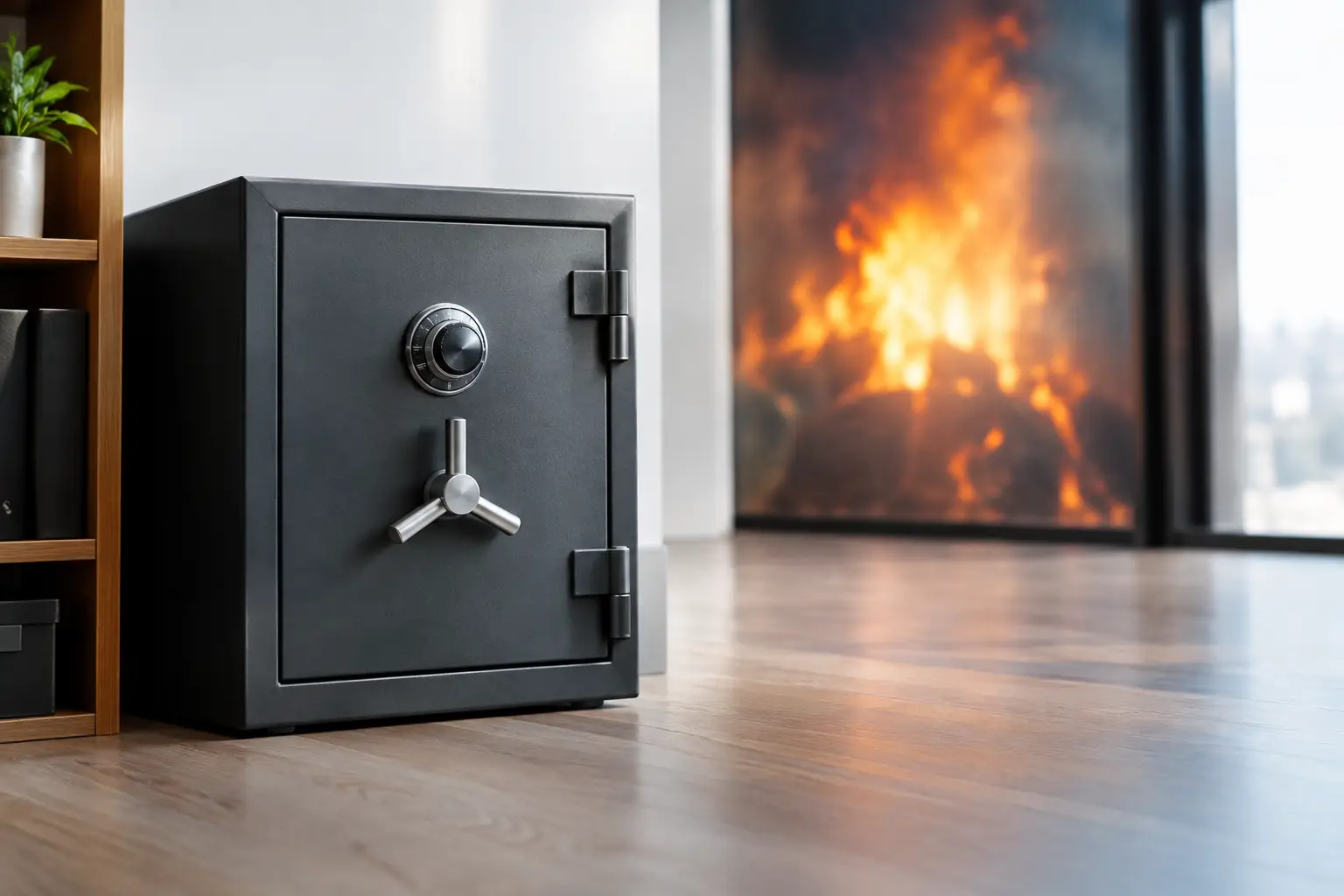
A fire can turn a filing cabinet, desk drawer, or standard metal box into a source of intense heat within minutes. Safe fire ratings give you a practical way to judge whether a safe can protect paper records, cash, passports, jewelry, or digital media for long enough to matter during a real fire.
The rating on a safe is not a general promise that everything inside will survive any fire. It is a tested performance measure with limits. Before buying, match the rating, test duration, safe size, and lock type to the assets you need to secure.
What Safe Fire Ratings Actually Measure
A fire rating indicates how well a safe limits the temperature inside its storage compartment when exposed to a controlled fire test. The goal is to keep the interior below the temperature at which the stored material is likely to be damaged.
For paper documents, the commonly referenced benchmark is an internal temperature of no more than 350°F. Paper begins to char and deteriorate at higher temperatures, so a properly rated fire safe is designed with insulating materials, door seals, and wall construction that slow heat transfer.
The duration matters just as much as the temperature. A 30-minute rating is intended to provide protection for a shorter fire exposure. A 60-minute or 120-minute rating provides a longer tested protection period. This does not mean a safe will fail immediately after the stated time. It means that the manufacturer has demonstrated performance under a defined test for that period, not indefinitely.
A rating must be tied to the specific safe model and testing standard. Product descriptions that simply say “fireproof” without naming a rating, duration, or independent test should be treated carefully. Fire-resistant is the more accurate term because no practical consumer or commercial safe is immune to every possible fire condition.
Paper, Data, and Valuables Need Different Protection
The right fire rating depends first on what will be stored inside. This is where many buyers make the wrong selection: they purchase a safe rated for paper, then use it to store hard drives, USB drives, backup media, or other temperature-sensitive items.
Paper documents and cash
Paper-rated safes are suitable for passports, property documents, contracts, certificates, invoices, records, cash, and many printed photographs. A safe tested to keep its interior at or below 350°F is generally designed for these items.
For a homeowner, a 30- or 60-minute paper fire rating may suit essential documents and small valuables when the safe is correctly installed. For offices, legal departments, finance teams, and administrative areas with critical records, a 60- or 120-minute model often provides a more appropriate margin of protection.
Digital media and electronic records
Digital media is more vulnerable than paper. Hard drives, flash drives, backup tapes, memory cards, and optical media can be damaged at temperatures well below the threshold used for paper safes. Humidity created during a fire test can also affect media.
Ratings such as UL Class 150 or UL Class 125 are designed for more sensitive contents, depending on the specific media category and the safe’s tested conditions. A paper fire safe should not be assumed to protect electronic records simply because it is labeled fire-resistant.
If your business stores backup drives, accounting archives, surveillance footage, or customer records on physical media, specify the media type before selecting a safe. In many cases, a data-rated inner compartment or dedicated media safe is the safer choice.
Jewelry, watches, and other valuables
Jewelry and watches are often more affected by theft risk than by heat alone. Precious metals may survive high temperatures, but gemstones, watch movements, packaging, certificates, and sentimental items may not. A fire rating still adds valuable protection, but it should be combined with a meaningful burglary rating, solid locking system, and secure anchoring.
For jewelry retailers and high-value residential collections, a burglary-resistant jewelry safe with tested fire protection is usually a stronger choice than a lightweight document safe. The best specification depends on inventory value, daily access needs, insurance requirements, and whether the safe will be installed in a public-facing area.
How Fire Test Duration Affects Your Decision
A longer rating generally provides greater protection, but it also affects price, weight, wall thickness, floor-loading requirements, and installation planning. Buying the highest rating available is not always necessary. Buying too little protection can be a costly false economy.
A 30-minute fire-rated safe can be practical for homes, hotel rooms, small offices, and locations with lower volumes of essential paperwork. It offers a basic layer of protection for items that would be difficult to replace.
A 60-minute rating is often a balanced option for professional offices, retail cash rooms, clinics, and small businesses. It provides added time for fire response while remaining practical for many indoor installations.
A 120-minute rating is better suited to organizations that hold irreplaceable records, high-value documents, legal files, financial archives, or operational records that cannot be easily recreated. Larger safes with longer ratings also require more careful delivery, placement, and anchoring.
Keep in mind that fire severity varies. Building materials, room location, fuel load, ventilation, fire suppression, and emergency response time all influence what happens at the installation site. A fire rating is a tested baseline, not a prediction of every real-world event.
Fire Protection Is Not Burglary Protection
Fire resistance and burglary resistance are separate performance categories. A safe that keeps documents cool during a fire may not offer adequate resistance against drilling, prying, cutting, or forced entry. Likewise, a heavy burglary safe may not provide a high fire rating unless it has been designed and tested for it.
When securing cash, jewelry, retail proceeds, controlled documents, or business assets, evaluate both risks. Look at the body construction, door thickness, boltwork, lock type, anchoring points, and the safe’s stated burglary certification or classification. For businesses handling daily cash deposits, a deposit safe may be needed in addition to a fire-rated records safe.
This distinction matters for insurance as well. Insurers may set requirements for cash limits, jewelry storage, burglary grades, alarm systems, and anchoring. Confirm the policy conditions before purchasing a safe for high-value assets.
What to Check Before You Buy
Use the product specification sheet to confirm the details rather than relying on the product category name. A sound purchase decision should account for the following factors:
- The fire test standard and the rating duration, such as 30, 60, or 120 minutes.
- The intended contents: paper records, cash, jewelry, digital media, or a combination of assets.
- Whether the safe includes burglary protection appropriate to the value being stored.
- Exterior dimensions, internal capacity, weight, delivery access, and the floor’s ability to support the unit.
- Installation requirements, including anchoring, room location, and access control.
Also consider daily workflow. A finance office may need fast access to cash and documents during business hours, while a homeowner may prioritize concealed placement and simple electronic access. A hotel operator may need compact guest-room safes, but central records and backup media require a separate, higher-rated solution.
Installation Can Affect Real-World Protection
A quality safe can underperform if it is poorly installed. Place the safe where it is accessible to authorized users but not exposed to unnecessary risk. Avoid locations prone to flooding if the safe will contain paper files or electronic media. Fire protection does not automatically mean water protection from sprinklers, hoses, or flood conditions.
Anchoring is especially important for burglary resistance. However, installation must follow the manufacturer’s instructions so that drilling or mounting does not compromise tested performance. For heavy commercial units, professional placement helps protect the building, the safe, and the people using it.
For businesses in Abu Dhabi or Dubai, delivery routes, elevator capacity, floor loading, and building management approval can all affect safe selection. Plan these details before ordering a large fire-rated safe or filing cabinet.
Choose Protection Based on What Cannot Be Replaced
The best safe is not defined by a single number on a label. It is the one that protects the assets you actually hold, for a realistic period, while also meeting your theft-security and operational needs. A family may need protected storage for passports and legal records. A retailer may need a deposit solution plus a burglary-resistant safe. An office may need fire-rated filing cabinets for active records and dedicated protection for digital backups.
Review your contents, confirm the tested rating, and select capacity with room to grow. Safe World UAE can help buyers compare fire-resistant safes, burglary protection, filing solutions, and secure storage formats so protection remains practical long after the purchase. Protect what matters most by choosing a rating that fits the risk, not just the label.