

Choosing a Cash Deposit Safe for Retail Stores

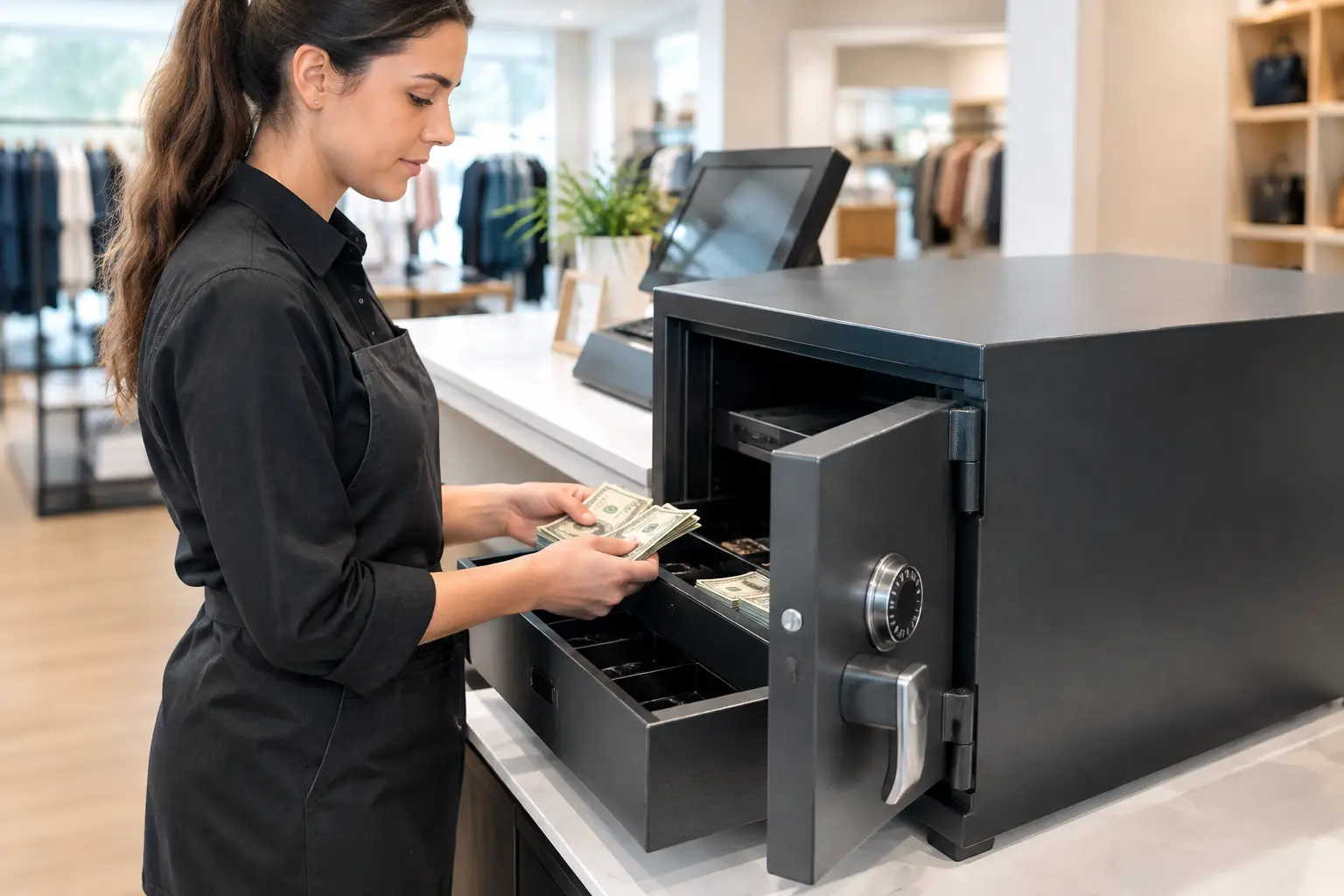
A busy register should not become overnight cash storage. A cash deposit safe for retail gives staff a controlled place to secure notes, envelopes, and receipts during a shift without giving every employee access to the main safe compartment. For retailers, this is a practical control against internal loss, forced handovers, and the risks created when cash waits too long in a till.
The right model depends on how your store collects cash, who handles deposits, and how often collections take place. A small convenience store, a restaurant with several terminals, and a jewelry retailer may all need a deposit safe, but their deposit method, capacity, and access controls will differ.
Why Retail Stores Need a Deposit Safe
Cash is most exposed when it moves between the point of sale and secure storage. Staff may remove excess notes from a register, supervisors may collect envelopes from multiple counters, or a manager may be busy with customers when a deposit is needed. Leaving money in drawers, desks, or an unlocked back-office cabinet creates avoidable exposure.
A deposit safe separates depositing from retrieval. An authorized employee can place cash into the safe through a slot, rotating drum, deposit drawer, or front-loading compartment. The deposited contents then fall or pass into the protected body of the safe. Access to that main compartment remains limited to a manager, owner, or approved cash collection team.
This separation supports better accountability. Employees can make regular cash drops without waiting for a keyholder, while management keeps control of opening the safe. It also helps reduce the amount of cash visible at the counter, which matters for staff safety as well as loss prevention.
Choose the Deposit Method Before the Safe Size
The deposit opening is the working part of a retail deposit safe. Select it around what your team deposits, not simply the exterior dimensions of the unit.
Deposit Slots for Notes and Envelopes
A slot deposit safe is suitable for folded notes, deposit bags, vouchers, and slim envelopes. It is often a good fit for small stores that make frequent, straightforward cash drops. Check the slot width and height before buying. A slot that accepts loose banknotes may not accept your standard deposit envelope or tamper-evident bag.
The opening should include an anti-fishing feature. This prevents a person from reaching or manipulating the deposited contents back through the slot. Without this protection, a deposit opening can become the weak point of the safe.
Rotary Drums and Chutes
A rotary drum or chute is useful where staff deposit bulkier envelopes, receipts, coin bags, or small cash boxes. The employee places the item into the compartment, rotates the drum, and the contents enter the secure chamber. This design provides a more controlled transfer than an open slot and can suit stores with higher cash movement.
The trade-off is space. Drum and chute systems generally require more depth than a compact slot model. Measure the counter, office, or back-room location carefully, including door clearance and the room needed to operate the deposit mechanism.
Deposit Drawers for Larger Packages
A deposit drawer is designed for larger sealed bags or bundled cash. It can be the right choice for supermarkets, hospitality operations, fuel stations, and multi-register retail locations. Some drawer designs also support a two-stage process, where one employee deposits and another employee verifies under defined procedures.
For high-volume operations, a larger opening is useful only if the safe body and internal capacity match the workload. A drawer that takes large bags but fills the safe chamber too quickly will create another operational problem.
Match Capacity to Your Cash Routine
Do not size a safe only for one day of average sales. Consider peak trading periods, weekends, promotions, public holidays, and the time between armored collection or bank deposits. A retailer that clears the safe daily can often use a smaller model than a business that holds deposits for several days.
Start by estimating the largest realistic amount of physical cash on site. Then account for deposit bags, receipt rolls, vouchers, and coin if these are stored in the same safe. Notes take less room than coin, while sealed bags and envelopes can consume more internal space than expected.
A safe should allow deposits to fall freely into the compartment. If the chamber becomes crowded, staff may struggle to deposit correctly, deposits can jam near the opening, and the process becomes less secure. For growing businesses, choosing a moderate capacity increase is often more cost-effective than replacing an undersized safe after a few months.
Focus on Security Construction, Not Just a Heavy Door
Weight alone does not define security. A suitable cash deposit safe for retail should have a solid steel body, a secure door construction, strong locking bolts, and protection around the lock area. The right level of burglary resistance depends on the value held, the store’s location, insurance requirements, and whether the premises are occupied overnight.
For businesses holding substantial cash, ask about independently tested burglary ratings and whether the safe meets insurer requirements. A model that appears suitable on the sales floor may not satisfy the cash cover conditions in your insurance policy. Confirm this before placing an order.
Fire protection is a separate consideration. A burglary-resistant safe is not automatically fire-rated, and a fire-resistant safe is not automatically designed to resist attack. If your operation also stores daily reports, contracts, or other paper records, assess whether certified fire protection is required. Paper and digital media have different protection needs, so specify what will be stored.
Select a Lock That Fits Your Access Rules
The lock should support your cash-handling policy rather than force your team into poor workarounds. Key locks are straightforward and can be appropriate for a small owner-managed store, but key control needs discipline. Know who holds each key, keep spares secured, and change the lock arrangement if a key is lost or an employee leaves.
Electronic locks are common in retail because they allow PIN-based access and avoid day-to-day key circulation. Depending on the model, they may provide an audit trail showing opening events. This can support investigations and routine reconciliation, but only if managers review the information and protect user codes.
For higher-risk locations, consider dual control, where two authorized people or two separate credentials are needed to open the main door. A time-delay feature can also reduce the value of immediate access during a robbery. These controls create a trade-off: they improve security but can slow emergency access. Set them around your actual operating procedures, not just the highest available specification.
Installation Is Part of the Security System
A deposit safe must be anchored correctly. An unsecured safe can be removed from the premises, regardless of its lock or deposit design. Floor and wall anchoring should follow the manufacturer’s approved fixing points and suit the construction of the site.
Place the safe in a restricted back-office area where possible, rather than in a public-facing location. Staff need convenient access for regular drops, but customers and unauthorized visitors should not be able to observe codes, watch the deposit routine, or identify when the safe is opened.
Think about delivery access before selecting a large unit. Confirm door widths, elevators, stairs, floor loading, and the route from unloading area to installation point. In Abu Dhabi and Dubai, retail locations in malls and towers may also have building access windows and delivery procedures that affect installation planning.
Build a Clear Cash Drop Procedure
The safe is only as effective as the routine around it. Set a threshold for removing excess cash from each register, such as a defined amount or a scheduled interval. Staff should know how to prepare deposits, label them when needed, and record the register, time, and employee responsible.
Keep the process simple enough to follow during peak hours. If employees must complete several manual steps before making a drop, they may delay it. A basic deposit log, clear access rules, and regular reconciliation provide a stronger control than complicated procedures that are ignored.
Use separate controls for deposit and retrieval. Cashiers may be authorized to deposit, while only designated managers open the main safe door. When the safe is opened, verify deposits against register reports and investigate discrepancies promptly. Delayed checks make small issues harder to trace.
For stores handling large note volumes, banknote counters and counterfeit detectors can support the same process. Counting and checking cash before final reconciliation reduces errors and helps identify suspect notes before they enter the next stage of your cash cycle.
Questions to Ask Before You Order
Before selecting a model, confirm the deposit item size, expected daily volume, number of employees making drops, required lock controls, and available installation space. Also ask whether your insurer requires a particular burglary rating, cash limit, or anchoring method.
If your retail operation handles only occasional deposits, a compact slot safe may be sufficient. If several registers deposit sealed bags throughout the day, a drawer or drum model with greater capacity and controlled access will usually be the better operational choice. The goal is not to buy the largest safe. It is to create a deposit process your staff can use consistently and management can control confidently.
Before your next peak trading period, review where cash sits between the register and the bank. A properly specified, professionally installed deposit safe turns that vulnerable interval into a controlled part of your operation. Contact Safe World UAE to select a retail cash deposit safe that fits your deposit routine, security requirements, and available space.
One thought on “Choosing a Cash Deposit Safe for Retail Stores”